Sympathy & Funeral Flowers
Send Condolence Flowers Hong Kong
If you need to send condolence flowers Hong Kong families will receive with dignity, the most thoughtful decisions combine cultural understanding with practical planning. Local customs tend to favour understated palettes and formal presentation, and venues such as funeral parlours and churches often maintain their own rules for size, placement and delivery windows. Even small choices carry meaning: a banner’s language order, whether a standing tribute will fit the display wall, or if a discreet basket is more suitable for a private wake. Because Hong Kong services frequently blend Chinese and Western elements, etiquette can shift subtly from one family to the next. Some may request traditional white chrysanthemums; others may welcome a restrained touch of pastel at a Christian memorial. In certain circles, a monetary condolence known as baak gam may be preferred in place of flowers. The guidance below helps you choose a respectful arrangement, confirm venue expectations, and prepare a message that reads appropriately in both Chinese and English so your sympathy is expressed with clarity and care.
Direct answer
Send Condolence Flowers Hong Kong
Choose calm, respectful colours (predominantly white, with soft yellow or green accents) and match the arrangement format to the setting: standing wreaths for public vigils and parlours, and modest baskets or vases for more intimate spaces. Confirm the venue’s display rules, including stand height, acceptable placement and delivery timing. Banners in Hong Kong usually follow a conventional order when Chinese text is used, and bilingual messages should be balanced so neither language conflicts with the other. When traditions are unclear, a white arrangement is a safe default, and avoid celebratory tones such as bright red or hot pink. If you are arranging from overseas, share the exact venue address, a contact person and your preferred wording for any banner or card. Because availability and conditions can vary, please ask Y. Florist whether standing wreaths, bilingual banners and specific design formats are currently available, and what delivery windows and size limits apply for your chosen venue.
Choosing the Right Floral Arrangement
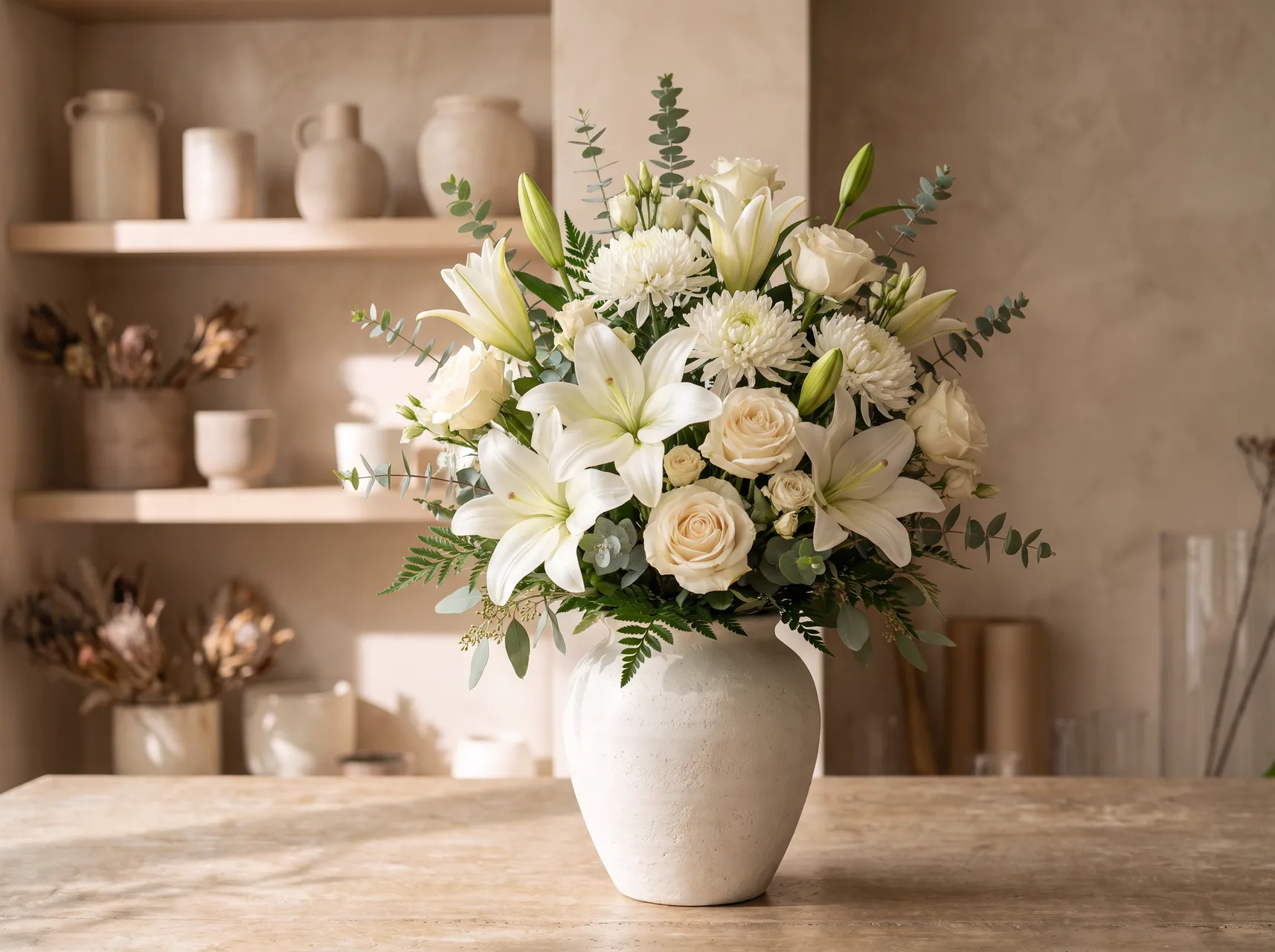
In Hong Kong, funeral flower etiquette leans toward restraint and symbolism. White chrysanthemums are widely understood to represent mourning, while lilies are favoured for their association with purity and remembrance. Muted palettes feel most at home in local parlours and places of worship, whereas vivid celebratory tones are best avoided. Many families blend Chinese and Western practices, so it is common to see traditional wreaths displayed alongside smaller table tributes on memorial tables. Christian services sometimes accept soft pastel accents and, where appropriate, cross-shaped tributes; Buddhist and Taoist contexts typically emphasise simple, calm designs without overtly religious forms from other traditions.
Compare Standing Spray Funeral when reviewing related requirements.
Send Condolence Flowers Hong Kong comparison
| Consideration | Suitable direction | Confirm before proceeding |
|---|---|---|
| Flowers and colour | Match the recipient, occasion and setting | Seasonal supply and substitutions |
| Finished form | Bouquet, vase, basket, plant or event design | Display space and handling |
| Delivery | Share the venue and preferred timing | Address, phone and access notes |
| Budget | Compare flower grade, size and work | Delivery and additional requirements |
Key Considerations for Your Selection
Before you finalise a tribute, weigh three considerations: relationship, venue and faith. Large, formal displays are suitable for organisations or close family displaying public respect, while smaller baskets and vases are thoughtful for friends and distant relatives. Check the venue’s policies on dimensions, banner placement and delivery windows, because not every parlour or chapel can accommodate tall stands or elaborate structures. If the family’s religious background is not known, select a white-forward design and a concise, formal message. When bilingual banners are needed, confirm the language order and request a proof so names, titles and phrases appear with dignity in both Chinese and English.
See also same day condolence flower delivery for a related style or use.
About Y. Florist
Common Hong Kong settings for condolence tributes include licensed funeral parlours, churches and chapels, community memorial halls, and occasionally private homes for intimate wakes. Public parlours often allocate designated walls or rows for standing tributes and may set firm limits on stand height, base width and banner placement. Christian churches may accept cross-shaped tributes and soft pastels, while Buddhist or Taoist contexts generally prefer simple white designs without bright celebratory hues. Communication is typically bilingual; a Chinese banner follows a customary reading order that differs from English, and clarity on names and titles prevents awkward errors. Some families also value the tradition of baak gam (condolence money) either in addition to or in place of flowers. If you are arranging from abroad, confirm the exact venue name and address, the service schedule and a local contact so your tribute can be placed correctly and respectfully on arrival.
Keep the recipient, occasion, venue, contact details, preferred colours and any restrictions together. Ask the Y. Florist team to review availability, substitutions, timing and other requirements before relying on any arrangement.
05 · Decision point
The cultural language of colour and bloom
Colour choice is the first signal of respect in Hong Kong mourning customs. White is the most broadly accepted tone and communicates solemnity and purity, while soft yellow and green foliage can add calm depth without reading celebratory. Vivid reds, hot pinks and bright oranges are commonly reserved for joyous occasions and therefore feel out of place at wakes and funerals. When a family blends Chinese and Western traditions—especially in Christian contexts—soft pastels may be permissible, but they should remain understated and never dominate a space intended for reflection. If you are uncertain, select a white-forward design and confirm any specific preferences with a family representative or the venue.
Flower selection carries cultural nuances. White chrysanthemums are a familiar emblem of mourning in Hong Kong and sit comfortably in standing wreaths, sprays and table tributes. Lilies contribute a sense of purity and are frequently combined with chrysanthemums in elegant, restrained designs. While gerberas, sunflowers and other bold blooms have their place in celebratory gifting, they can appear discordant in a memorial room. Overseas senders often find it helpful to request a quick design sketch or photograph to ensure the palette and composition suit local expectations; this small step reduces the risk of a tribute that looks beautiful yet feels culturally mismatched.
06 · Decision point
Which tribute format suits different relationships
Scale and format should echo your relationship to the deceased and the setting where tributes will be displayed. Large standing wreaths and tall sprays convey formal, public respect and are often chosen by employers, professional bodies or close-knit teams at funeral parlours. Their presence reads as communal support, and banners clearly identify the sender. Friends, neighbours and distant relatives may prefer a smaller basket or vase tribute that expresses sympathy without competing with the family’s principal displays. These compact formats sit neatly on tables near the condolence book and are easy for staff to position without disrupting the flow of visitors.
Consider handling and placement when selecting a design. Standing tributes require adequate floor space, a secure base and a clear sightline to be read; narrow corridors or compact parlours may not accommodate them comfortably. A basket or vase can be moved quickly during set-up or after the service, which is helpful when a family intends to relocate flowers to a memorial table or chapel foyer. If the service is Christian and the family welcomes religious symbols, a simple floral cross may be appropriate; for Buddhist or Taoist contexts, a circular or softly fan-shaped white arrangement offers a respectful fit without imposing unfamiliar iconography.
07 · Decision point
Confirming venue requirements and delivery details
Venue policies vary across Hong Kong. Some funeral parlours maintain strict height and width limits for stands; others restrict where banners can be placed relative to the memorial altar. Churches and chapels often specify access times so set-up does not overlap with services. Before arranging a tribute, ask for the exact venue name, hall number if applicable, and any display constraints. A simple call or message to confirm these details prevents the common frustration of a beautiful tribute that cannot be placed as intended. If the wake is held in a busy district with multiple parlours, share clear directions and a local contact to assist on arrival.
Timing also matters. Tributes are usually positioned before the vigil or service begins so families can receive guests without interruption. Provide the expected start time and ask which delivery window the venue accepts; some sites prefer delivery several hours in advance, while others request a narrower slot to keep corridors clear. If a standing tribute includes a large banner, allow time for staff to adjust the angle for readability. For overseas arrangements, supply the sender name as it should appear, the exact bilingual wording if needed, and a reachable phone number so any placement questions can be resolved quickly onsite.
08 · Decision point
Wording and layout for banners and cards
Banners are part of the visual language of condolence in Hong Kong, and their layout follows conventions that communicate respect. With Chinese text, a common structure places the recipient or family name on the right, a central phrase of condolence in large characters, and the sender name on the left. English messages should remain brief and formal to match the solemn tone. When both languages appear, they should be balanced to avoid conflicting reading orders and to ensure each line is legible from a distance. A short proof shared by the florist is invaluable for checking names, titles and spacing before the banner is produced.
For cards, the same principle applies—clarity and restraint. If you are unfamiliar with traditional idioms, keep the message simple and sincere, using neutral wording that avoids theological assumptions unless you know the family’s faith. For bilingual cards, decide whether to place English first or second based on the main language of the service, and verify the correct order of family and given names in Chinese. Transliteration mistakes are common when names are provided hastily; confirm spellings and character forms with a relative or organiser where possible. This careful attention ensures your sentiment reads as intended in both languages.
09 · Decision point
Religion-specific considerations and respectful defaults
Religious context guides both design and symbolism. In Buddhist and Taoist settings, florals tend to be serene and unembellished, with white chrysanthemums, lilies and green foliage forming a calm composition. Bold colour is not typical. Christian or Catholic services may incorporate pastel accents and, where appropriate, modest floral crosses that align with the service’s imagery. Even within a single tradition, family preferences can vary; a quick check avoids guesswork and signals genuine care. When customs are unknown, a white-focused design with a succinct, formal message is a respectful default accepted across most local contexts.
Remember that some families prefer alternatives to display-heavy tributes. At times a memorial space is intentionally simple, with only a few family arrangements near the altar. In such cases, a compact basket or vase may be more fitting than a tall stand. Where the family explicitly requests donations in lieu of flowers, follow that guidance. If you are coordinating across time zones or through colleagues, ask one person close to the family to verify preferences for design motifs and wording. These small confirmations help your gesture integrate gracefully into the chosen ritual and setting.
10 · Decision point
Alternatives to flowers and when they are appropriate
While flowers are a familiar expression of sympathy, alternatives are equally meaningful in many Hong Kong communities. Baak gam—the customary presentation of condolence money—remains a respected practice and is sometimes preferred to floral displays, especially when a family wishes to keep the space uncluttered. Families may also request donations to a designated charity or memorial fund in memory of the deceased. A formal letter of condolence, signed by a team or organisation, can be especially appropriate when a message of support matters more than a physical display.
Situations also shape choice. A private home wake may not have room for standing tributes; a compact basket or a heartfelt card could be more considerate. If you are a distant acquaintance, a restrained table arrangement, a signed condolence card or a charitable donation may align better with the family’s wishes than a large public display. Overseas senders often find these alternatives practical when coordinating delivery windows is difficult. When in doubt, ask a trusted contact or the organiser which gestures the family will appreciate most so your support is both culturally sensitive and logistically smooth.
11 · Decision point
Practical examples, common pitfalls and a quick checklist
Consider three scenarios: a corporate department supporting a colleague’s family at a large parlour chooses a traditional white chrysanthemum standing wreath with a bilingual banner; they confirm stand dimensions, provide the exact family name for banner placement and request a proof before production. A neighbour attending a small chapel service selects a compact white lily basket with a concise card; its scale shows care without overwhelming the family’s tributes. An overseas relative preparing a Christian memorial checks whether a simple floral cross is suitable, shares the full venue address and contact, and confirms the bilingual message order so both languages read naturally on the banner.
Avoidable mistakes include sending vivid red or pink flowers, assuming home delivery is welcome before the funeral, and overlooking venue limits that prevent a tall stand from being displayed. To keep things smooth, follow a quick checklist: confirm the exact venue name and address; ask whether standing tributes are accepted and what size limits apply; request the preferred delivery window; clarify the banner’s language order and wording; and ask whether the family prefers flowers, baak gam or donations to charity. If anything is unclear, consult the organiser or Y. Florist for guidance before finalising your arrangement.
Related florist pages
Standing Spray Funeral same day condolence flower delivery Sympathy Flower Arrangement memorial flower basket Sympathy flowers delivery flower bouquet
Send Condolence Flowers Hong Kong FAQs
What should I send if I’m unsure of the family’s religion or customs?
Choose a restrained white arrangement featuring chrysanthemums and lilies, which are widely accepted across Hong Kong’s diverse traditions. Avoid bright, festive colours and novelty styles. Keep your message formal and concise; if a bilingual banner is required, request a layout proof so the Chinese and English texts present harmoniously. If you are still uncertain, ask a family representative or the funeral organiser whether any faith-specific symbols should be included or avoided. You can also enquire with Y. Florist for neutral design options and for help confirming venue guidelines, banner wording and appropriate delivery timing for the vigil or service.
When should the flowers arrive at a Hong Kong funeral parlour?
Most venues prefer tributes to arrive before the vigil or service begins so staff can position and label them. Exact delivery windows vary by parlour or church, and some sites set tight access periods to avoid disrupting ceremonies. It helps to provide the venue name, full address, the date and start time of the vigil or service, and a local contact person who can liaise on arrival. If your arrangement includes a standing tribute or a banner, allow extra time in case the venue needs to adjust placement. Ask Y. Florist to confirm the allowed time window for your chosen venue before dispatch is arranged.
How do I format names and wording on a traditional Chinese condolence banner?
Chinese banners commonly present the recipient or family name on the right, a central expression of condolence in the middle, and the sender name on the left. Keep the tone formal and avoid casual phrases. For bilingual banners, ensure the English text does not conflict with the Chinese reading order and that names appear in the correct family/given sequence. Provide the exact characters and spellings to prevent errors, and request a digital proof so you can check the placement, spacing and tone before printing. If you are unsure which idiom or phrase suits the context, ask the family or consult Y. Florist for suggestions.
Need help arranging a respectful tribute?
Whether you are in Hong Kong or overseas, we can help you choose an appropriate format, confirm venue guidelines and prepare dignified bilingual wording. Because venue policies and florist capacity can change, please ask whether standing tributes, cross-shaped designs and banners are currently available, what size limits apply, and which delivery windows the venue accepts. Share the venue name and address, the service date and time, any on-site contact person, and your preferred language for the message so we can advise on fit and presentation in advance.
Enquire About a Tribute Contact Y. Florist