Wedding Flowers
church floral arrangement for your wedding
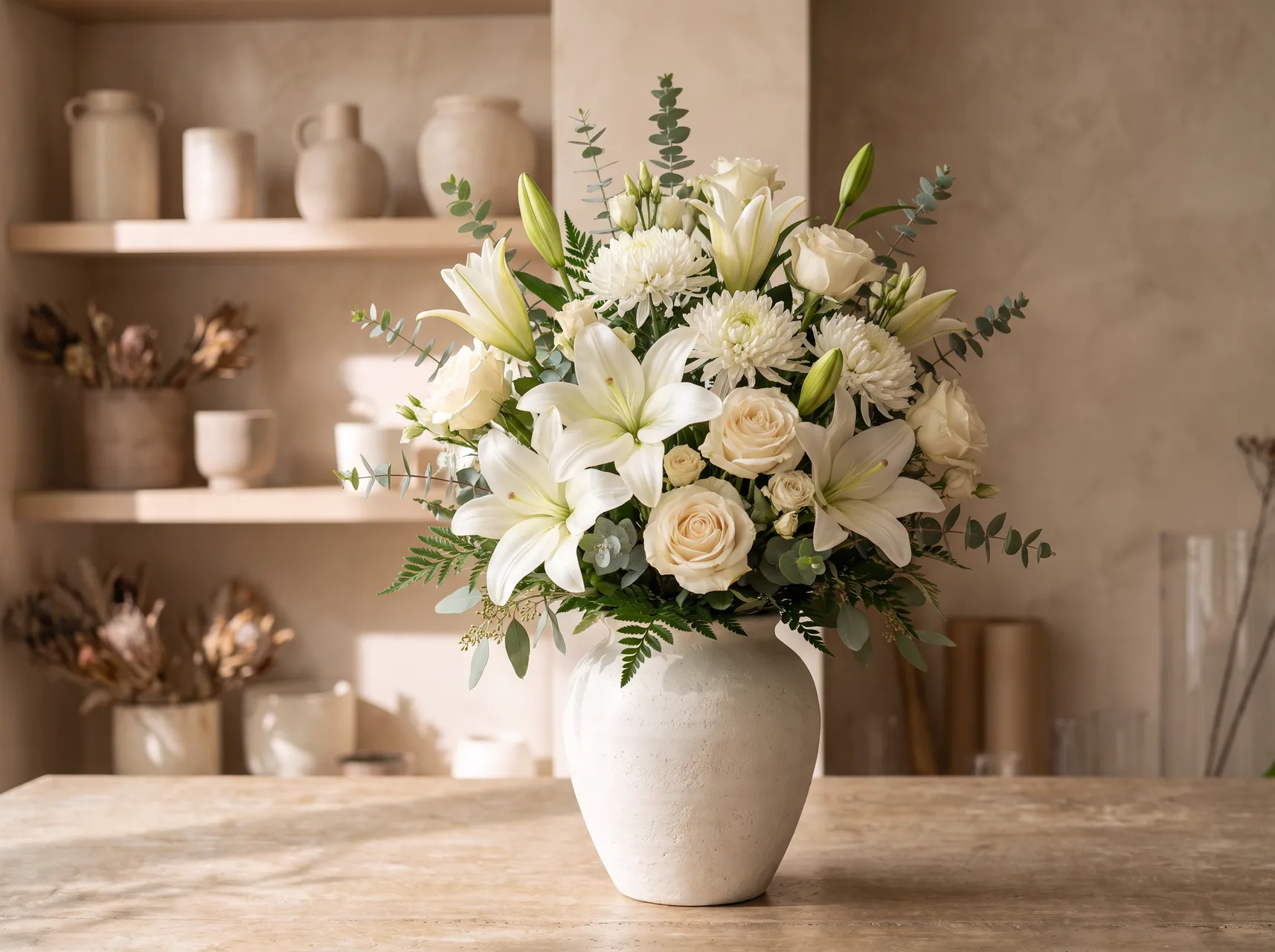
Planning a church floral arrangement for your wedding begins by sharing your ceremony date, church name and preferred colours. Consider altar pieces, aisle flowers, pew ends and vestibule displays that suit your ceremony’s scale and any venue rules. The team can review seasonal options, prepare installation proposals and, if helpful, discuss site visits or mock-ups so clergy and venue staff can approve placement. Ask Y. Florist about availability, timing and any permissions relevant to your date.
Direct answer
church floral arrangement for your wedding
Church floral arrangements require careful coordination with your venue regarding placement, attachment methods, and installation timing. Altar pieces, pew ends, aisle markers, and vestibule displays must respect the historic nature of the building and the liturgical requirements of the ceremony. Soft ribbon ties, foam-free mechanics, and low-water constructions are often necessary to protect delicate surfaces. Couples should always consult their church coordinator early in the planning process to confirm any restrictions, such as no-flame policies or limitations on where flowers can be placed.
Church Ceremony Floral Services
Church Ceremony Floral Services
Compare corsages when reviewing related requirements.
church floral arrangement for your wedding comparison
| Consideration | Suitable direction | Confirm before proceeding |
|---|---|---|
| Flowers and colour | Match the recipient, occasion and setting | Seasonal supply and substitutions |
| Finished form | Bouquet, vase, basket, plant or event design | Display space and handling |
| Delivery | Share the venue and preferred timing | Address, phone and access notes |
| Budget | Compare flower grade, size and work | Delivery and additional requirements |

Ordering & Installation in Hong Kong
Ordering & Installation in Hong Kong
See also bridesmaid bouquet for a related style or use.
About Y. Florist
Essential elements for church weddings include altar pieces, pew ends, aisle arrangements, pedestal displays, and vestibule displays, often requiring foam-free methods and low-water constructions to protect historic interiors.
Keep the recipient, occasion, venue, contact details, preferred colours and any restrictions together. Ask the Y. Florist team to review availability, substitutions, timing and other requirements before relying on any arrangement.
05 · Decision point
Altar and Aisle Designs for Church Ceremonies
The core floral elements for a church wedding typically revolve around the altar and the aisle, creating a beautiful focal point for the ceremony and a welcoming path for the procession. Altar centrepieces and freestanding pedestal displays can beautifully frame the sacred space, while aisle arrangements guide the eye towards the front of the church. When designing these elements, it is essential to consider how they relate to the bridal party flowers, ensuring a cohesive aesthetic that complements the overall theme of your wedding.
When planning aisle decorations, the importance of respecting sightlines and the flow of the procession cannot be overstated. Compact aisle markers are often preferred in narrower churches to allow ample space for the bride's dress and the bridal party to move comfortably. It is crucial to strike a balance between visual impact and practical spatial requirements, ensuring that the floral designs enhance the ceremony without obstructing the view of the guests or impeding the movement of those participating in the service.
06 · Decision point
Navigating Church Rules and Historic Interiors
Decorating a church requires a deep respect for its historic interior and adherence to specific constraints set by the venue. Many churches have strict rules regarding what can be placed on the main altar and how items can be attached to pews or architectural features. It is often necessary to use stable mechanics that do not damage delicate surfaces. For instance, attaching pew ends with soft ribbon ties rather than wire or tape is a common requirement to protect historic woodwork from scratches or residue.
To further protect the church environment, low-water and foam-free methods are frequently employed. These techniques prevent messy or dripping arrangements that could damage church floors or furnishings. Additionally, florists must often adapt to restrictions such as no-flame policies or limits on the size and weight of installations. Understanding and respecting these boundaries from the outset ensures that the floral designs are both beautiful and compliant with the sanctuary's preservation guidelines.
07 · Decision point
Installation, Removal, and Venue Approvals
The logistical steps for church florals are as critical as the designs themselves, requiring careful coordination with venue staff. Conducting site visits or creating mock-ups is often an essential part of the process, allowing clergy and church coordinators to review and approve the proposed placement of arrangements. This collaborative approach ensures that all designs meet the church's liturgical requirements and do not interfere with the ceremonial proceedings or safety regulations.
Sharing venue rules and timing constraints with your floral team early is vital for a smooth execution. The team must propose clear timelines for access, setup, and removal, ensuring they align with the church's schedule. Failing to confirm these logistical details can lead to complications on the wedding day. Couples should ask Y. Florist about their experience with specific venues and their ability to manage the precise timing required for church installations and clear-outs.
08 · Decision point
Coordinating with Bridal Party Florals
A harmonious aesthetic is achieved when church floral arrangements are thoughtfully coordinated with the bridal party flowers. The colours, textures, and flower varieties chosen for the altar pieces and pew ends should reflect the style of the bridal bouquet and bridesmaids' arrangements. This cohesive approach ties the visual elements of the day together, creating a seamless transition from the ceremony space to the personal flowers carried by the wedding party.
While the church flowers should complement the bridal party florals, they must also be scaled appropriately for the venue. Large, impactful arrangements may be necessary to fill a grand sanctuary, whereas more delicate designs might suit an intimate chapel. The floral team will consider the architectural scale of the church when translating the bridal party's floral theme into the larger ceremony installations, ensuring that the designs are proportionate and impactful within the specific setting.
09 · Decision point
Addressing Common Misconceptions and Constraints
A common misconception when planning church weddings is assuming that all venues permit flowers on the main altar. In reality, many churches have strict liturgical guidelines that restrict where arrangements can be placed, often requiring them to be positioned on pedestals to the side rather than directly on the altar table. Couples must clarify these boundaries with their church coordinator early in the planning process to avoid designing arrangements that cannot be used during the ceremony.
Another frequent oversight is failing to consider the practical implications of floral mechanics in a historic setting. Using dripping arrangements or attachments that leave marks can cause significant damage to church property. By prioritising foam-free methods and protective attachment techniques, couples can ensure their floral decor enhances the space without causing harm. It is essential to discuss these constraints with your floral team to guarantee that all designs are both beautiful and respectful of the venue.
10 · Decision point
Confirming Logistics with Your Venue
Clear communication with your church venue regarding logistics is a fundamental aspect of planning ceremony florals. Key confirmation questions include asking whether the church has specific guidelines regarding where flowers can be placed and if there are any restrictions on the types of attachments used for pew ends. Understanding these rules upfront allows the floral team to design arrangements that are fully compliant with the venue's requirements, preventing any last-minute issues on the wedding day.
Additionally, it is crucial to establish the exact times when the floral team can access the church for setup and when the flowers must be removed. Some churches host multiple services on a single day, leaving a very narrow window for installation and clear-out. Couples should ask Y. Florist about their availability and capacity to operate within these specific timeframes, ensuring that the logistical execution is as flawless as the floral designs themselves.
Related florist pages
corsages bridesmaid bouquet wedding floral arrangement boutonnieres groom boutonniere flower bouquet
church floral arrangement for your wedding FAQs
What is the timeline for planning bespoke church floral installations?
Planning bespoke church floral installations should ideally begin several months before your wedding date. This allows sufficient time to discuss your vision, review seasonal flower availability, and coordinate with your church venue regarding their specific rules and access times. Early planning also ensures that any necessary site visits or mock-ups can be arranged to secure approval from clergy and venue staff for the proposed designs and placement.
How can floral designs be adapted for strict church rules and tight spaces?
Floral designs can be adapted to strict church rules by using protective methods such as attaching pew ends with soft ribbon ties instead of wire or tape, which safeguards historic woodwork. For tight spaces, compact aisle markers can be designed to ensure ample room for a wide wedding dress and the bridal procession. Additionally, freestanding pedestal arrangements can frame the altar without resting directly on it, complying with sanctuary restrictions.
What is the process for confirming delivery and installation logistics for specific venues?
Confirming delivery and installation logistics involves sharing your church's access rules and timing requirements with the floral team early in the planning process. The team will then prepare an installation proposal detailing the timeline for access, setup, and removal. It is crucial to verify these times with your church coordinator to ensure smooth operations on the day. You should ask Y. Florist about their availability to manage these logistics for your specific date.
Discuss Your Church Ceremony Requirements
Every church has unique architectural features and guidelines that influence floral design. Reach out to discuss your venue's specific rules, your preferred colour palette, and the scale of your ceremony to explore suitable arrangement options.
Enquire About Church Florals Contact Y. Florist