YumYum Bakery & Cakes · Ordering guides
Branded Corporate Mooncakes: What Needs Approval for Standard Boxes vs OEM?
For this guide:Branded Corporate Mooncakes: What Needs Approval for Standard Boxes vs OEM?
Arrange your baking order
Considering Mooncake Wholesale? Send the date, district and the points discussed in this guide to YumYum Bakery & Cakes to confirm suitable options and a quotation.
Order MooncakesWhatsAppThis opens a prepared WhatsApp enquiry. Availability, details and price must be confirmed before booking.
A logo can look right while the gift is still not ready to approve. The sleeve may cover information on the original box, the greeting card may prevent the lid from closing, or a new tray may have been drawn around a mooncake without its individual wrapper. None of those questions is settled by an email saying the artwork looks good. A corporate mooncake packaging approval checklist should make the limits of each approval visible before anyone treats the whole order as confirmed.
Start by listing the parts you want to change: the mooncake, its individual packaging, the original gift box, any new tray, and added materials such as a sleeve or card. Then assign separate owners for the brand artwork, the assembled gift and the product selection. The following checks are procurement recommendations, not a statement that YumYum offers every custom component or follows a fixed sampling process. Confirm the available options and approval requirements for your particular enquiry.
1. Define the changes before choosing a purchasing route
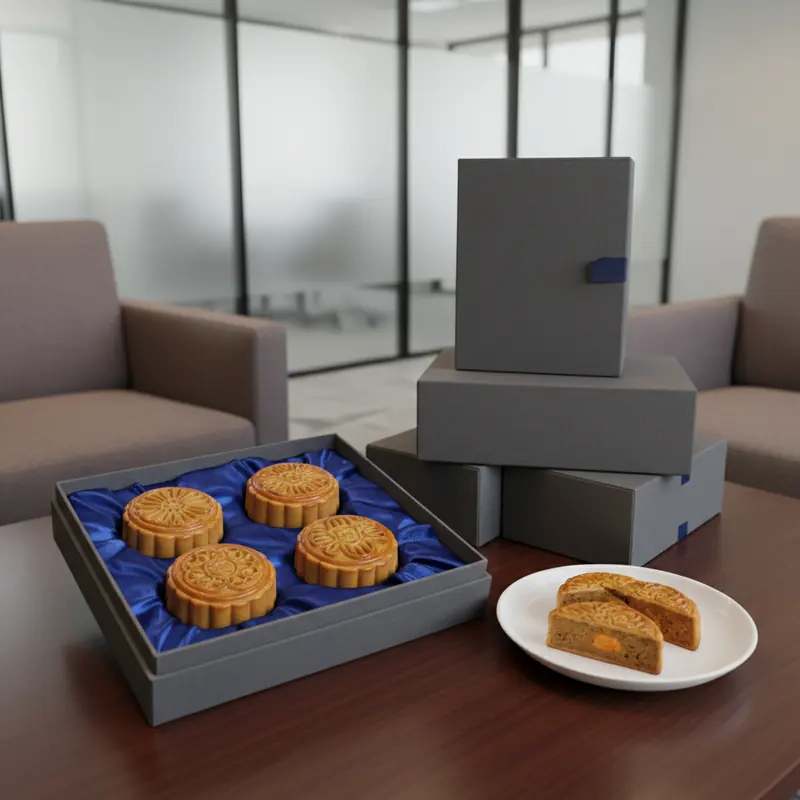
Comparing standard mooncake gift boxes vs OEM is more useful when you compare the actual scope rather than the labels. One proposal might keep both the mooncakes and their original box, adding only an outer sleeve. Another might put an existing mooncake into a newly designed gift box. A third might change the mooncake itself as well as its packaging. Each involves a different set of decisions, even if all three proposals are described as branded gifts.
OEM does not automatically mean developing a new recipe. Hong Kong supplier Multizen's mooncake OEM and ODM page describes both existing recipes and co-developed flavours, alongside custom boxes and inner trays. That supports a practical distinction: product development and packaging development can be separate choices. It does not establish which combinations another supplier can offer.
Write a short scope statement with three headings: unchanged, changed and not yet decided. Include the selected product, wrapper, box, tray and external branding under those headings. An undecided item should remain visible rather than quietly becoming part of an assumed standard package. Ask the supplier to confirm the same scope in writing so that your design team and purchasing team are reviewing the same proposal.
2. If the original box stays, concentrate on the added branding
For an unchanged mooncake in its original gift box, the additional approval work may be mainly packaging-led. You still need to select the actual product and box, but there is no reason to assume a new recipe sample is required merely because a brand message is being added. Establish which original components remain intact and whether any original labels, seals or packaging will be removed or covered.
Use Mooncake Wholesale as a starting point for asking about existing products, original box formats and whether separate branded materials can be accommodated. Ask rather than assume that a wholesale order permits a sleeve, card or replacement box. Availability, assembly responsibilities, costs, quantities and timing need confirmation for the individual order.
In a hypothetical sleeve-only project, the brand team might approve the logo and message while procurement checks the sleeve against the chosen closed box. The product selection would still be recorded by name or reference. This keeps the approval proportionate: you are not reopening an unchanged recipe, but you are checking the new component and preserving a clear record of what will be inside it.
3. A replacement box creates a separate packaging project
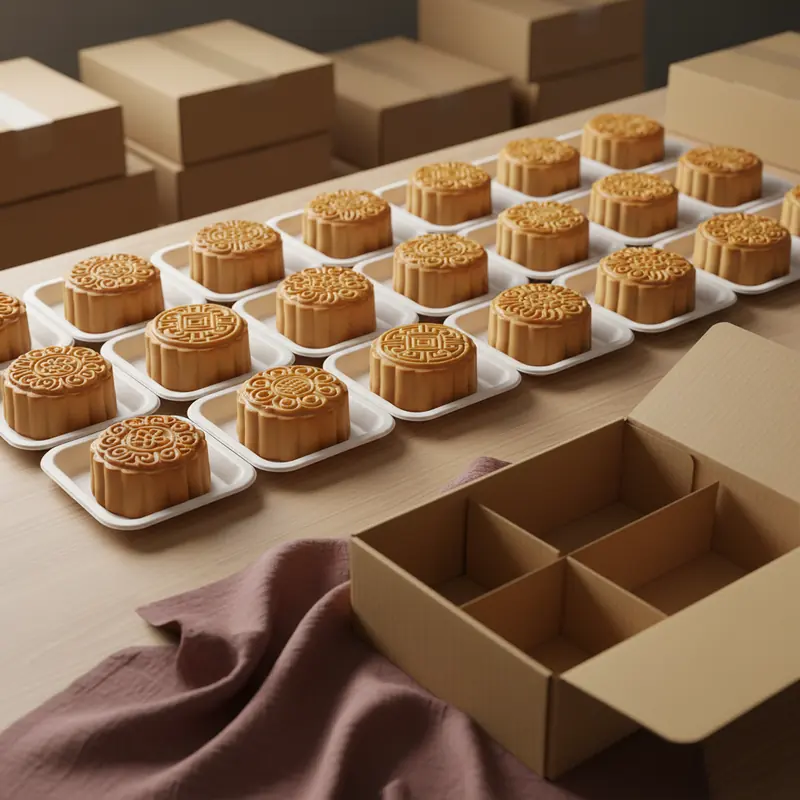
An existing mooncake in a new box sits between a simple branding addition and a changed product. The recipe may stay the same, but the supplier still needs to establish how the individually packaged mooncakes sit inside the new presentation. Confirm the number of pieces, their arrangement, the tray design and the space occupied by cards or other agreed inserts. A drawing of an empty box is not enough to describe that relationship.
Ask who supplies each component and who assembles the finished gift. If one party makes the box and another supplies the mooncakes, name the person responsible for confirming that the actual wrapped product matches the packaging specification. Otherwise, both parties can approve their own component without anyone approving the complete assembly.
Also identify the boundary between presentation packaging and other packing needed for the agreed handover. A decorative box approval should not silently become an approval of every later handling arrangement. Record any unresolved packing or distribution questions separately and obtain order-specific answers rather than treating an attractive box image as evidence of performance.
4. Add product sign-off when the mooncake specification changes
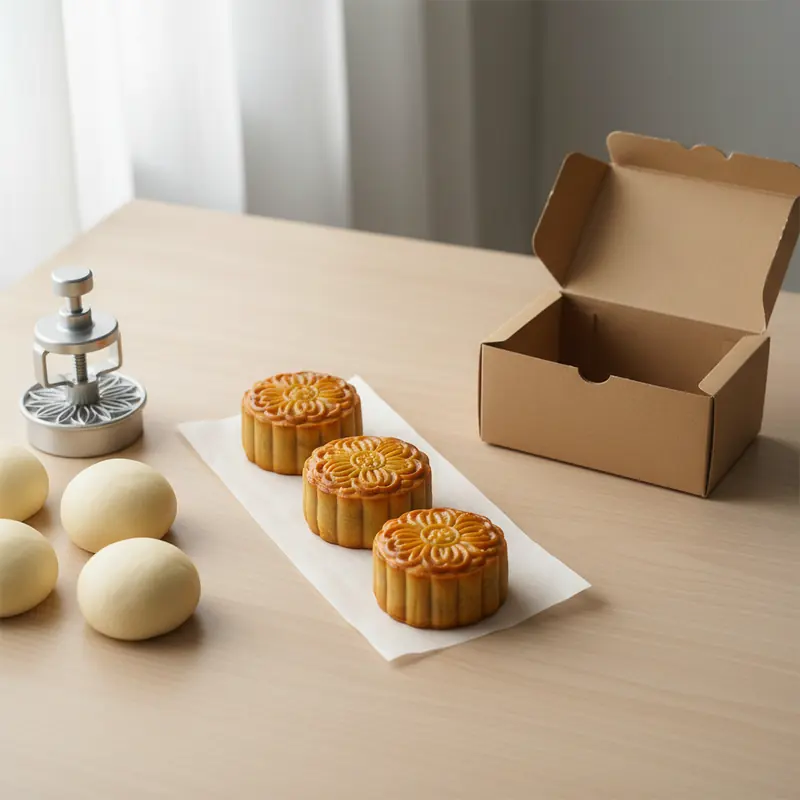
Changing the filling, recipe, weight, dimensions or surface pattern introduces product decisions that a packaging approval cannot cover. List each requested change explicitly. A new surface design may require a different confirmation from a new flavour, while a size change may also affect the individual wrapper and tray. Ask the supplier which specifications, drawings or samples are needed for the particular combination.
If those are the changes you need, send the list through Custom Mooncake Manufacturing and ask about manufacturing feasibility, the proposed product specification and the relevant sample scope. This route is not a requirement for every logo sleeve. It is an appropriate enquiry when the requested work includes product or manufacturing decisions that need their own written confirmation.
Where an existing recipe is proposed, record the exact selected item rather than describing it simply as standard. Where a new sample is proposed, record what it is intended to demonstrate: flavour, appearance, size, surface detail or some combination. Do not assume a tasting sample also approves the final wrapper and box unless those components are included in the agreed review.
5. Give artwork approval a precise boundary
Brand review should start with the correct logo file, confirmation of permission to use it, the intended wording and the agreed colour references. Check the company name, greeting, language versions and any contact or campaign text as they appear in the final layout. Review every panel that will be printed, not just the front-facing view used in a presentation.
Make clear whether an approval concerns text and placement only or also an agreed colour or finish reference. An on-screen layout cannot establish hand feel or opening behaviour, and a presentation mock-up should not be mistaken for confirmation of an achievable print result. Ask the supplier how the proposed materials and printing method will be represented for review.
Mooncake sleeve artwork approval needs an identifiable version
Put a version identifier on the artwork file and use that identifier in the approval message. The accompanying note should name the component, such as the outer sleeve, and describe the scope of approval. For example, an explicitly hypothetical note could read: sleeve artwork revision B approved for wording and logo placement; physical fit and print reference still pending. This is more useful than an isolated reply saying approved.
Keep the approved file alongside the supplier's corresponding layout or dimensional reference. If the supplier changes a fold, seam or panel size after the brand review, check whether text placement needs to be reviewed again. A familiar filename is not enough if the underlying layout has changed.
6. Check physical fit with the actual contents
Before signing off a new sleeve or box, obtain the selected box's dimensions and confirmed contents. The Mooncake Gift Box page provides an enquiry starting point; ask which format is being proposed, how many individually packaged pieces it contains and what occupies the remaining space. Use that specific combination when checking the sleeve, tray and insert arrangement.
Packaging supplier The Craft House's corporate mooncake box guide describes sampling after dimensions, artwork, materials, mechanisms and real contents have been reviewed. It identifies proportion, colour, hand feel, opening movement and product fit as sample checks. This is a useful packaging reference, not a promise that another supplier uses the same process or offers the same sampling arrangements.
During the agreed physical review, check the closed box, its opening sequence and the position of the individually wrapped mooncakes. Confirm that the card and any other included component occupy their intended places. For a sleeve, ask to see how it sits on the actual closed box, including its seam and edges. Record whether the review used final materials or substitutes, and identify any remaining limitation rather than calling the whole assembly final.
7. Distinguish a visual reference from a production sample
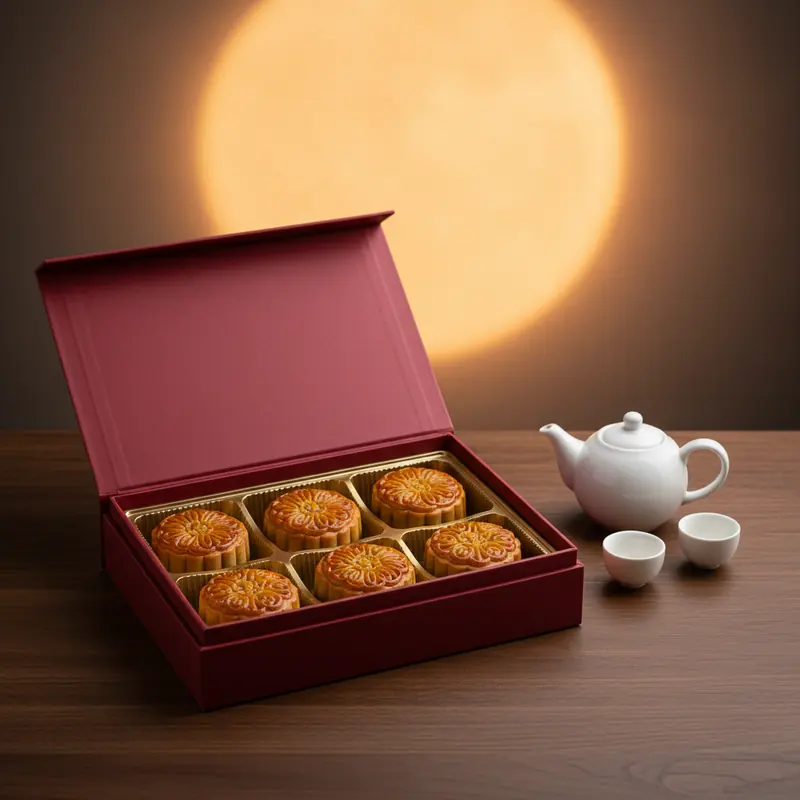
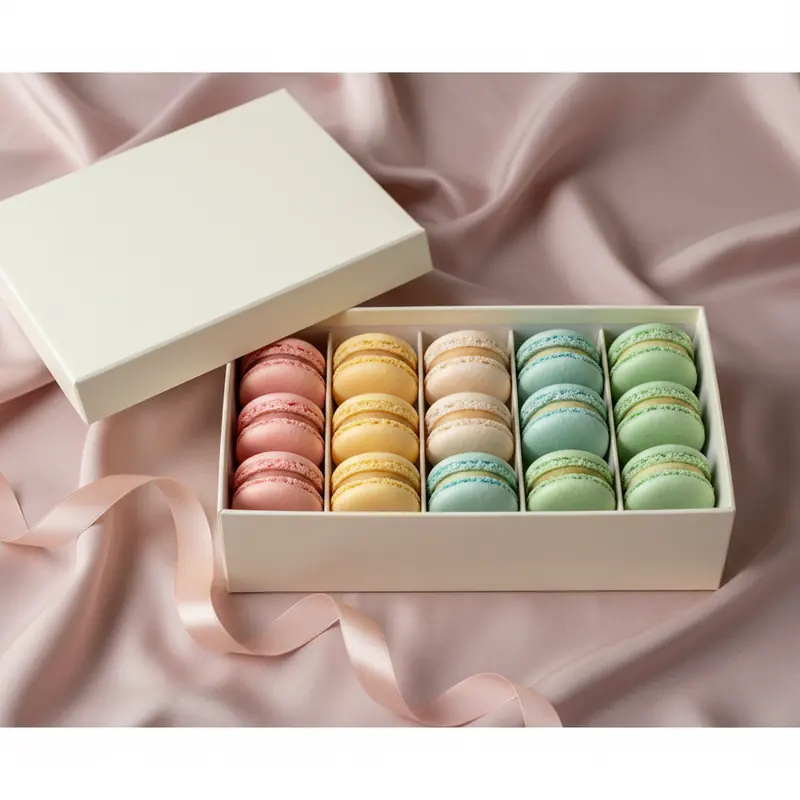
A reference image can communicate a presentation idea without proving that the proposed package works. A ribboned macaron box, for example, may help explain a restrained gift presentation, but its contents and arrangement cannot establish a mooncake tray's dimensions. Mark visual references as references and keep them separate from the files or samples that identify the proposed production components.
Ask the supplier what kind of review material is appropriate for each unresolved question. A digital proof can help with wording and placement. A structural mock-up may address assembly or proportion without representing final colour or finish. A product sample may answer a product question without including the final packaging. The important point is to agree what the item demonstrates and what it does not.
Choose the review scope according to the uncertainty, not simply the most impressive-looking sample. If the only unresolved issue is whether a sleeve closes around the selected box, ask how that fit will be checked. If a special opening mechanism is proposed, ask how its movement will be demonstrated. Confirm any sample charges and their effect on the order schedule directly; no fixed sample package or turnaround is assumed here.
8. Keep product information attached to the selected variant
A gift range can include more than one mooncake style, so avoid keeping product information in a generic folder disconnected from the selected item. Record the proposed product reference and obtain its current ingredient, allergen, storage, shelf-life and labelling information from the supplier. Ask appropriately qualified people to review the information where necessary; this checklist is not a food-law or allergen-safety assessment.
If different recipients will receive different selections, give each combination a clear reference that connects contents to packaging. Do not assume a box approved for one selection is approved for another. A product that looks similar in a catalogue may still need a different wrapper, arrangement or information panel. The supplier should confirm which specifications apply to each proposed combination.
When adding a sleeve or replacing a box, ask how the required product information will be presented and checked in the finished arrangement. Do not rewrite food information from memory or infer it from a flavour name. Any proposed wording change should return to the person responsible for verifying that information rather than being treated as a routine design edit.
9. Build a corporate mooncake packaging approval checklist with three statuses
Use one shared approval record, but keep artwork, physical fit and product specification as separate statuses. For every component, record the owner, the identifying file or sample reference, the approved scope and any open point. This gives procurement a way to distinguish a genuinely complete approval from a brand approval with packaging questions still outstanding.
The record does not need to be elaborate. A simple entry can say that the sleeve wording is approved under its named artwork revision, while its fit remains pending against the selected box reference. A separate product entry can identify the unchanged mooncake selection. Avoid marking an item complete merely because a related component has been accepted.
Copy these fields into the shared approval record
For each line, fill in: component or product; unchanged or changed; responsible approver; artwork, specification or sample reference; what is approved; what remains open; and the supplier's stated next action. Where one review covers several components, list them individually so the scope is visible. Include an explicit not applicable status when a review is not required, with the reason agreed by the relevant parties.
Keep the evidence with the record, whether that is the approved digital proof, the identified sample or the supplier's written specification. An approval message should point to those references rather than rely on attachments scattered across several conversations. This is especially helpful when brand, procurement and the supplier are not all copied into the same email thread.
10. Reopen the decisions affected by a revision
After a revision, ask which previous approvals remain valid. A wording correction may only need another artwork review, but moving that wording onto a different panel may also affect a fold or seam. A different mooncake size can affect the wrapper and tray as well as the product specification. The change should be traced through the relevant components rather than accepted as a cosmetic adjustment by default.
Keep the earlier reference and identify its replacement clearly. Ask the supplier to explain whether the revision changes the proposed production arrangements, costs or timing before you authorise the revised scope. Do not assume that approval of a new file automatically preserves every condition discussed for the previous version.
A change from one filling style to another should also return to the product-information record, even if the gift box artwork remains unchanged. The aim is not to repeat every approval unnecessarily. It is to revisit only the decisions that depend on the changed specification, while preserving a reliable link between the final product and its final packaging.
11. Send a handover that the supplier can answer
Prepare one concise enquiry or handover with the intended recipients, preferred gifting date, general delivery area, selected product and box references, branding files and the status of each approval. State who can approve artwork and who can approve product or assembly questions. If a decision is still open, describe the question instead of leaving the supplier to infer the answer from a mood board.
For a company gifting enquiry, use Corporate Mooncake to submit that brief and ask which options are feasible. Include the chosen box format and whether artwork is draft, internally approved or ready for supplier review. Ask for confirmation of quantities, charges, sampling and delivery arrangements for the actual proposal; this article does not establish a minimum order, discount or delivery guarantee.
Keep commercial confirmation separate from design acceptance. A signed-off logo is not a confirmed quotation, an agreed quantity or an accepted delivery arrangement. Procurement should check those order details with customer service alongside the component approval record, so neither the supplier nor the internal team has to guess what has been authorised.
12. Close the loop before authorising the agreed scope
Before giving a final instruction, compare the approval record with the supplier's latest written proposal. The product reference, box format, included branding materials and current artwork revisions should agree. Resolve any mismatch explicitly. If an item is intentionally excluded, such as a card that appeared in an early visual, make that exclusion visible in the final scope.
Ask the supplier which outstanding decisions prevent the next production step and what form of confirmation is required. Then send an instruction that names the approved product and packaging references rather than relying on a general proceed message. Keep any unresolved matter open until the responsible party answers it; a deadline does not make an unanswered fit or specification question disappear.
The right route is the one that matches the changes you need. Keep an unchanged product selection clear, test the proposed packaging relationship at the appropriate level, and add product development approval only where the product specification requires it. With those decisions separated, a branded Mid-Autumn gift becomes a defined order rather than a logo approval carrying assumptions no one intended to make.
Details to confirm before ordering
- Scope: product reference ______; original box reference ______; unchanged components ______; requested changes ______.
- Artwork: logo-use permission confirmed by ______; sleeve or card file and revision ______; brand approver ______.
- Assembly: individually packaged mooncake dimensions or supplier reference ______; box and tray reference ______; fit review status ______.
- Sample scope: review item ______; questions it demonstrates ______; substitutes or unresolved limitations ______.
- Product information: current supplier documents received ______; responsible reviewer ______; outstanding clarification ______.
- Change control: superseded references ______; current product and packaging combination ______; supplier response on revised arrangements ______.
- Order handover: preferred gifting date ______; general delivery area ______; quantities and charges to confirm ______; final internal decision owner ______.
Questions about this decision
Does adding a company logo mean I need an OEM mooncake?
Not necessarily. If the product and its original box remain unchanged, the enquiry may concern an added sleeve or card rather than product development. Ask whether that branding option is available and what artwork and fit checks it requires. The actual scope matters more than the label attached to the proposal.
Can an OEM proposal use an existing mooncake recipe?
It can, depending on the supplier's proposal. The researched OEM reference describes both existing recipes and co-developed flavours. Confirm the exact selected product and packaging specifications; do not assume every OEM project includes a new recipe.
Is a digital sleeve proof enough for approval?
It can address wording and layout, but it does not establish physical fit or hand feel. Ask how the proposed sleeve will be checked against the actual selected box and how colour or finish will be represented. Record any limits to the proof you approve.
What should I do if the box is approved but the product changes?
Ask which packaging decisions depend on the changed product. Recheck the relevant dimensions, individual wrapper, tray arrangement and product information, and update the linked references. An existing box approval should not automatically transfer to a different product selection.
Who should give the final approval?
Name the approvers internally rather than assuming one person covers everything. Brand may own artwork, procurement may coordinate the assembled gift, and a designated reviewer may handle product information. The supplier should receive a consolidated instruction identifying the current approved references and any remaining open decisions.
Sources and further reading
Reference only. Illustrations are AI-generated design references, not photographs of actual customer orders. Confirm current contents, prices and arrangements with our team.
For this guide:Branded Corporate Mooncakes: What Needs Approval for Standard Boxes vs OEM?
Arrange your baking order
Considering Mooncake Wholesale? Send the date, district and the points discussed in this guide to YumYum Bakery & Cakes to confirm suitable options and a quotation.
Order MooncakesWhatsAppThis opens a prepared WhatsApp enquiry. Availability, details and price must be confirmed before booking.
Explore related services and designs
Compare relevant options, view design references and find the information you need before making an enquiry.
Corporate Mooncake
Compare mooncake gift presentation, assortment planning and coordinated packaging ideas for workplace gifting, distinguishing staff sharing from individual client gifts without assuming a specific order size.
Mooncake Gift Box
Explore mooncake assortments, compartment arrangements and gift box presentation to compare styles for Mid-Autumn gifting, with the contents and packaging of any order confirmed separately.
Lava Mooncake
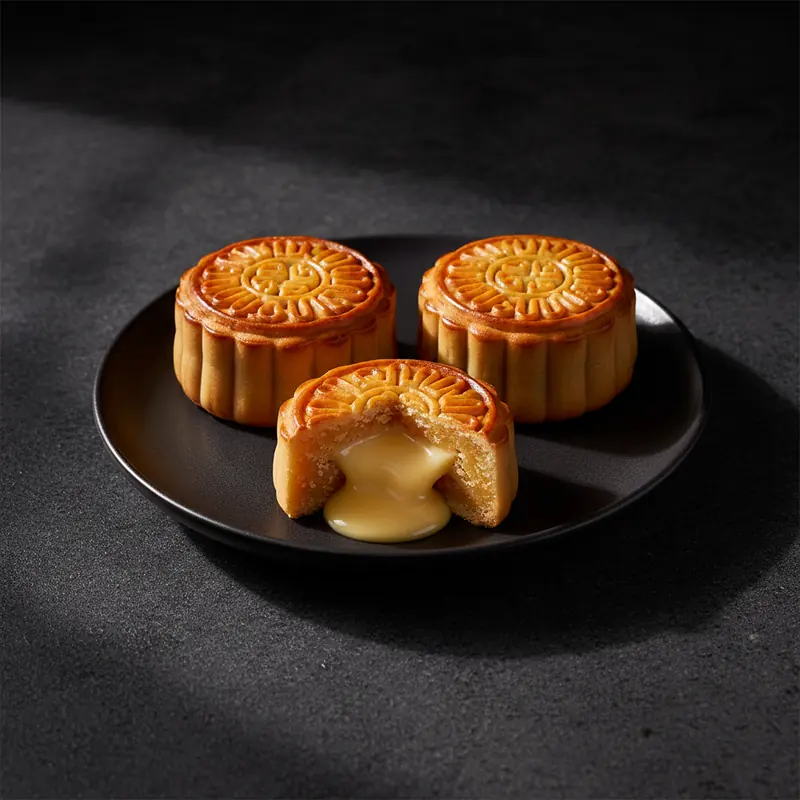
Compare golden mooncake surfaces, cut sections and flowing filling presentation to explore lava mooncake styles, with specific flavor choices discussed separately for the intended order.
Snow Skin Mooncake
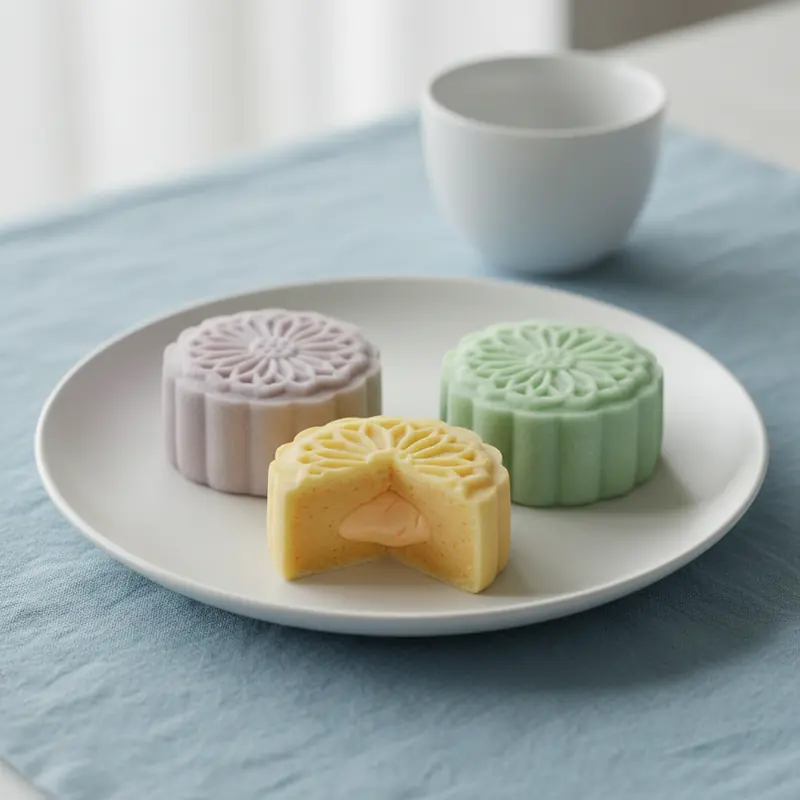
Explore soft-skinned mooncake colors, molded surface patterns and filling presentation to compare snow skin styles, focusing on texture and visual variety rather than unconfirmed flavor availability.
Original AI-generated navigation references; designs and order details are subject to confirmation.
Useful options for your plans
Explore Corporate Mooncake to compare gift presentation ideas for colleagues or clients during Mid-Autumn.
View Mooncake Gift Box to compare mooncake assortments and presentation ideas for Mid-Autumn gifting.
Explore Lava Mooncake to compare golden crusts and flowing filling presentation.
View Snow Skin Mooncake to compare soft skins, molded patterns and filling presentation.