Hong Kong Catering Planning Guides
YumYum Catering: practical Hong Kong catering guides. Compare options, prepare the right measurements and booking details, and use focused checklists before requesting a quotation.
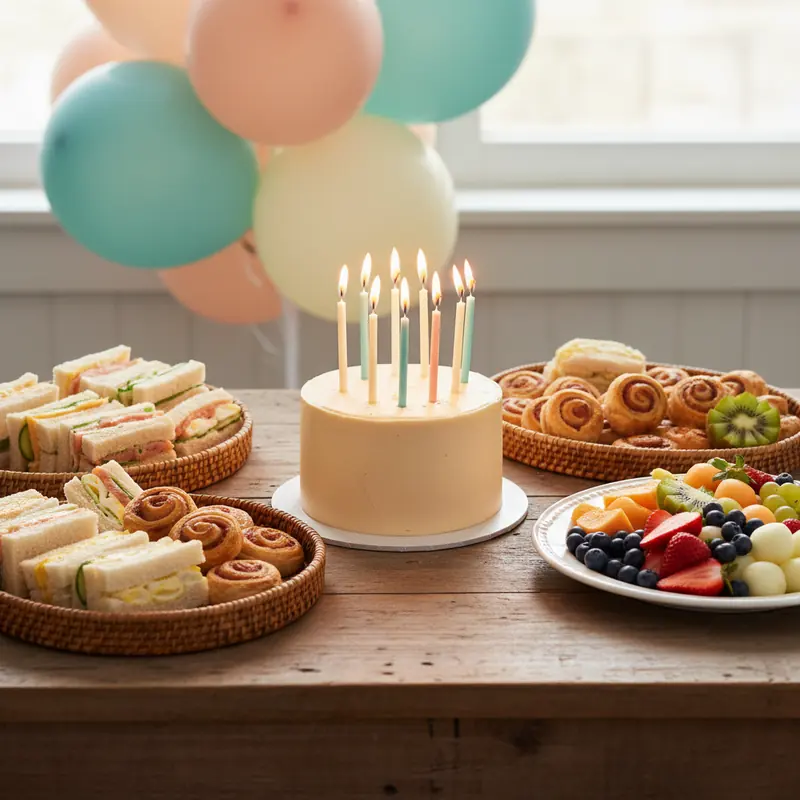
AI design illustration, not an order photograph: the birthday spread prompts a first decision about which food is a meal and which is for cake-time refreshments. Birthday guests stay for one hour or all afternoon: how many meal portions should you order?
Count each confirmed meal guest once, regardless of how long they stay, then reserve food for their actual eating window. Keep snack-only guests and unanswered RSVPs visible rather than converting them into fractional meals. This guide turns a birthday guest list into a practical catering brief, with a worked example, package checks and questions for late-arrival arrangements.
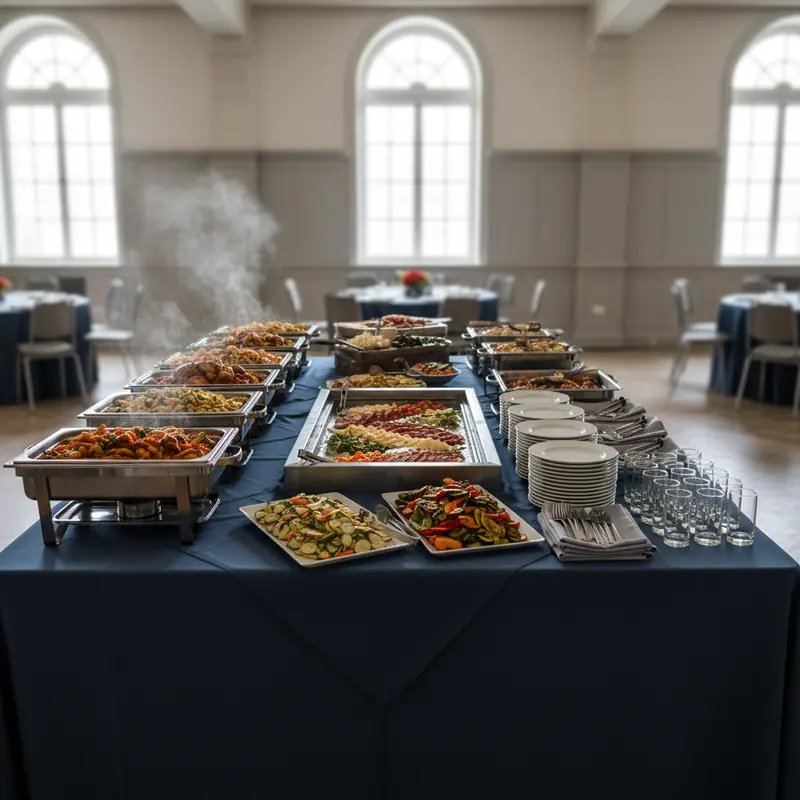
AI design illustration: use the existing food-station concept as a starting point for reviewing a larger guest list, not as proof of portions or included equipment. From 45 to 70 Guests: What to Change in Your Catering Plan
When an event grows from 45 to 70 guests, revise more than the food order: recheck the venue layout, arrival pattern, tableware, drinks, staff duties and delivery access. Start by confirming what the new headcount means, then compare changes to the existing package. Record each original arrangement, its replacement, the person confirming it and any effect on the quotation or timetable.
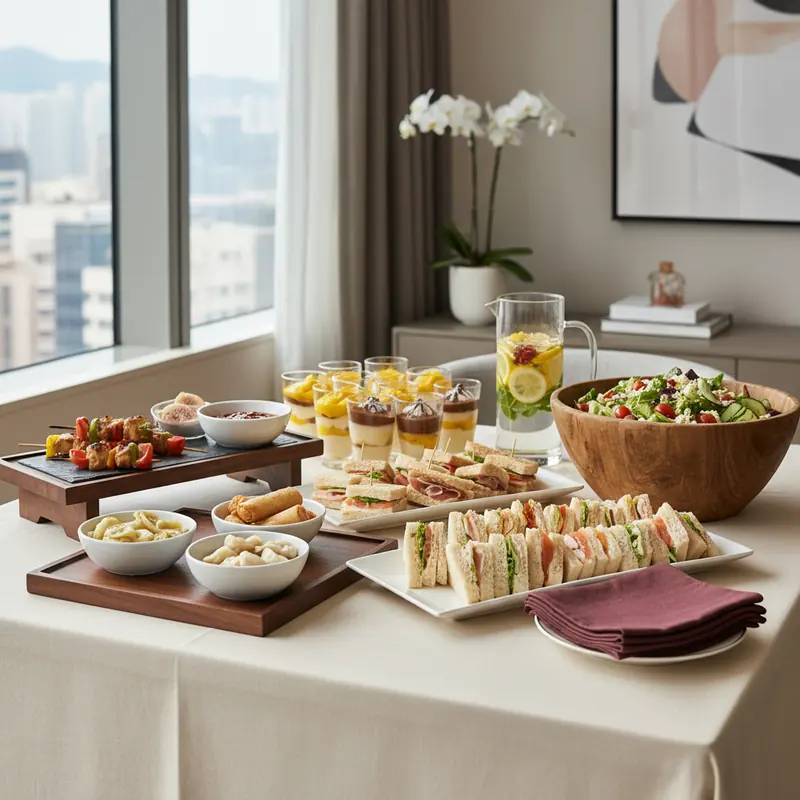
AI-generated design reference illustrating different food formats to discuss before changing a minimum-spend quotation; not an actual order photograph. Below the Catering Minimum Spend: Add Food or Upgrade the Service?
Add food when the menu has a genuine gap. Consider extra service when useful duties are uncovered, but only count it towards the minimum if the supplier confirms that it qualifies. First identify the eligible subtotal, then request food-adjustment and service-upgrade quotations on the same event brief. Compare the remaining shortfall, separate charges and total payment before deciding.
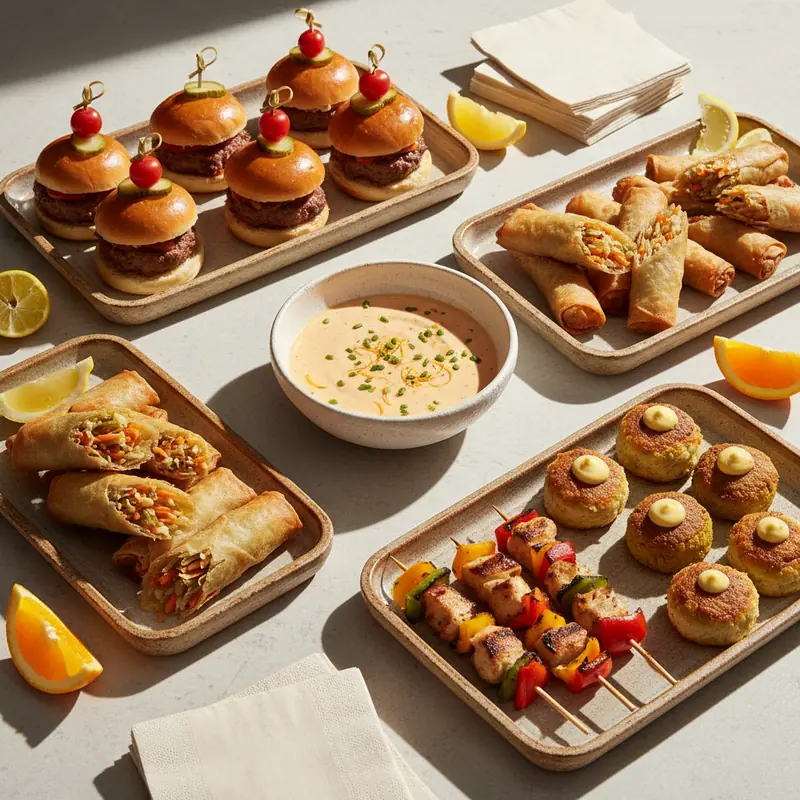
AI-generated design illustration of handheld formats to examine for size and ease of eating; not an actual order or a dinner-portion guarantee. How to Plan a Knife-Free Dinner Menu for a Standing Reception
A standing reception can serve dinner without a full dining-table layout, but every dish must work with the utensils and surfaces available. Build the meal around substantial food, check portions with the supplier and provide places for drinks and seated eating. This guide helps you distinguish genuinely handheld food from bowls that still occupy both hands.
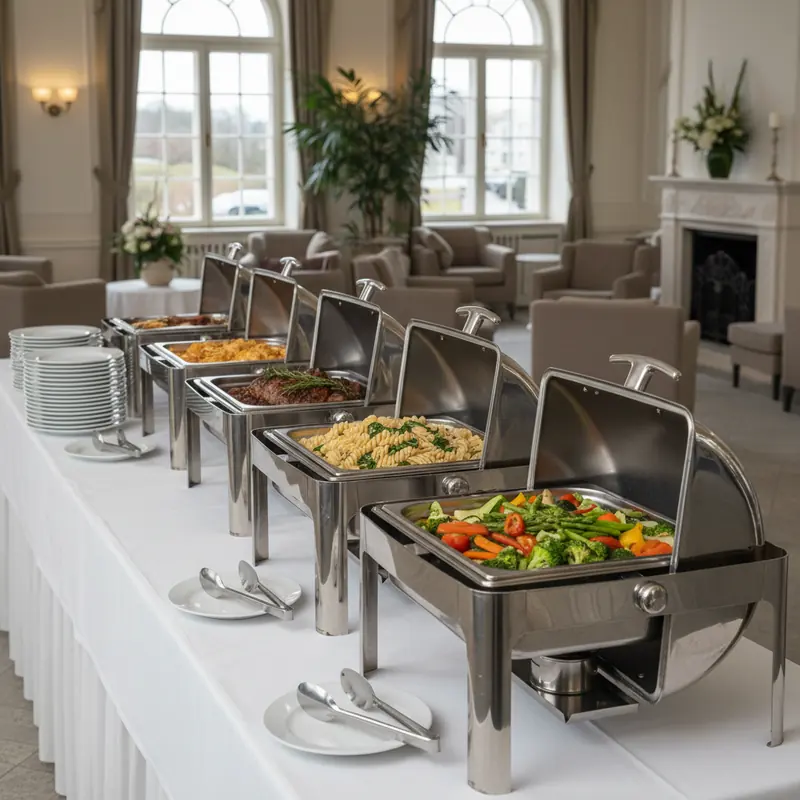
AI design illustration of buffet equipment; use it to consider the plate start and serving tools, not as evidence of an actual reception setup. Two Buffet Stations, One Menu: How to Stop Guests Queueing Twice at Your Reception
Treat identical buffet stations as alternative places to collect the same meal, and say so before guests choose a queue. First confirm every dish at both stations, then match the entrance signs to that allocation. Give someone responsibility for updating the message when availability changes. This guide explains the practical checks without assuming that two stations require twice the food or eliminate all waiting.
AI design illustration: separate hot-food positions provide a useful starting point for planning a shared serving line; actual equipment must be confirmed. Can Chinese, Western, Korean and Thai Mains Share One Buffet Setup?
Yes, Chinese, Western, Korean and Thai mains can potentially share the same type of warming equipment and one serving line, but each dish still needs its own suitable pan and utensil. Choose by texture, portioning and service requirements rather than cuisine labels. Confirm the actual dishes, compatible equipment, venue restrictions and replacement-pan arrangements before committing to a mixed menu.
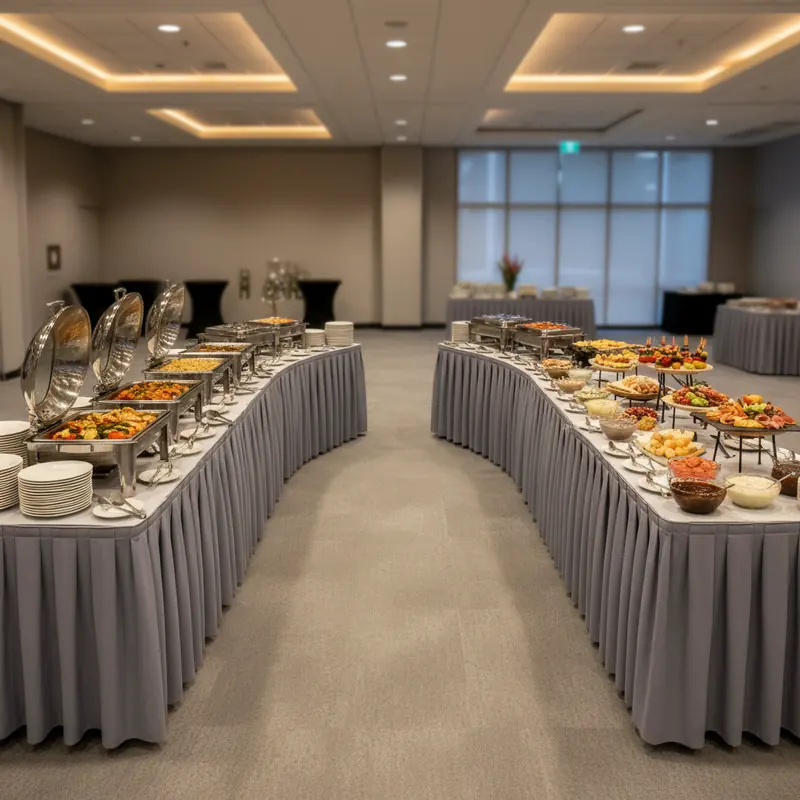
AI design illustration of separate serving areas: opening two menus together still requires a distinct arrangement for each. This is not a photograph of an actual order. Dim sum and sushi at a reception: one buffet or separate serving rounds?
Dim sum and sushi can share a reception service window when each has suitable, separate holding and display arrangements, with someone responsible for replenishment. Separate rounds may suit speeches or limited table space, but the waiting food still needs an agreed storage plan. Compare the two formats through delivery, equipment, reserve storage and staff duties before confirming either menu with YumYum Catering.
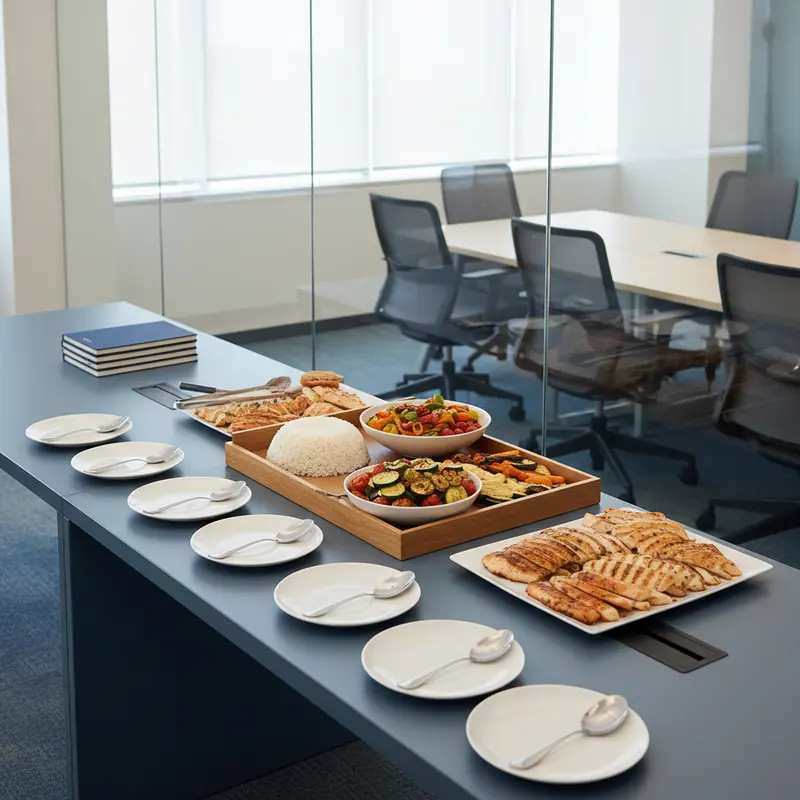
AI design illustration: an office lunch setting for planning how dietary requests will be collected and checked; not a photograph of an actual order. Office Lunch Dietary Request Forms: What to Ask for Halal, Vegan and Gluten-Free Meals
Use a shared set of lunch-order fields, allow colleagues to select every applicable dietary requirement, and open separate follow-up questions for vegetarian or vegan, halal and gluten-free requests. Then match each person to a specific meal and a written supplier response. Count diners, not checkboxes, keep sensitive details private, and resolve unanswered requirements before placing the affected order.
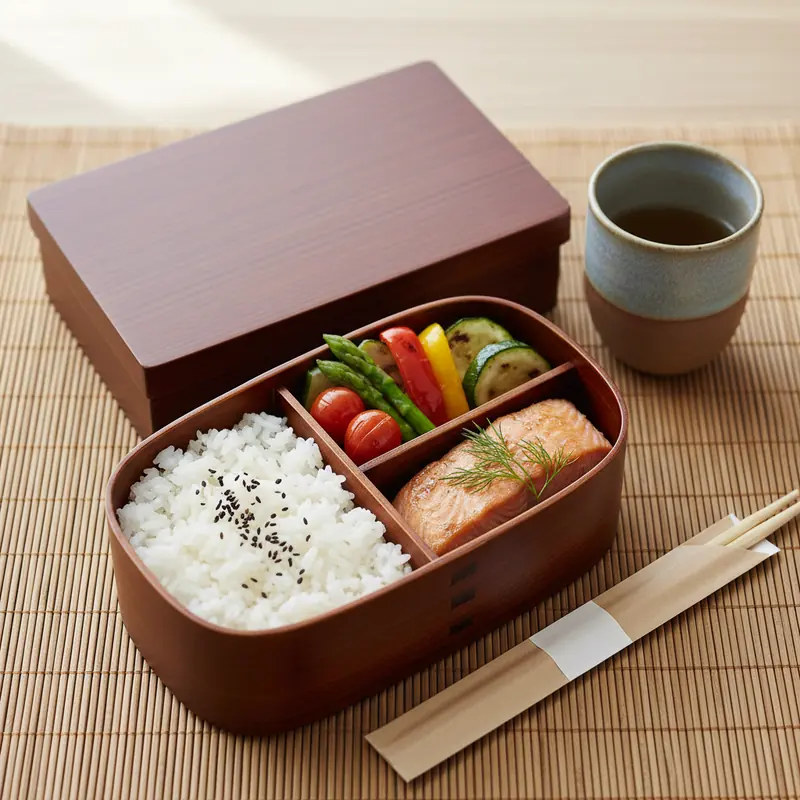
AI design illustration: an individual meal provides a useful context for checking exactly which approved components would change; it is not a confirmed menu or an order photograph. Adding a Guest with Dietary Requirements After Catering Approval: What to Put in the Change Request
Send a change request that identifies the approved order, states whether the guest is additional or replacing an existing meal, and records the exact dietary requirement. Ask the caterer to confirm the whole meal, handling limits, revised quantities, charges and delivery window. Obtain any necessary budget approval and a replacement written confirmation before telling the guest that their meal is arranged.
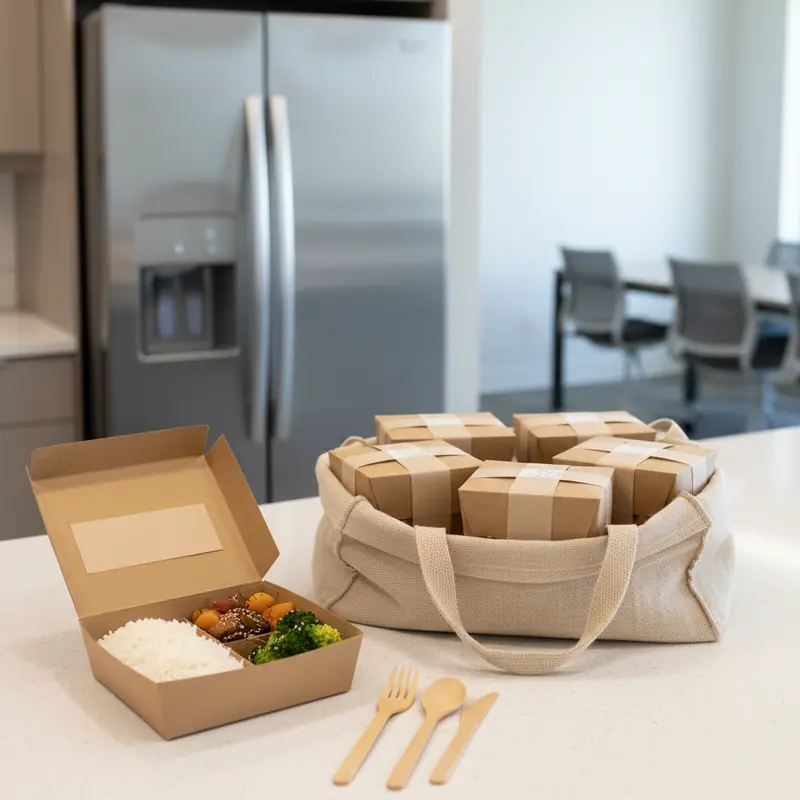
Design illustration, not an order photograph: a pantry-counter lunch arrangement introduces the distinction between receiving food and serving it in the meeting. Lunch Delivery During a Client Presentation: How to Arrange a Quiet Office Handover
Arrange lunch through a colleague outside the presentation, at a building-approved handover point, and move it into the meeting only when the host signals a break. Separate arrival from serving, confirm who handles setup and where food can wait, and agree a backup contact. This guide explains how to make those arrangements without assuming silent delivery, unrestricted access or unlimited holding time.
AI design illustration: an individually packed meal provides context for recording a person's selected lunch, not evidence of a fulfilled order. How to Record Absences on a Weekly Office Lunch Order Sheet
Record each employee and lunch date separately, with distinct fields for attendance, meal need and caterer confirmation. Save the submitted order before logging later absences, and do not reduce confirmed quantities until the caterer agrees. This guide explains the fields, reply rules and daily handovers that help office administrators reconcile a changing weekly lunch list with the final bill.
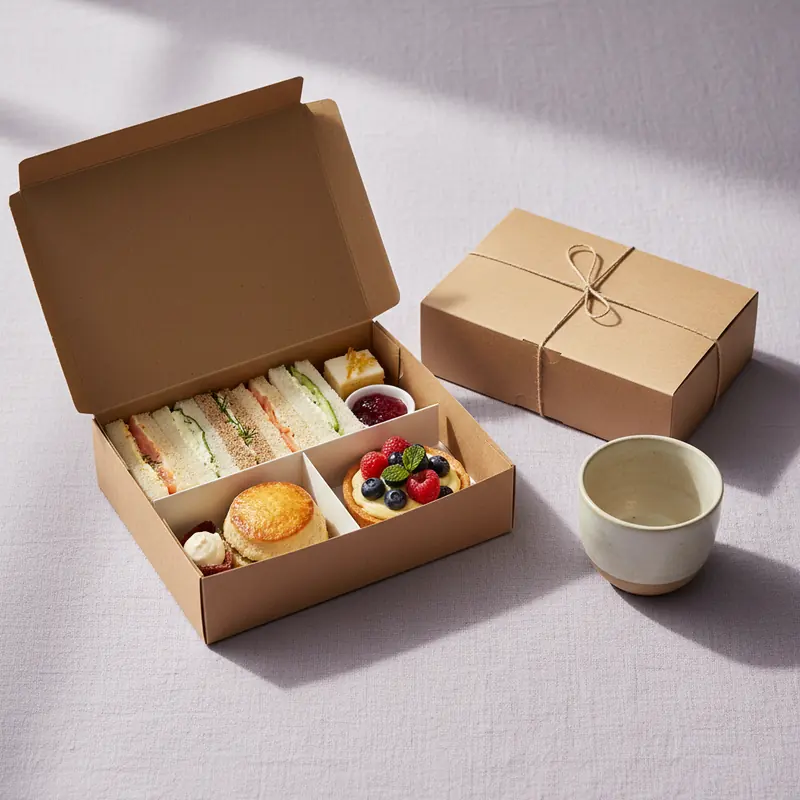
Design illustration, not an order photograph: individual savoury and sweet food remains a separate decision when the venue supplies coffee. The venue provides coffee: what should you remove from an afternoon tea order?
Remove only the coffee, equipment or cups that both suppliers confirm are duplicated and that the catering package allows you to omit. Keep suitable savoury and sweet food, check whether tea and water are covered, and assign replenishment and clearing duties. A venue coffee service does not automatically replace every drink, utensil or member of the catering team, nor does removing an item guarantee a lower price.
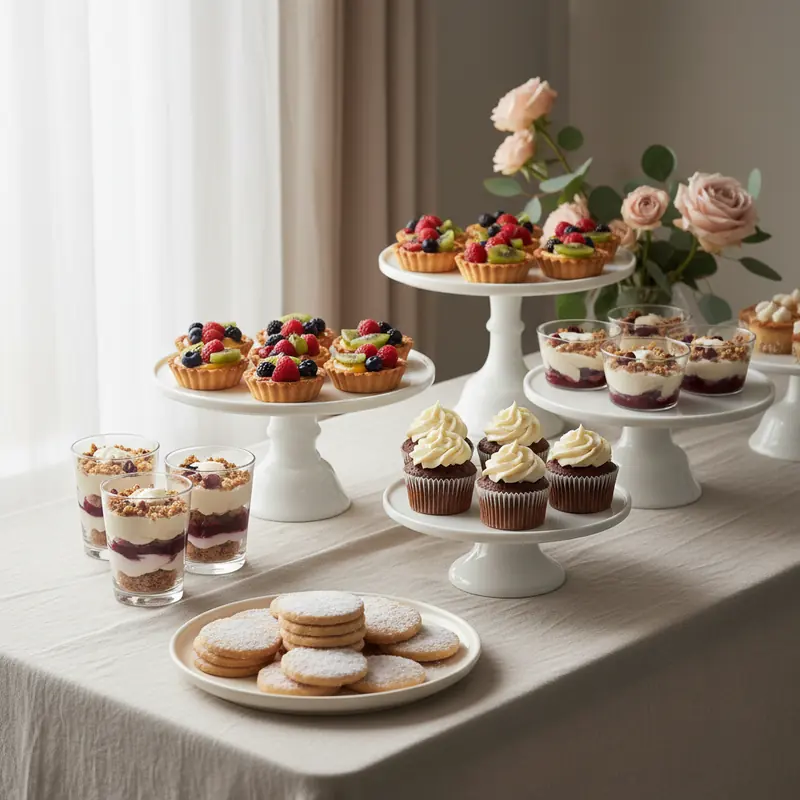
Design illustration: a raised dessert display helps frame the presentation to discuss for both serving windows; it is not a photograph of a completed order. Late-Arriving Dessert Guests: How to Request a Quote for Two Serving Windows
Ask for two defined dessert-serving periods, not an unspecified all-day table. Give the caterer each guest wave, reserved quantities, gap responsibilities and final clearing time, then compare continuous service, onsite standby and a return visit on the same menu and portions. Separate drinks and staffing requirements, and confirm feasibility and charges with YumYum Catering before choosing an arrangement.
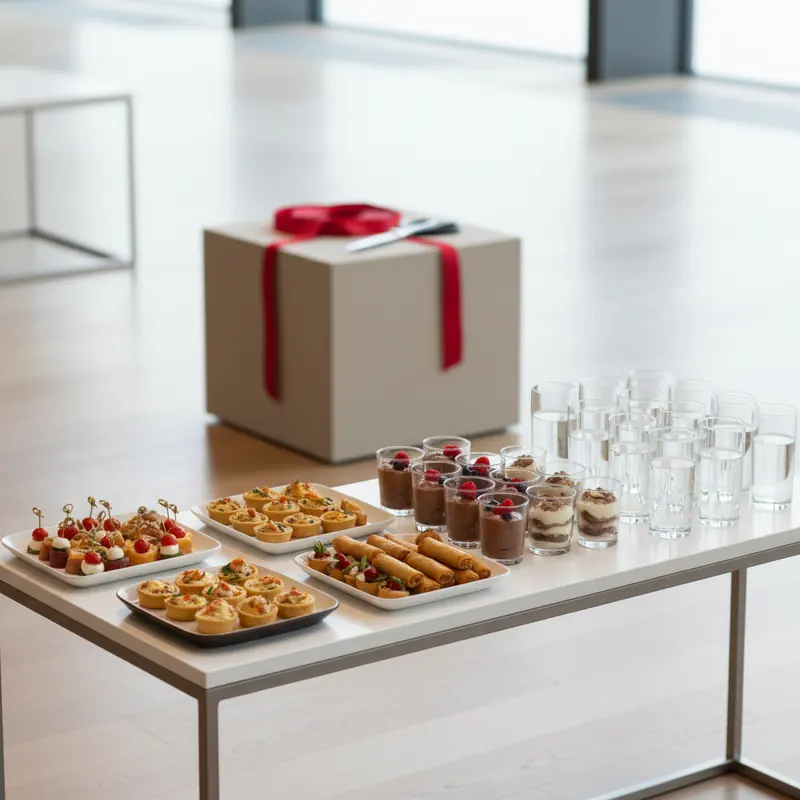
AI-generated design illustration of a ribbon-cutting reception; ceremony presentation and guest food still need separate specifications. How to Order a Ceremony Roast Pig and Guest Dinner Separately for a Grand Opening
Prepare two connected briefs: one for the ceremony roast pig and another for the guests staying for dinner. Give each its own food requirements, arrival window, receiving contact and quoted scope. The same supplier may handle both, but confirm cutting, serving and any later use of the roast pig explicitly rather than assuming the ceremony order provides a complete meal.
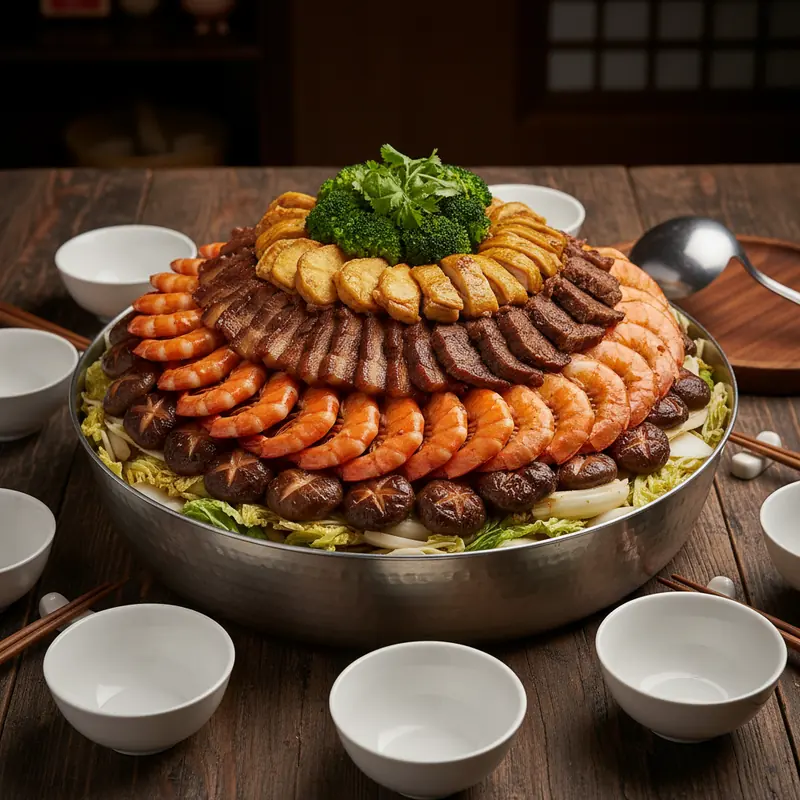
AI design illustration of the basin-meal side of the plan; confirm the actual contents and suggested dining servings for the selected order. Poon Choi and Platters: How to Split Portions for Seated Guests and Drop-In Visitors
Count confirmed poon choi diners separately from visitors who will eat only from platters, then record which seated guests will also take snacks. Choose basins using their stated dining servings, and assess each platter by its actual contents and meal role. A two-station worksheet helps you discuss quantities and replenishment without counting everyone as two full meals.
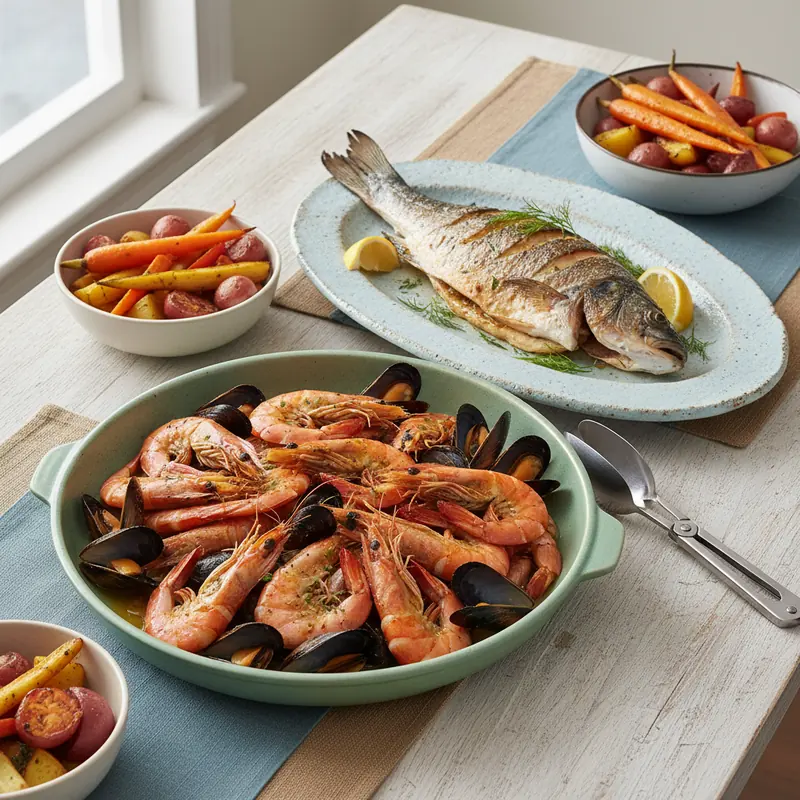
Design illustration of several seafood dishes; confirm each dish’s intended serving condition before placing it in the running order. Serving seafood at an event: which timing checks belong in your running order?
Confirm the food’s required holding conditions before fixing its place in the event programme. Record arrival, completed handover, storage, release from temperature control, guest service and tray withdrawal separately. Hot cooked seafood, chilled cooked dishes, sushi and sashimi need product-specific instructions. This guide helps you agree those instructions with the caterer and venue, including what changes if speeches or photographs run late.
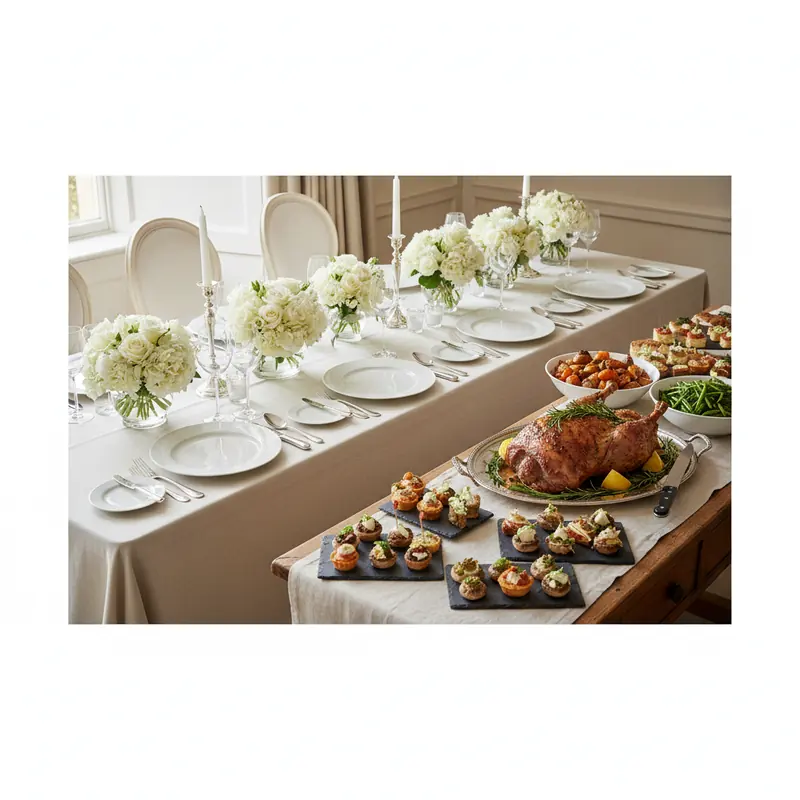
AI design illustration, not an actual wedding photograph: include both dining tables and the food sideboard when planning the plate-clearing route. Wedding venue provides plates but no clearing staff: who should you hire?
Hire for the missing work, not for another set of plates. If your venue's tableware is sufficient, request staff with clearly defined plate-clearing duties. Separately confirm washing, return to storage and end-of-night cleanup. This guide helps you document those boundaries, identify genuine tableware gaps and compare quotes against the same wedding schedule.
AI design illustration of a dining table beside a reception food sideboard, showing the distinction between a planned meal and welcome food rather than an actual wedding order. Wedding Speeches Delay Lunch: Can Canapés Bridge the Gap or Replace the Meal?
If lunch is still planned, treat canapés as a bridge, not an automatic replacement. Confirm when the meal can actually start, which guests have received food and whether further bites can be served. Then agree a revised speech and service order. Cancelling lunch needs a different menu, service brief and clear notice to guests.
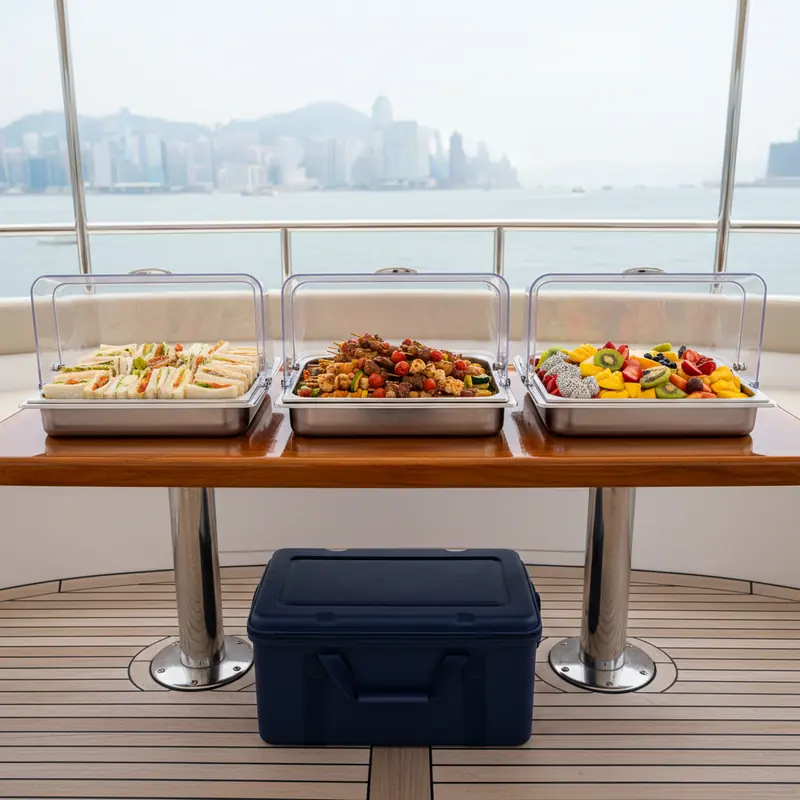
AI design illustration of food trays on a boat deck, introducing the need to check the real serving space; not a photograph of an actual order. No dining seats on your junk boat? Choose between individual snack boxes and sharing platters
Individual boxes suit guests who have somewhere to support an open container; they are not automatically one-handed meals. If that support is missing, ask about individually wrapped handheld items instead. Sharing platters need a fixed distribution point. Before ordering, check the boat layout, opening space, actual package counts, chilled storage and pier handover, then choose the format that matches how guests will eat.
AI design illustration of a boat-deck food arrangement; a changed sailing time still needs a separately confirmed catering handover. Junk boat departure delayed? What to reconfirm before catering dispatch
Before changing a catering handover, confirm the boat's revised plan and ask the caterer whether your food is being prepared, packed or already travelling. Recheck the pier, accepted delivery window, receiver, meal time and guest count against the original order. A later sailing does not automatically change the food delivery; get the supplier's acceptance of the revised arrangement.
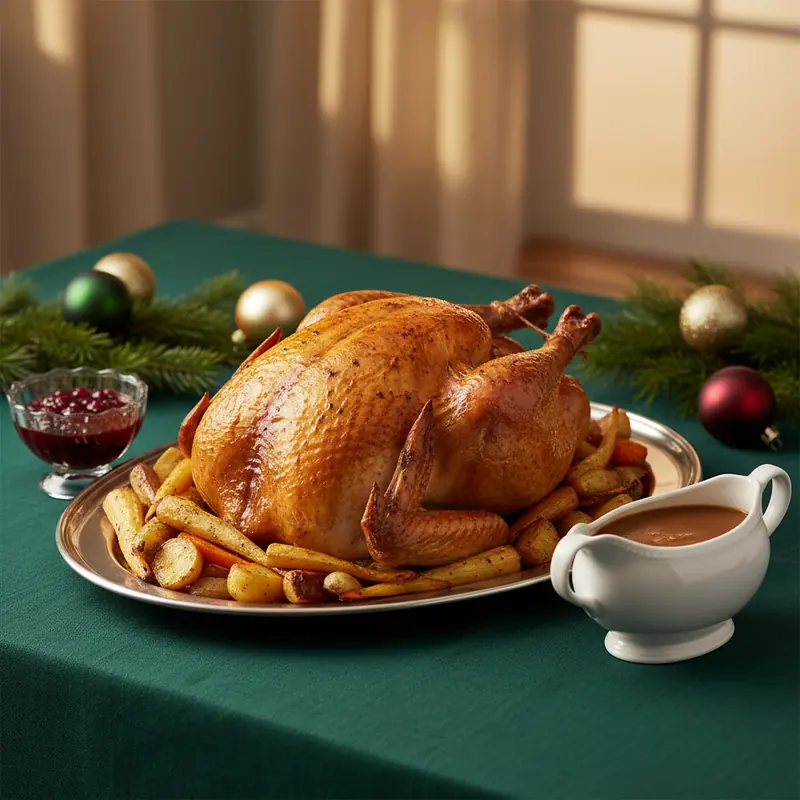
Design illustration, not an order photograph: a whole-bird presentation makes it important to confirm what still needs carving after delivery. Who carves a delivered Christmas turkey? Equipment and staffing to confirm before your office party
A delivered turkey is carved by whoever your order explicitly assigns: the kitchen before dispatch, a willing host, or a separately confirmed on-site carver. Delivery alone does not settle that responsibility. Before your office party, confirm the exact portions arriving, the working surface and tools, and who transfers, replenishes and clears the food. Put those answers into one written handover.
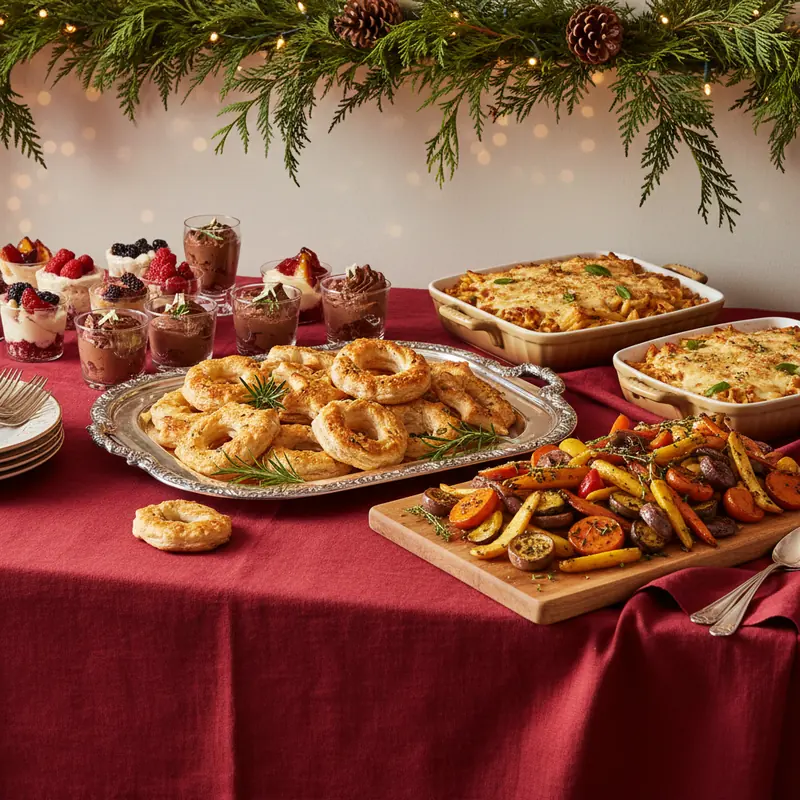
AI design illustration of a festive shared spread; use the buffet list to distinguish on-site food from any separately promised takeaway packs. Office Christmas party with takeaway meals: how to count buffet guests and gift packs separately
Count people eating at the buffet in one column and promised takeaway packs in another. A colleague receiving both belongs in both columns, but remains one attendee. Define whether each pack is a meal or a snack, confirm that its food is separately allocated, and receive it against its own list. Unpromised buffet leftovers should never be the assumed source of those packs.
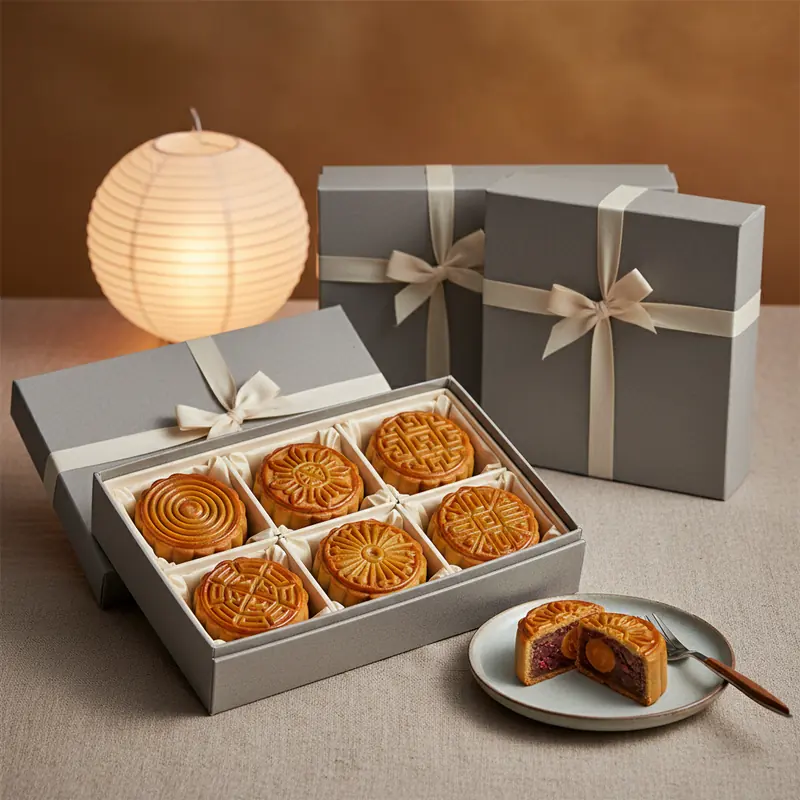
AI design illustration: distinguish takeaway gift boxes from mooncakes separately allocated for sharing. How many mooncake gift boxes and lunch servings should you order for a staff Mid-Autumn gathering?
Order gift boxes from approved recipient allocations, lunch from confirmed diners, and drinks from the people who need them. These totals may differ even at the same staff gathering. Keep takeaway gifts separate from mooncakes opened for sharing, then reconcile each order line by unit, delivery point and confirmation status before asking the supplier to finalise quantities.
AI design illustration of mooncake gift packaging, used here to distinguish gift-box and packing details from the separate lunch shipment; not an actual order photograph. Branch Mid-Autumn Gifts and Lunch: Keep Two Delivery Manifests Separate
Share one checked branch address record, but issue separate manifests for Mid-Autumn gifts and team lunch. Gift boxes, outer cartons and card versions need their own reconciliation; meals need a separate menu breakdown, receiving window and handover record. This guide explains how Central and Kwun Tong offices can coordinate both deliveries without treating one signed receipt as proof that everything arrived.
Design illustration, not an event photograph: a birthday spread introduces the need to separate cake arrangements from the food order. Birthday and grand opening catering in the same week: what needs a separate order brief?
Keep one supplier contact sheet, but prepare a separate brief for the birthday and the grand opening. Each needs its own guest count, menu quantities, delivery window, programme, receiver and quotation status. Coordinate birthday cake logistics separately, and record how opening speeches or ribbon-cutting affect service. When one event changes, identify that brief and obtain a revised confirmation without silently changing the other.
Explore related services and designs
Compare relevant options, view design references and find the information you need before making an enquiry.
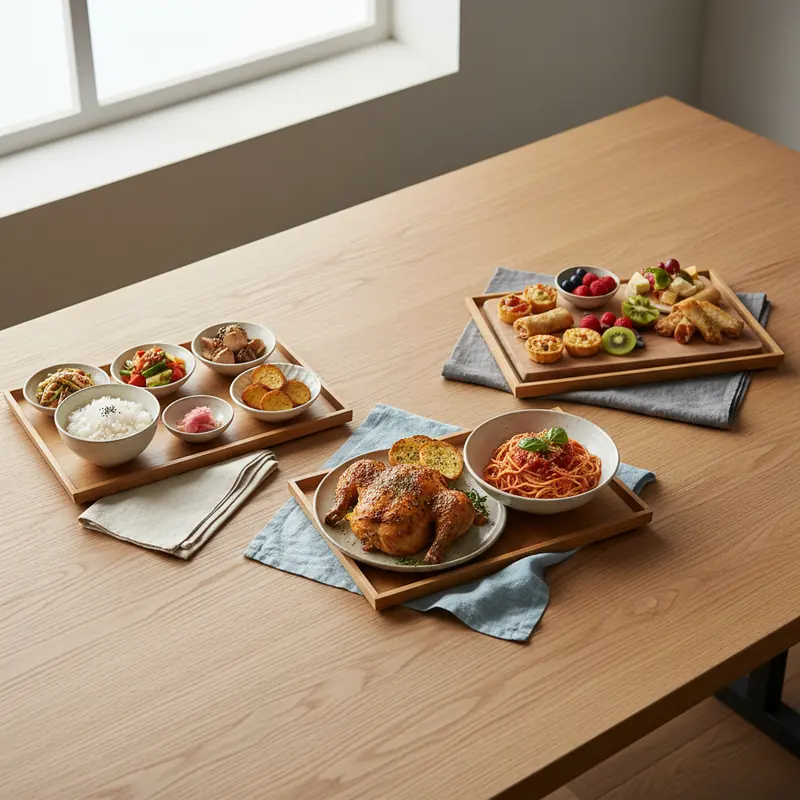
Catering Packages Comparison
Compare set menu combinations, serving formats and group suitability in one place, using the package overview to narrow your choices before exploring individual catering options.
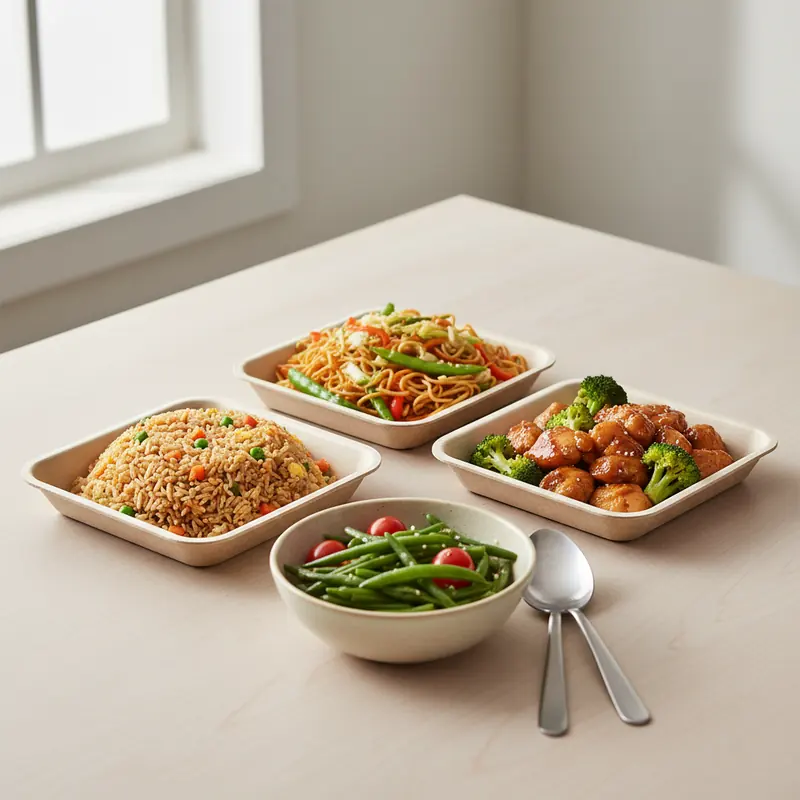
Budget Catering
Compare straightforward catering combinations, dish variety and serving formats with your budget in mind, using the page details to assess options rather than assuming discounts or fixed prices.
50 Person Catering Package
Compare menu formats for a larger event, exploring broader shared dish selections and serving layouts while checking the package information for stated portions, equipment and group suitability.
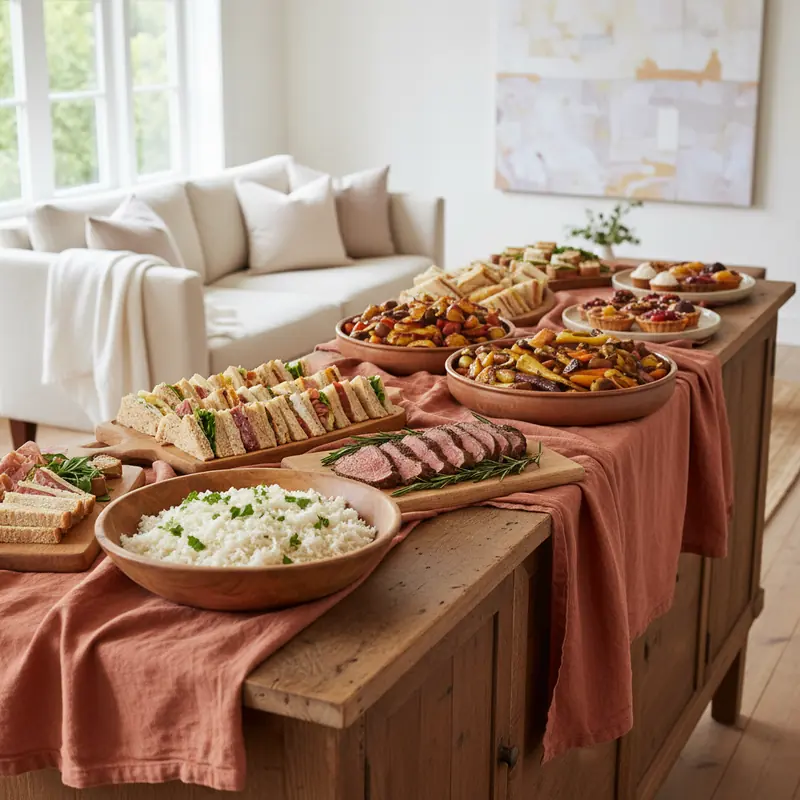
20 Person Catering Package
Explore medium gathering menu arrangements, comparing shared main dishes and snack additions while using the package details, not the image, to assess portions and group suitability.
100 Person Catering Package
Explore corporate event menu planning at a larger scale, comparing food station arrangements and shared dish formats while relying on package details for portions and event requirements.
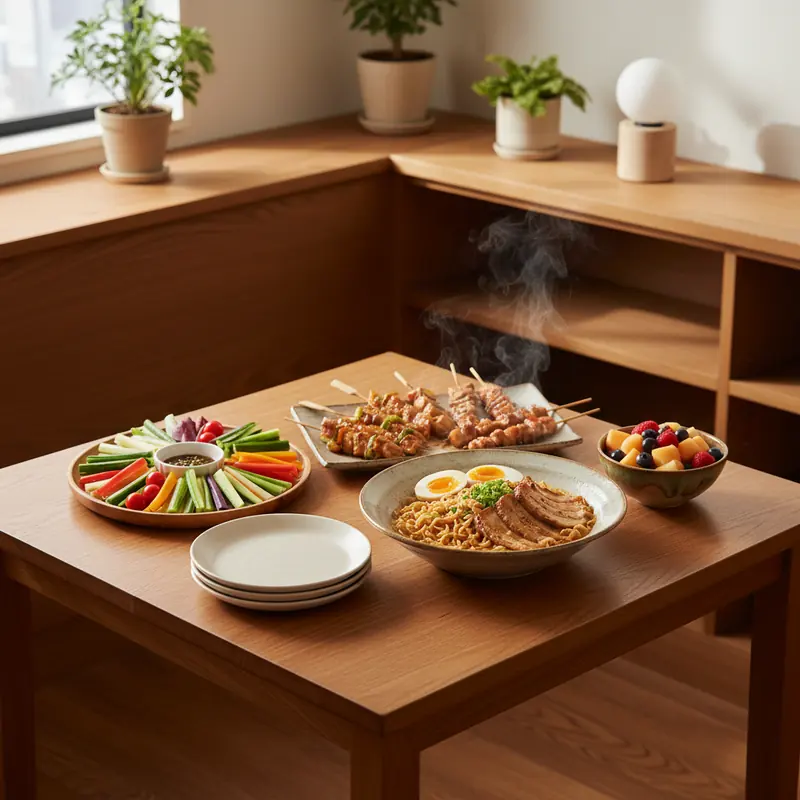
10 Person Catering Package
Compare small party menu combinations and compact sharing layouts, exploring the package page for group suitability while checking listed portions rather than relying on the illustration for quantities.
Original AI-generated navigation references; designs and order details are subject to confirmation.
Useful options for your plans
Use Catering Packages to compare set menu combinations and serving formats.
Compare broader menu selections and serving layouts for a larger event with 50 Person Catering Package.
Explore 20 Person Catering Package to compare shared dishes and snack additions for a medium gathering.
Compare compact menu combinations for a small gathering with 10 Person Catering Package.