YumYum Catering · Ordering guides
Lunch Delivery During a Client Presentation: How to Arrange a Quiet Office Handover
For this guide:Lunch Delivery During a Client Presentation: How to Arrange a Quiet Office Handover
Plan catering for your event
Considering Office Lunch Catering? Send the date, district and the points discussed in this guide to YumYum Catering to confirm suitable options and a quotation.
Book Catering NowWhatsAppThis opens a prepared WhatsApp enquiry. Availability, details and price must be confirmed before booking.
When a client presentation is still running, an arriving lunch creates a coordination problem rather than an immediate invitation to serve. Someone must receive it, someone must decide where it can wait, and someone must authorise entry into the meeting room. If all three decisions sit with the presenter, a delivery call can interrupt the discussion even when the driver follows the address correctly.
The practical starting point for office lunch delivery during a client presentation is to separate those responsibilities before confirming the order. Mark the protected presentation period on the agenda, appoint an available colleague outside the room, and ask the supplier to confirm a workable handover arrangement. Quiet is the objective, not a guarantee: necessary security checks, delivery conditions and the needs of the food still take priority.
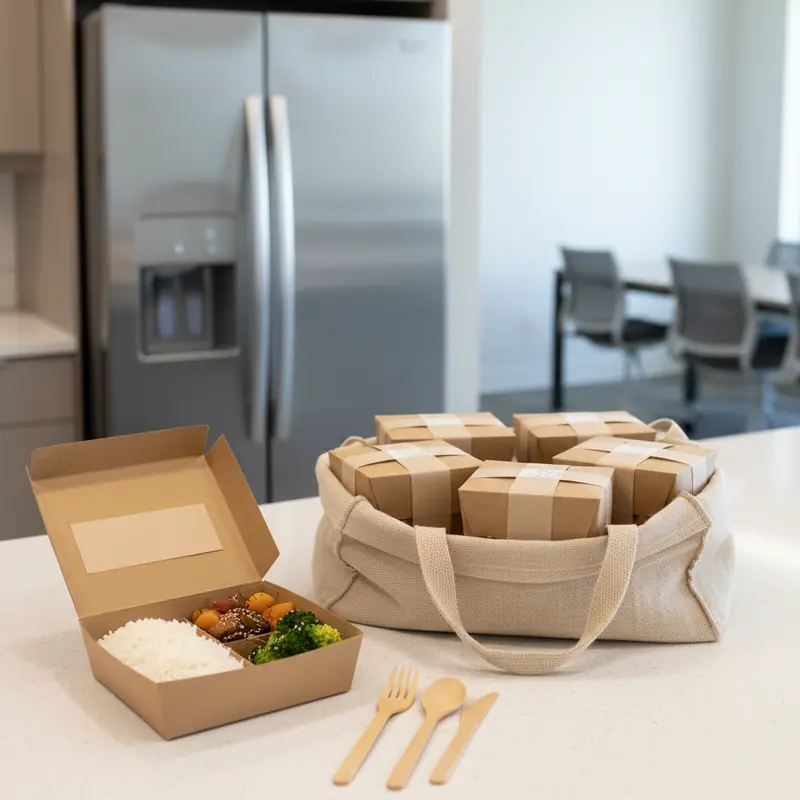
Plan the three stages of office lunch delivery during a client presentation
Write down three distinct events: the supplier's expected arrival window, the transfer of the order to your authorised receiver, and the host's permission to serve. Arrival does not mean the meeting has paused. Handover does not mean the food should enter the room. Keeping these events separate lets the receiver finish the delivery interaction while the presenter continues speaking, provided the venue and food-handling arrangements support the gap before lunch.
Share the relevant agenda boundaries, not just a requested lunchtime. Explain when the room must remain undisturbed and who can signal the next suitable break. PINX Catering's meeting guide recommends staging outside the room and moving food during a break rather than mid-session. Treat that as a planning principle, not a service commitment from your own supplier. Ask what arrival and serving arrangement can actually be agreed for your presentation.
Choose a lunch format that can be organised outside the room
Compare formats by the work required after handover. Individual boxes may allow an internal colleague to organise a complete meal for each attendee before the break, but bags, lids and cutlery still need handling. Shared trays can suit a lunch discussion, yet may require serving utensils, a cleared surface and a considered route to the table. Browse Office Lunch Catering with that distinction in mind, then ask whether the selected format can be prepared outside the presentation room.
Do not choose on the assumption that one format is silent. Instead, identify where the noisy or distracting work would happen: opening carriers, separating packaging, placing plates and moving trays. A format that needs substantial setup inside the room is a poor match for a presentation with no planned pause unless the host changes the serving plan. Agree the location and sequence before committing to a menu that the available space cannot support.
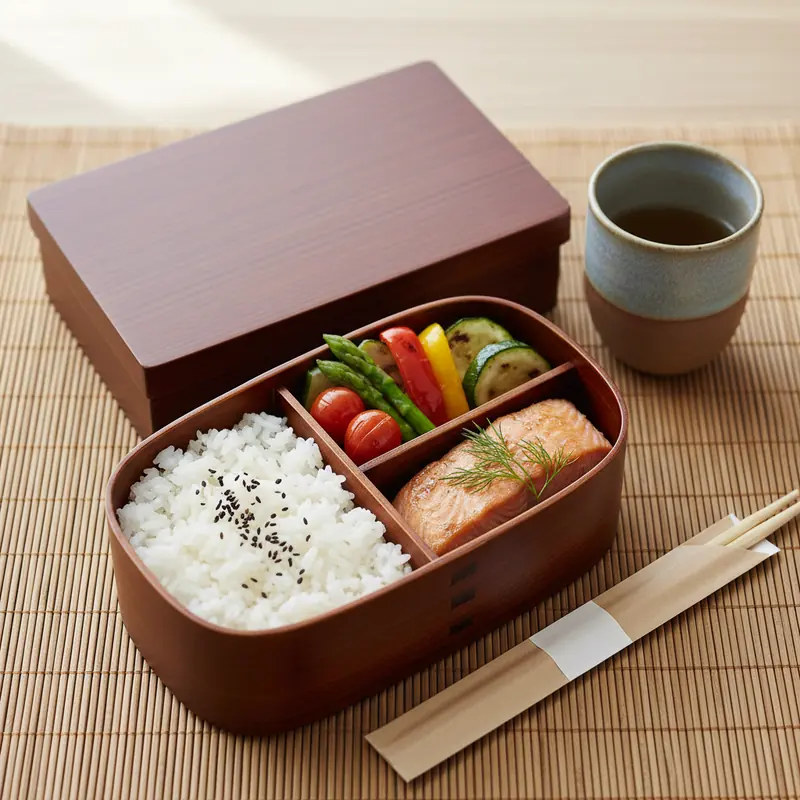
Confirm whether the order includes delivery, setup or service
A driver handing over closed containers is a different arrangement from a team preparing a serving area. Canapés Room's Hong Kong catering information distinguishes ready-to-serve delivery, delivery with setup and on-site crew, and notes the need to confirm practical matters such as lift access, power and space. Those distinctions are useful questions to put to your chosen supplier; they do not establish what another catering order includes.
Ask who will unpack, place serving utensils, arrange tableware and carry food from the receiving area to the meeting. If those tasks belong to internal colleagues, check that someone is available and that equipment is already in the approved preparation area. Do not assume the delivery charge includes staff waiting for the presentation to finish, setting up a buffet or returning later to collect equipment. Request the scope and any applicable charges in writing.
Name the person who takes over after handover
Record the point at which the supplier's agreed task ends and the internal lunch coordinator takes responsibility. That colleague needs the host's break signal and the confirmed food-handling instructions, not just the order number. If separate people receive and serve the lunch, arrange a direct handoff between them so that neither assumes the other is watching for a message.
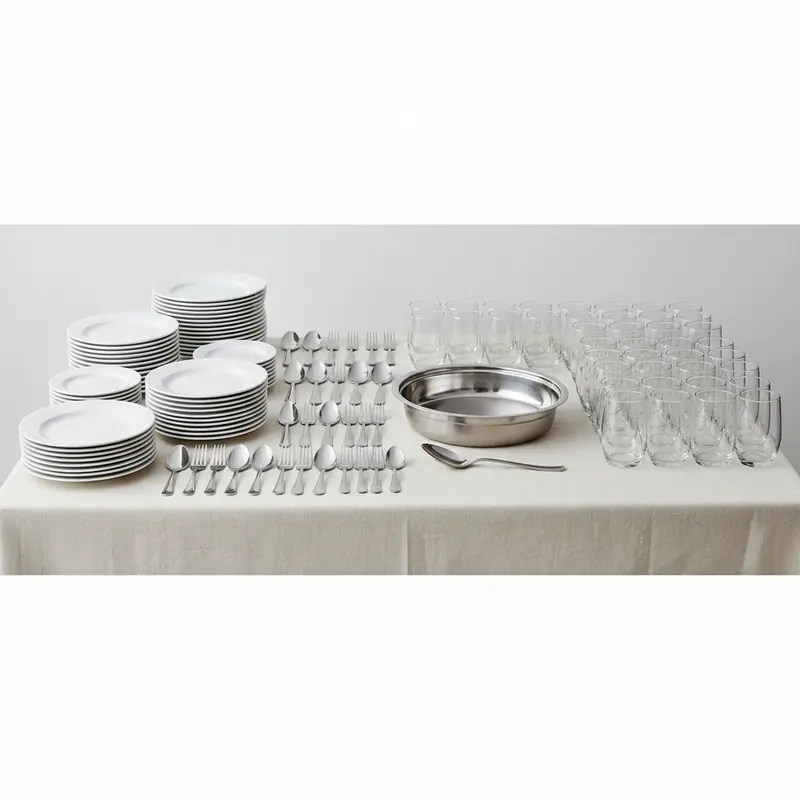
Put an available colleague in charge outside the presentation
The main receiver should be able to leave their desk or waiting area, answer the agreed contact channel and reach the authorised handover point. Avoid appointing the presenter or making the meeting host the only contact. Waterfront Gourmet's corporate lunch checklist recommends an internal person other than the meeting organiser to meet the driver and direct setup. For a live client presentation, availability outside the room is the key practical test.
Name a backup who has the same instructions and is genuinely available during the expected arrival window. Reception can fill that role only if the team agrees and has authority to accept the order. A colleague sitting behind a reception desk is not automatically responsible for food, and an unanswered switchboard is not a backup plan. Confirm who will monitor messages and how responsibility transfers if the main receiver becomes occupied.
Confirm the building route and authorised handover point
Ask property management or the responsible workplace contact to confirm the building's full name, permitted entrance, destination floor or unit, visitor registration procedure and any lift restrictions. Identify the exact place where your colleague is allowed to receive food. If delivery personnel cannot go upstairs, the plan must name a permitted ground-level meeting point and an internal person who can collect there. Share only access information you are authorised to provide; do not circulate door codes merely because an instruction field exists.
Put the confirmed route beside the receiver and backup details, then use your Office Lunch Delivery enquiry to ask the supplier to confirm the arrival window and handover method. Make the protected presentation period explicit. If the proposed route or window cannot be accommodated, resolve that before treating the order as arranged. Neither a complete address nor a quiet-delivery request establishes permission to enter a building or reach a meeting-room floor.
Turn the arrival notification into a usable instruction
Ask which contact method the supplier can use on the day rather than assuming the driver can follow a particular messaging request. Where accepted, direct the arrival message or call to the colleague outside the room. The instruction should identify the receiver and meeting point, with a backup route if there is no response. A quiet handover for office lunch delivery depends more on a reachable person and a clear destination than on adding the word 'quiet' to an order note.
If the supplier accepts the request, specify no direct knocking on the presentation-room door and no unpacking in the presentation area. Give a positive alternative: contact the receiver, complete the agreed handover and let the internal coordinator wait for the host's signal. Do not prohibit essential calls from building security or require a driver to ignore an access problem. The plan should prevent avoidable interruptions without obstructing legitimate checks or leaving the delivery team without a way to get help.
Use the district to route an enquiry, not to assume access rules
For a presentation in a Central office, a Central Corporate Catering enquiry should include the actual building's confirmed entrance, registration requirement and permitted receiving point. Explain whether the receiver can meet downstairs during the presentation and whether reception has agreed to assist. The district identifies the location of the enquiry; it does not establish that every office tower permits the same route or that delivery personnel can reach your floor.
For an office or industrial-building venue in Kwun Tong, ask property management which delivery entrance and lift, if any, may be used, then include that answer in your Kwun Tong Corporate Catering enquiry. If a particular lift requires permission or an escort, clarify who arranges it. Do not describe a goods lift or upstairs handover as available until the people responsible for that specific property have confirmed the arrangement.
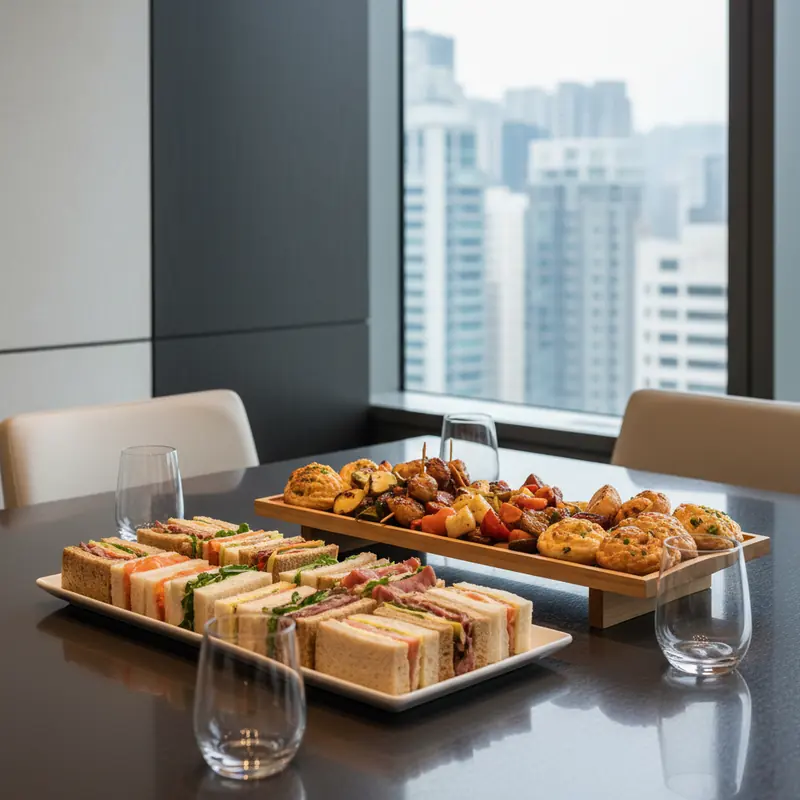
Prepare an approved place for food to wait
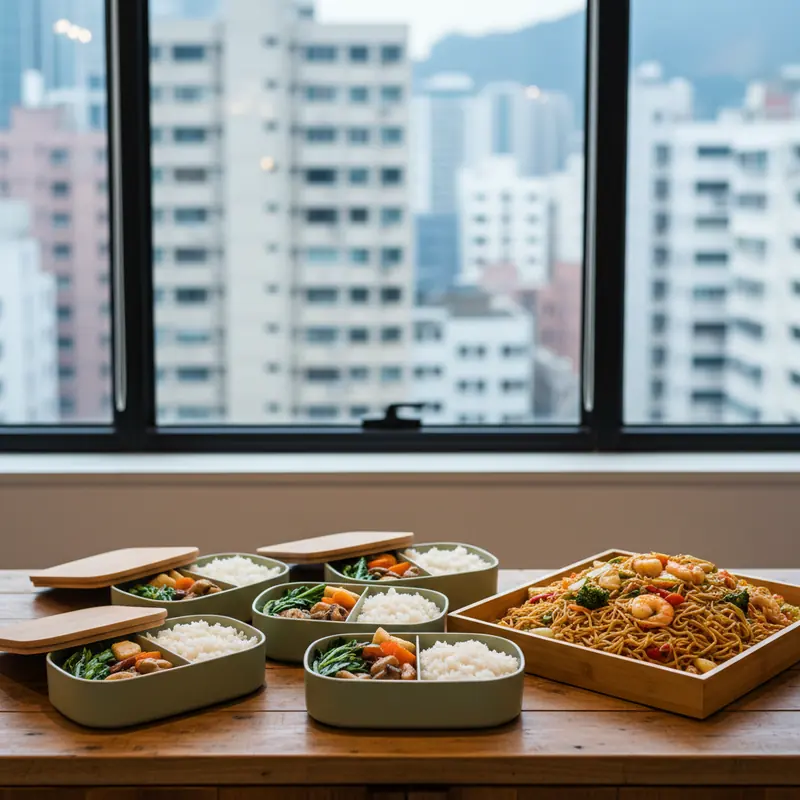
Before planning an early handover, ask the supplier what holding conditions the selected food needs and ask the venue whether it can provide them. The answer may affect the arrival window, menu format or intended serving break. A pantry counter, spare room or reception side table is not automatically suitable simply because it is outside the meeting. Confirm permission to use the location, the available space and any necessary equipment rather than treating an empty surface as approval.
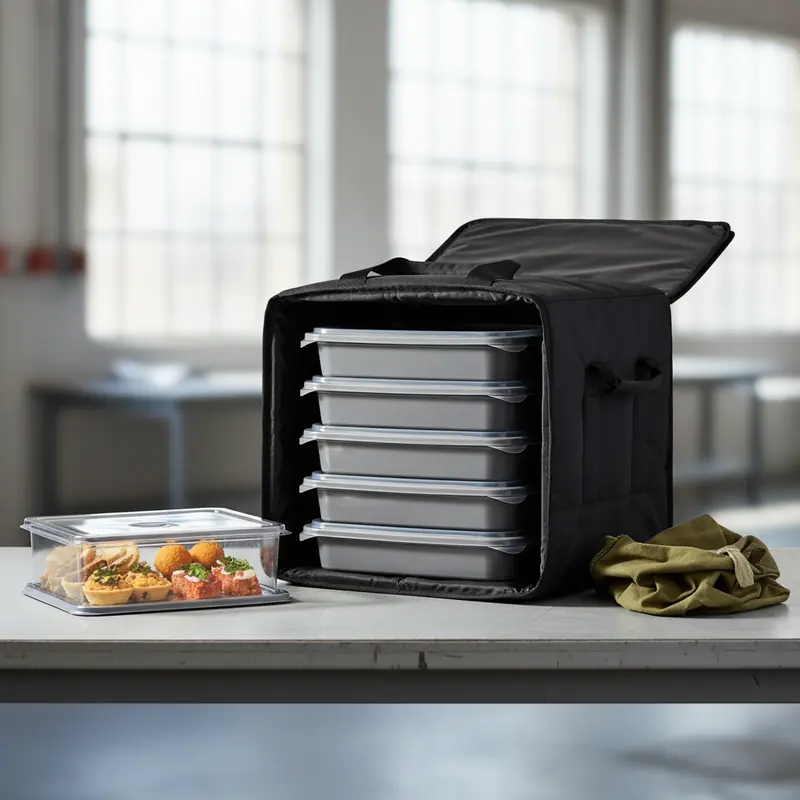
Keep the transfer route clear and do not plan to leave containers in a public corridor, fire escape route or unattended lobby. The receiver should know where the food is, who controls access to it and who will move it when the break begins. There is no universal waiting period in this guide: follow the supplier's confirmed handling requirements and the venue's actual capabilities. If those conditions cannot be met, change the plan rather than extending the wait by guesswork.
If upstairs access is refused, keep the handover downstairs
Use the previously approved ground-level collection point and send the designated colleague there. The receiver should tell the internal coordinator that food has arrived but has not yet reached the agreed holding area. That distinction matters when the host is about to call a break: a downstairs handover still leaves internal transport to complete. Do not tell attendees that lunch is ready in the room merely because the driver has reached the building.
If the planned downstairs point is also unavailable, contact the responsible building representative and supplier to establish an authorised alternative. Do not direct the driver through a restricted door or assume another tenant's reception will accept the order. Equally, do not assume floor delivery or additional carrying assistance is included without confirmation. The objective is a controlled transfer to a named person, not access at any cost. Any change that affects the supplier's scope should be agreed, not imposed at arrival.
If the main receiver misses the message, use the agreed backup
Give the supplier a simple escalation route in advance: contact the main receiver, then the named backup according to the agreed procedure. If reception has expressly agreed to receive the order, state when it may be used and how the internal coordinator will learn that handover is complete. Avoid specifying an arbitrary unanswered-call waiting period unless the supplier accepts it. A plan that depends on repeated calls to someone speaking in the presentation has not solved the interruption problem.
If nobody authorised responds, the delivery has not become permission to leave food unattended or enter the meeting. Ask the supplier to contact the agreed order contact for further instructions under the confirmed delivery terms. Internally, make sure the backup can see enough information to take over without asking the presenter where everything belongs. The essential details are the receiving point, holding location, host's break signal and any confirmed handling requirements, not a forwarded conversation with the decisions buried inside it.
If the presentation overruns, reassess the food plan as well as the agenda
Let the outside coordinator obtain the next break decision through the host's agreed contact route. Avoid sending several colleagues to the door to ask the same question. The coordinator should report the relevant position clearly: delivery not yet received, received and held under confirmed conditions, or unable to remain in the planned location. This gives the host a practical choice about the agenda without implying that every delivered lunch can simply wait until the discussion finishes.
Check any revised serving time against the handling arrangement already confirmed with the supplier. If the venue cannot meet the required conditions, contact the supplier and host to discuss an appropriate adjustment instead of promising that the food will remain suitable indefinitely. When a break is finally approved, the internal coordinator should confirm the route and serving area are ready before moving food. Delivery completion and permission to interrupt the room remain separate decisions even when the schedule has slipped.
Send one agreed instruction, then brief the people who will use it
Consolidate the final arrangement into a short operational note shared with the supplier, receiver, backup and relevant reception contact. Ask the supplier to confirm which requests it can follow, including the notification method and limit of any setup work. Ask the venue to confirm the access and holding arrangements separately. A copied instruction is useful only when the parties responsible for each part have accepted it; silence is not confirmation.
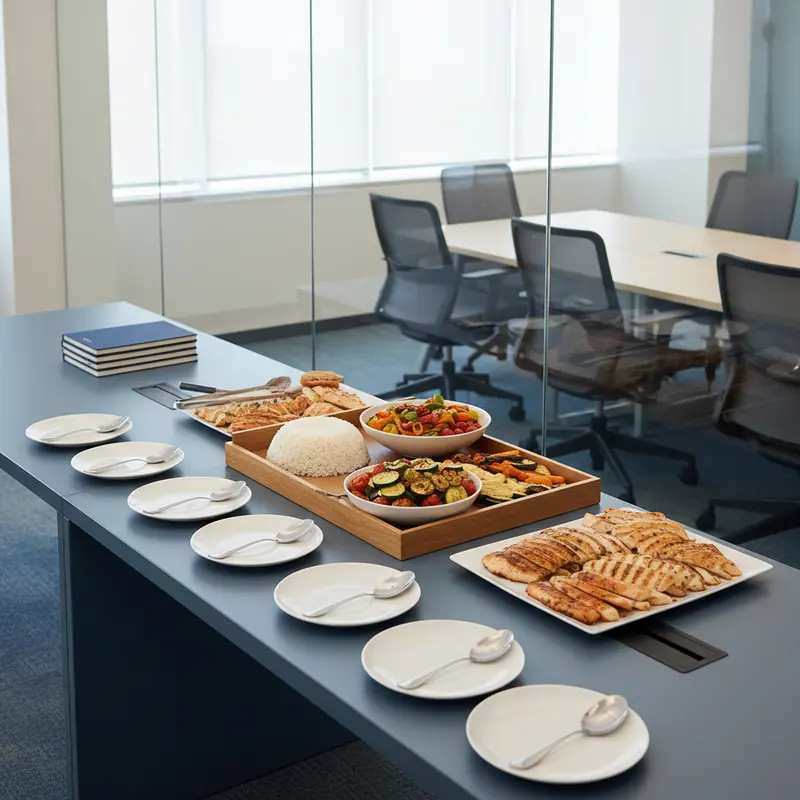
Before the presentation starts, have the receiver and backup locate the meeting point and approved holding area, check their contact availability and agree how the host will release lunch. Keep one current version of the note so a changed entrance or substitute receiver does not leave different people following conflicting instructions. The final goal is straightforward: a named person receives the order, a confirmed arrangement governs the wait, and the host controls when lunch enters the presentation.
A fill-in handover instruction
Our client presentation is protected from [start] to [expected break]. Please confirm an arrival window of [window] and the accepted notification method [method]. On arrival, contact [main receiver]; if unavailable, contact [backup] using [agreed escalation procedure]. Handover is at [approved point], via [permitted entrance and registration route]. Please do not go directly to the presentation room or unpack there, if this can be accommodated. [Internal coordinator] will move the food from [confirmed holding location] only after [host or agreed signal] releases the break. Please confirm the handling requirements, setup scope, access limits and any charges before we finalise the order.
Details to confirm before ordering
- The arrival window, protected presentation period and host's break signal are recorded separately.
- A main receiver and available backup are named, with an accepted notification and escalation method.
- The venue has confirmed the permitted entrance, registration procedure, lift access and handover point.
- Reception's role, if any, has been expressly accepted rather than assumed.
- The supplier has confirmed the setup scope, any equipment or staffing requirements and applicable charges.
- The holding location is authorised and can meet the selected food's confirmed handling requirements.
- The team has agreed what to do for refused access, an unanswered arrival notification and an extended presentation.
- The internal coordinator knows who releases lunch into the room and has the current handover note.
Questions about this decision
Can I request a message instead of a call when lunch arrives?
Ask the supplier which notification methods it can accept and confirm the choice in writing. Direct the notification to an available colleague outside the room, with a backup contact. A message-only request is not useful if nobody will monitor it, and necessary building-security contact must still be possible.
Should I give the driver the presentation-room number?
Provide the destination details needed for the agreed route, but distinguish the delivery handover point from the room where clients are meeting. If the supplier accepts it, state that the receiver will meet at the approved point and that there should be no direct knocking on the presentation-room door.
Can reception accept the lunch while everyone is presenting?
Only use reception as the receiver after the team has agreed and has authority to accept the order. Confirm who will notify your internal coordinator and where the food can go. Do not assume reception can store food or supervise it until the meeting ends.
Does asking for a quiet handover include lunch setup?
No setup scope should be assumed from that wording. Ask whether the order is handover only or includes specific setup tasks, staff or equipment. If colleagues will do the setup, name the person responsible and prepare an approved area outside the presentation room.
What if there is nowhere suitable for food to wait?
Tell the supplier and host before finalising the arrival plan. Discuss whether the arrival window, serving break or lunch format can be changed, subject to confirmation. Do not use an unattended corridor or invent a safe waiting period to compensate for missing facilities.
Sources and further reading
Reference only. Illustrations are AI-generated design references, not photographs of actual customer orders. Confirm current contents, prices and arrangements with our team.
For this guide:Lunch Delivery During a Client Presentation: How to Arrange a Quiet Office Handover
Plan catering for your event
Considering Office Lunch Catering? Send the date, district and the points discussed in this guide to YumYum Catering to confirm suitable options and a quotation.
Book Catering NowWhatsAppThis opens a prepared WhatsApp enquiry. Availability, details and price must be confirmed before booking.
Explore related services and designs
Compare relevant options, view design references and find the information you need before making an enquiry.
Office Lunch Delivery
Explore lunch delivery choices for everyday workplace meals, comparing individually packed options, meal variety and ordering considerations before discussing how office lunches could be organised.
Office Lunch Catering
Compare workplace lunch formats and menu combinations for team meals, considering shared serving arrangements and individual portions alongside the practical needs of an office gathering.
Bento Box Catering
Explore individual lunch box layouts and meal combinations, comparing compartment styles and serving convenience for groups that prefer separately packed lunches rather than shared dishes.
Kwun Tong Corporate Catering
Compare corporate meal formats for Kwun Tong enquiries, exploring individual lunch boxes and shared workplace dishes without assuming a specific office building, branch location or delivery arrangement.
Central Corporate Catering
Explore corporate catering enquiries for Central, comparing team lunch formats, meeting refreshments and serving arrangements without interpreting the illustration as a local branch or confirmed delivery location.
Original AI-generated navigation references; designs and order details are subject to confirmation.
Useful options for your plans
Compare everyday workplace meal options through Office Lunch Delivery.
Explore Office Lunch Catering to compare serving formats for a shared team meal.
Compare individually packed lunch layouts with Bento Box Catering.
Explore Kwun Tong Corporate Catering to compare individual lunches and shared workplace dishes.