YumYum Catering · Ordering guides
No dining seats on your junk boat? Choose between individual snack boxes and sharing platters
For this guide:No dining seats on your junk boat? Choose between individual snack boxes and sharing platters
Plan catering for your event
Considering Junk Boat Party Catering? Send the date, district and the points discussed in this guide to YumYum Catering to confirm suitable options and a quotation.
Book Catering NowWhatsAppThis opens a prepared WhatsApp enquiry. Availability, details and price must be confirmed before booking.
A boat can have benches, somewhere to leave a drink and plenty of room to mingle, yet still have nowhere comfortable to eat from an open food box. That is why choosing individual snack boxes for a junk boat party starts with the layout rather than the menu. The useful question is not simply whether the boat has dining seats, but where food can be distributed and what will support each guest's meal after collection.
Start by asking the boat operator to identify those two places. Then compare three arrangements: a compartment box for each person, individually wrapped handheld items collected as needed, or small sharing platters opened at a fixed serving point. This guide follows the food from collection to disposal, so you can describe the actual constraints to the caterer instead of relying on a broad request for something suitable for a boat.
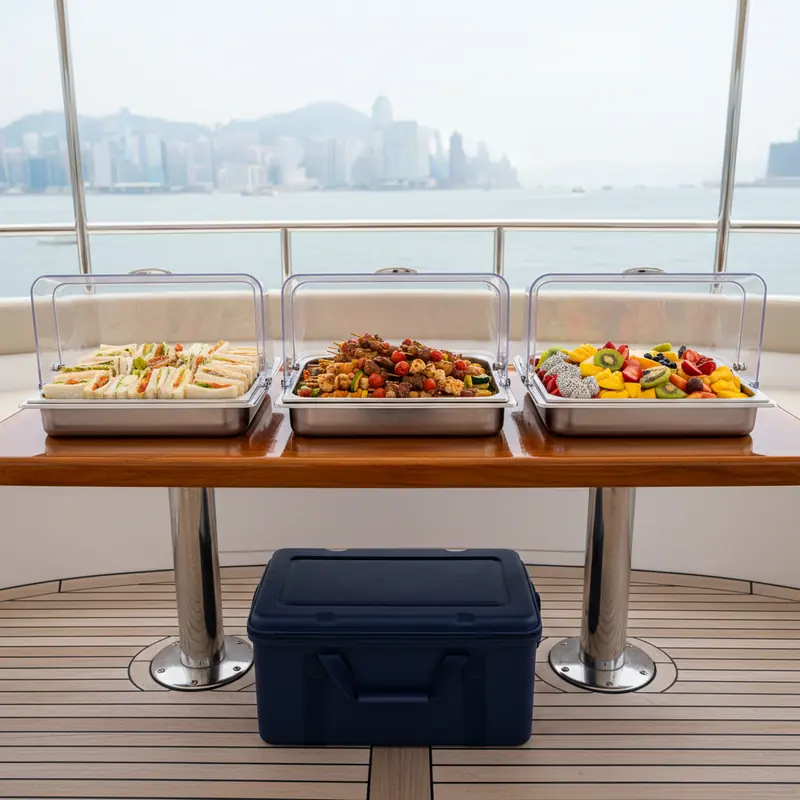
The first test: distribution space versus eating support
A distribution surface is somewhere to put food while guests collect it. Eating support is somewhere a guest can rest an open container while taking a bite, using a fork or putting the lid aside. A boat may offer one without the other. A narrow counter might accommodate a platter but not several people eating from boxes. Conversely, a seated guest might have somewhere to support a small box even though there is no communal serving table.
Treat these as separate yes-or-no questions before comparing menus. If both are available, any of the three formats may be worth discussing. If only a distribution point exists, wrapped handheld items deserve particular attention. If neither exists, do not assume that personal boxes solve the problem: both opening a box and serving from a large tray still require somewhere for the food to go. Once the layout is clear, use Junk Boat Party Catering to enquire about menu choices and the relevant pier handover arrangements.
Ask the boat operator for usable dimensions
Instead of asking only whether there is a table, ask which surface can actually be used for food during your trip. Request its usable length and width, whether it must remain clear for another purpose, and whether the crew permits a food distribution setup there. A photograph can help explain the arrangement, but the operator still needs to confirm how that space may be used. Do not count an occasional seat or an unconfirmed ledge as a serving platform.
Next, ask where guests could put down an open box and where unopened supplies would stay. These are different demands on a small area. A closed stack might fit a storage corner while the same boxes, with lids opened, would occupy much more working space. Record the available surfaces before asking the caterer for container dimensions. This makes the comparison practical: you are matching packages to usable space, not guessing from how compact they look in a menu photograph.
When individual snack boxes for a junk boat party make sense
An individual box can give each guest a recognisable allocation without asking them to assemble a selection from several platters. That is useful when you want to hand out complete snack assortments rather than keep a serving station open. Personal boxes are an established boating-food format: A Taste for Travel's boating snack guide includes individual charcuterie cups and boxes. That example demonstrates the format, not the suitability or performance of any particular box offered for your trip.
Browse Afternoon Tea Box Catering for the kind of savoury-and-sweet combination you want, then ask about the actual box, contents and eating method. Can the guest support it while opening the lid? Does a lid remain attached or need somewhere separate to sit? Will someone need a spoon or fork? A box may reduce shared serving steps, but it is a poor match if every guest must hold the base in one hand and manipulate several loose components with the other.
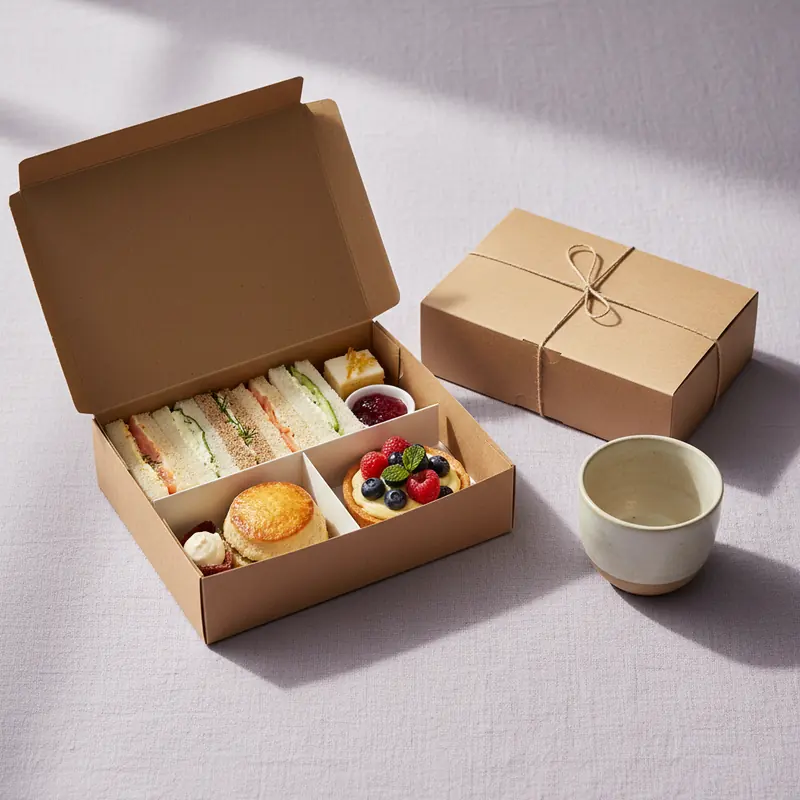
Choose the contents, not just the compartment layout
A compartment is a way to arrange food, not an instruction for eating it. A small sandwich can be lifted out; a dessert cup may need a spoon; a pastry might leave crumbs; a topping or separate dip may introduce another opening step. Ask for the proposed contents in enough detail to understand these differences. If the assortment includes items with particular storage requirements, obtain instructions for those selected foods rather than treating everything inside the box as equally convenient.
It also matters whether the box is intended to be finished at one sitting. Guests who want to take a single item and return later need somewhere to keep the remainder under the conditions specified by the caterer. They should not have to leave open boxes on every spare seat. If a preferred assortment does not match the boat layout, ask whether another existing selection is more suitable. Do not assume substitutions, individual wrapping or a different container can be supplied without confirmation.
No support for an open box? Compare wrapped handhelds
Where guests cannot support an open container, changing the unit they collect may be more useful than making the box smaller. A single wrapped sandwich or roll lets a guest collect one item rather than carry an entire assortment. Barletta's boat snack guide notes that boats may lack enough surface area for a full spread and discusses handheld sandwiches and individual wrapping. Use that as a starting point for format questions, not as a guarantee that every handheld food is convenient in every boat layout.
Explore Party Finger Food Catering for items that could be taken one at a time, then confirm which selections, if any, are individually wrapped. Ask how wrappers open, whether sauce is separate and whether napkins or utensils are included. Finger food is not automatically drip-free, and individual wrapping does not remove the need for an agreed distribution method. Someone must still hold or position the supply of unopened items without blocking a route through the boat.
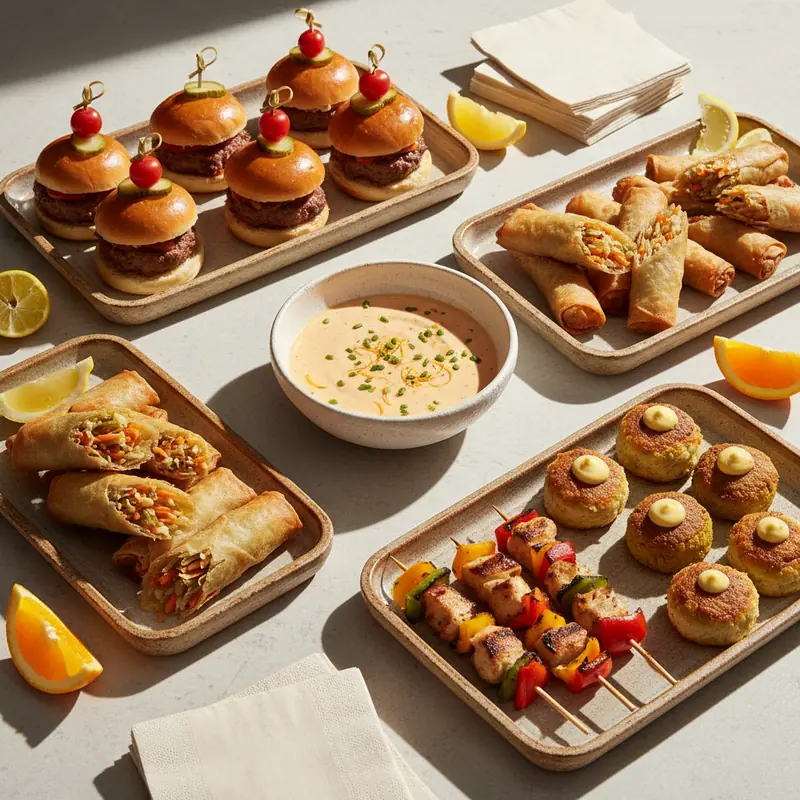
Sharing platters work only with a fixed serving point
A platter keeps the selection together and allows guests to choose individual pieces, but it transfers the space requirement to a common serving point. Hong Kong's local options include this format: Sassy Hong Kong's junk catering guide describes sharing platters alongside sandwiches and wraps. The existence of those choices does not mean a platter will fit your boat, or that guests can eat directly from it without plates or serving tools.
Consider Food Platter Delivery only after identifying a fixed distribution platform the boat operator agrees can be used. Ask for the tray's outside dimensions, whether there is a lid, and how the selected food should be served. Check whether guests need small plates and whether suitable serving tools are supplied. A covered small platter can be discussed as a batch-serving option, but neither the cover nor a smaller size proves it can be used without support or that it resists tipping.
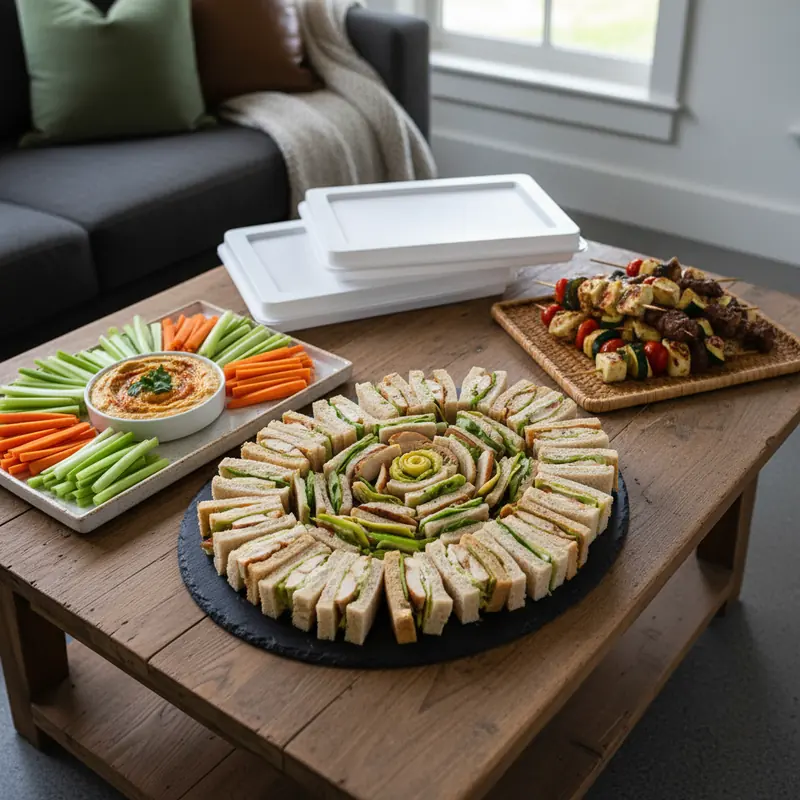
Rehearse one guest's opening, eating and clearing sequence
Before deciding, describe what happens to one portion from start to finish. Where is it collected? What does the guest hold while opening it? Where does the lid or wrapper go? How is the food eaten, and where is the empty packaging put afterwards? This short rehearsal can expose an awkward arrangement more clearly than comparing menu names. A package described as individual may still require both hands and somewhere to pause between bites.
Use the following two tests on your shortlist. They are planning checks rather than claims about how a specific product performs. Ask the caterer to explain any step you cannot picture, and ask the boat operator about any surface or storage position on which that step depends.
The open-container test
For a box, trace the base, lid, utensil and food separately. If the guest must put any of them down, identify the support available at that moment. A seated position alone is not enough information. If the proposed eating method depends on balancing the meal somewhere the operator has not confirmed, reconsider the contents or the format.
The serving-point test
For a platter or a supply of wrapped items, trace the guest's approach, collection and departure. Leave room for the serving tool, lid and any plates as well as the food container. Discuss how the next batch will replace the first. A tray that fits the surface exactly may leave no working room for the actions required around it.
Work backwards from available chilled storage
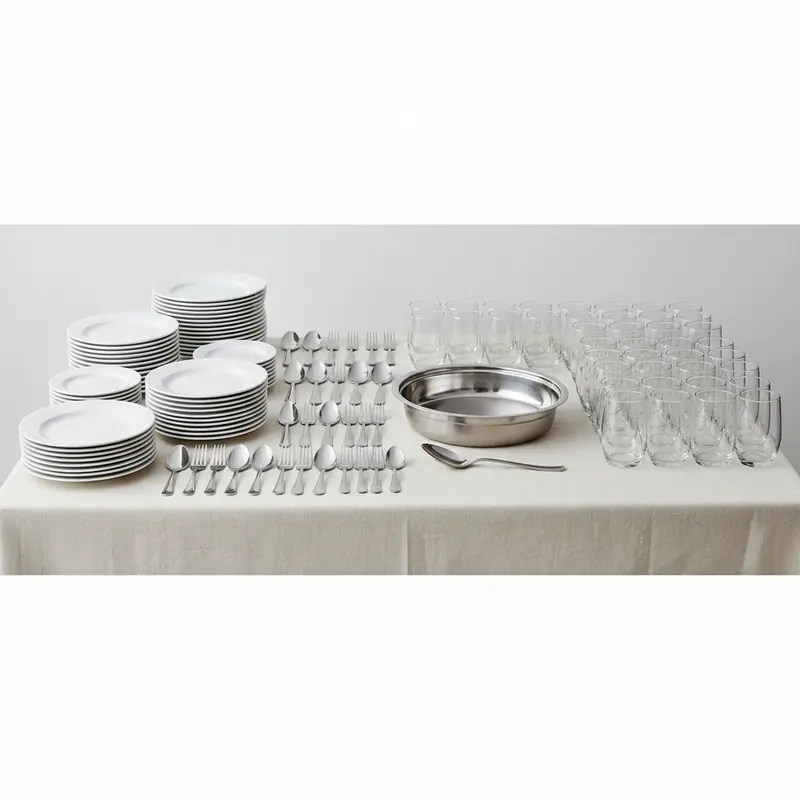
Find out what chilled storage is actually available and what the boat operator permits you to use. Then give the caterer those details and ask how the selected foods must be stored and when they should be served. The relevant comparison is not simply boxes versus platters: it is the packed size of the order, the required storage conditions and the sequence in which you intend to open it. Avoid planning around an unspecified fridge or assuming that an insulated carrier replaces instructions for the food.
Individual boxes can involve several separate containers; platters can need broad shelf space; wrapped pieces may arrive together in an outer tray or carton. Ask for the dimensions of the delivered arrangement rather than estimating from serving size. If you want to offer food at different moments, confirm whether unopened batches can remain stored appropriately. Do not open everything to create an attractive display when your plan depends on keeping later portions under their required conditions.
If around ten guests are joining, count portions and packages separately
For a hypothetical group of around ten, separate the headcount from the number of boxes, trays and individual pieces in the order. A package described by the number of people it serves may contain shared dishes rather than a complete container for every guest. Use 10 Person Catering Package to compare the listed portions and shared selections, not as evidence that the order consists of ten independent snack boxes. Confirm what would physically arrive before choosing it for a boat without dining seats.
Write down the chosen items, the stated quantity of each and the intended role: a snack assortment, a light eating break or part of a larger food plan. Then ask the caterer to reconcile that list with your actual group and appetite expectations. A headcount alone does not tell you whether every guest receives the same selection or whether some items are shared. If you want an individual allocation, state that explicitly rather than assuming it follows from the package name.
Use a mixed format only when it solves a real problem
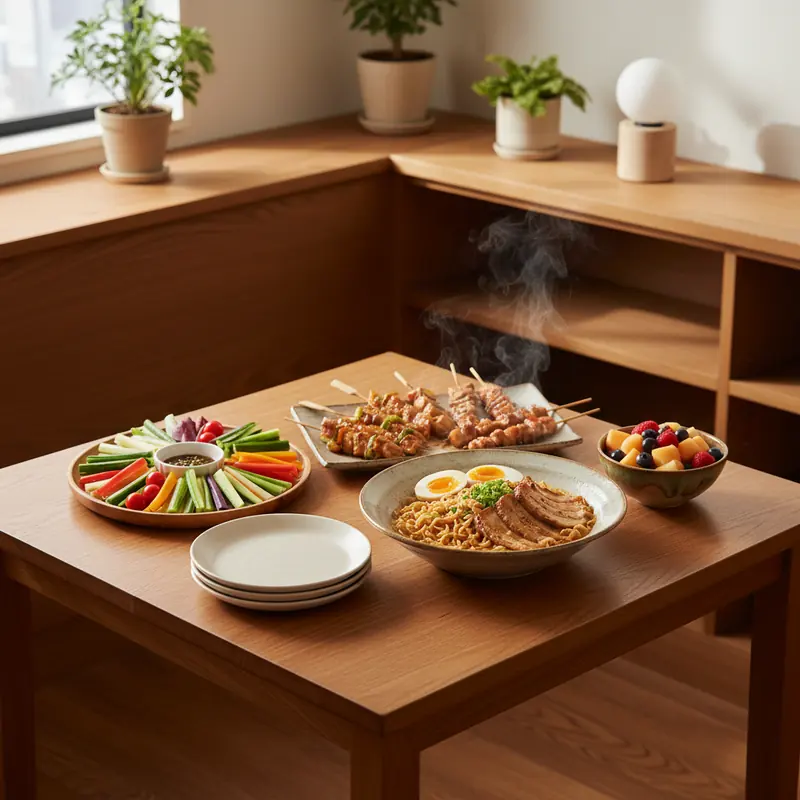
A mixed order can make sense when different parts of the trip offer different eating conditions. In a hypothetical arrangement, guests might collect wrapped savoury items while mingling, then receive a separate boxed assortment when a confirmed support area is available. The advantage comes from matching each eating moment to a workable format. Ordering several packaging styles without that reason can instead create more lids, tools and storage positions to organise.
Keep the plan simple enough for the person distributing the food to explain. Identify which items are available at each moment, where unopened supplies remain and how guests recognise any separately requested selections. For allergies or other dietary requirements, ask the caterer what can be provided and how it will be identified; do not treat a separate box as a guarantee of suitability. If the mixed arrangement needs packaging changes or labels, have those details confirmed before ordering.
Agree the pier handover and onboard recipient
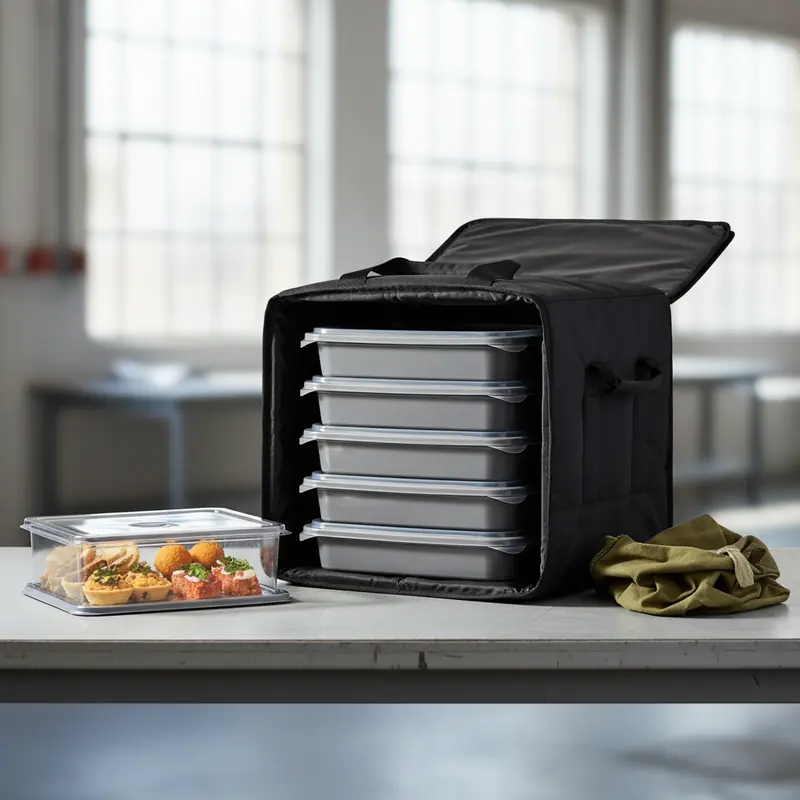
Packaging choices also affect the handover. Ask how the order will be grouped for transport and whether individual boxes, serving tools and other accessories arrive together or separately. Give the caterer the intended departure pier and agree the precise collection point, recipient and handover arrangement for your order. The departure location alone does not establish where a delivery can stop or how the food will get aboard. Confirm these details with both the caterer and boat operator rather than assuming an alongside delivery.
Assign one organiser to receive the order and check the package count against the confirmed order details. That person should know which packages need particular storage and where each batch will go. Keep the handover plan distinct from the food format: a well-chosen snack box still needs a workable route from collection to storage. Ask customer service to confirm the applicable charges, availability and timing for the specific order; no general article can establish those terms for your trip.
Close the plan with packaging collection
Decide where empty boxes, wrappers, plates and used serving tools will be collected before choosing how many packaging components to bring. Ask the boat operator about the onboard waste arrangement and any separation requirements. If you want to recycle packaging, confirm the material and the actual collection route rather than assuming that every food container can go into the same recycling stream. A reusable container also needs an agreed return or take-home plan; the label alone does not organise that step.
For junk boat food without a dining table, the strongest choice is the one whose whole sequence works: collection, opening, eating, storage of unopened supplies and clearing away. Choose individual boxes when guests can support them, enquire about wrapped handhelds when they cannot, and reserve sharing platters for a confirmed distribution platform. Take the completed details below to YumYum Catering and the boat operator, and resolve any missing packaging or space information before committing to the order.
Details to confirm before ordering
- Boat layout: distribution surface available = ___; usable dimensions = ___; operator-approved use = ___.
- Guest support: place for an open box = ___; room for an opened or detached lid = ___; intended eating period = ___.
- Food format: personal boxes / individually wrapped pieces / shared platters = ___; confirmed contents and eating tools = ___.
- Quantity check: actual guest count = ___; listed food quantities = ___; physical box, tray and package counts = ___.
- Storage: available chilled space and dimensions = ___; selected-food storage and serving instructions confirmed with caterer = ___.
- Handover: date and departure pier = ___; agreed collection point and arrangement = ___; designated organiser = ___; applicable charges confirmed = ___.
- Clearing: packaging materials = ___; onboard collection point = ___; agreed recycling, disposal or reusable-container return arrangement = ___.
Questions about this decision
Does an individual snack box mean guests can eat with one hand?
No. The base may need support while the lid is opened, and some contents may need utensils. Ask about the actual box and contents, then identify where guests can rest it. If there is no such place, enquire about individually wrapped handheld items instead.
Is a bench enough to make a boxed assortment practical?
Not necessarily. A bench provides seating, but it does not confirm a usable support for the meal. Ask the boat operator where guests may put open containers and whether that location remains available during the intended eating period.
Can I use sharing platters if the boat has no dining seats?
Potentially, if there is a fixed distribution point approved by the operator and enough space for the platter, its lid, serving tools and any plates. Guests still need a workable way to carry and eat the portions they collect.
Will a package for ten people contain ten separate boxes?
Do not assume so. A headcount-based package may consist of shared dishes. Check the listed quantities and ask for the number and type of containers that will arrive. Request individual allocations explicitly if that is what your group needs.
Can I request that every item be wrapped separately?
You can enquire, but availability must be confirmed for the selected foods and order. Ask which items already come wrapped, whether any packaging changes are possible and whether they affect the quotation. Do not build the serving plan around an unconfirmed repacking request.
Sources and further reading
Reference only. Illustrations are AI-generated design references, not photographs of actual customer orders. Confirm current contents, prices and arrangements with our team.
For this guide:No dining seats on your junk boat? Choose between individual snack boxes and sharing platters
Plan catering for your event
Considering Junk Boat Party Catering? Send the date, district and the points discussed in this guide to YumYum Catering to confirm suitable options and a quotation.
Book Catering NowWhatsAppThis opens a prepared WhatsApp enquiry. Availability, details and price must be confirmed before booking.
Explore related services and designs
Compare relevant options, view design references and find the information you need before making an enquiry.
Food Platter Delivery
Compare sharing platter styles, savoury combinations and presentation layouts, exploring convenient ways to place food on the table for informal gatherings and group snacking.
Junk Boat Party Catering
Compare food formats for a junk boat gathering, exploring portable sharing dishes and serving arrangements alongside pier delivery considerations, without assuming a particular vessel or delivery schedule.
Birthday Catering
Compare food arrangements for a birthday gathering, exploring shared savoury dishes, easy snacks and sweet additions that fit the occasion without assuming a particular age or guest count.
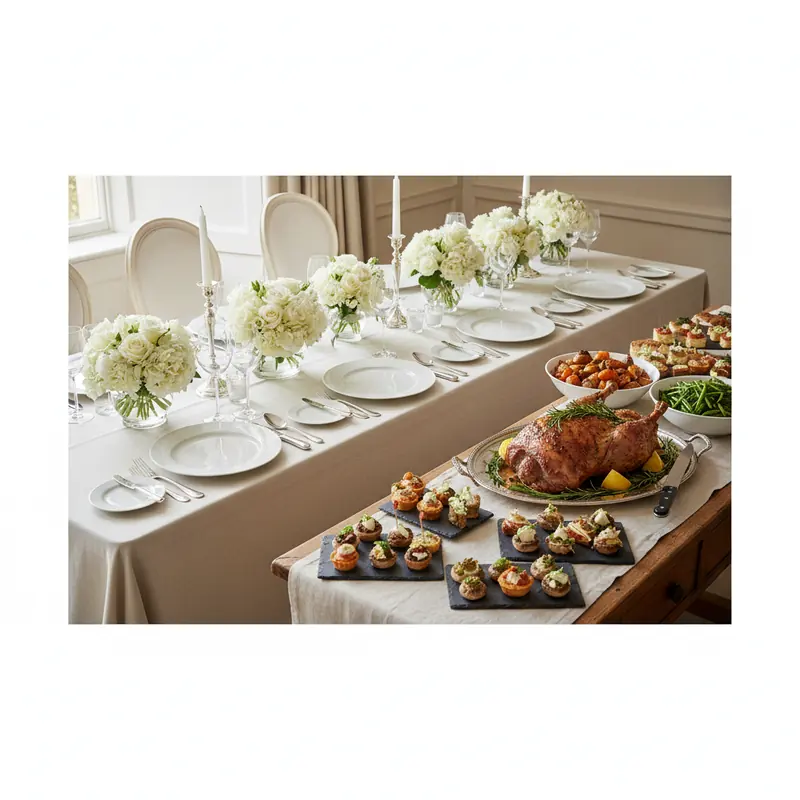
Wedding Catering
Explore wedding dining formats, comparing buffet and banquet style arrangements, savoury courses and reception serving layouts before considering the meal presentation that fits your celebration.
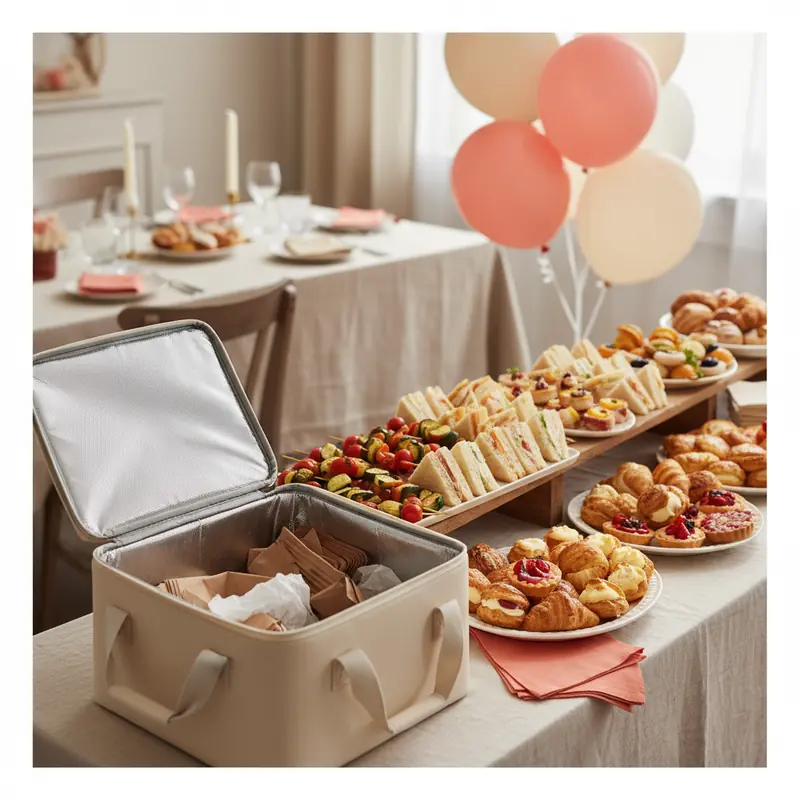
Party Catering
Compare party menu formats and food delivery considerations together, exploring shared platters, easy serving arrangements and the types of dishes suited to a social gathering.
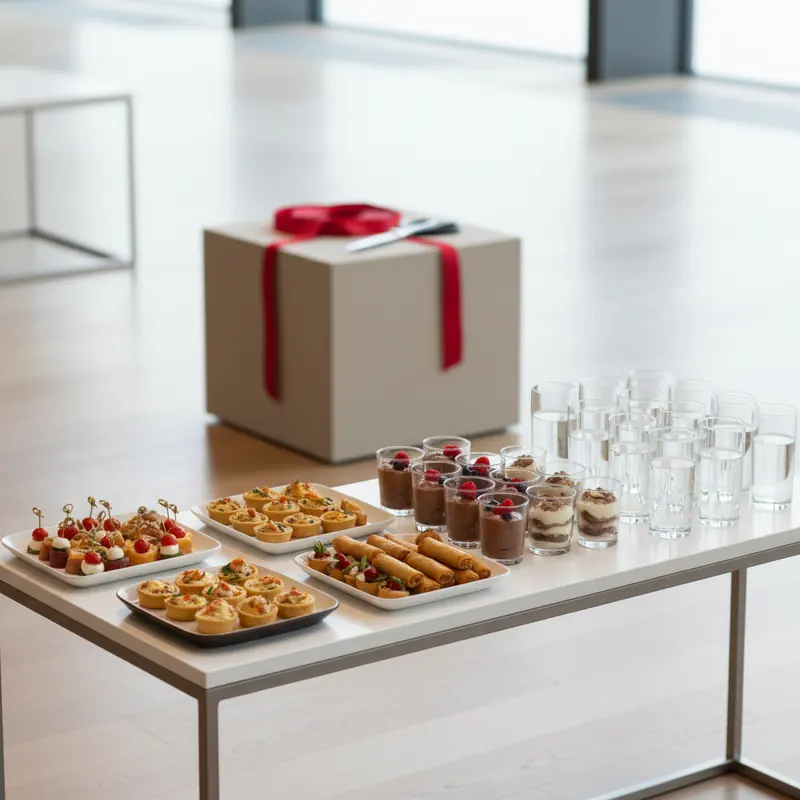
Grand Opening Catering
Explore catering formats for an opening reception, comparing easy to serve bites, shared dishes and refreshment arrangements that suit a ceremony without implying a particular business or venue.
Original AI-generated navigation references; designs and order details are subject to confirmation.
Useful options for your plans
Explore Food Platter Delivery to compare sharing platters for an informal gathering.
Explore Junk Boat Party Catering to compare portable dishes and serving arrangements for a boat gathering.
Explore Party Food Delivery for shared dishes and delivery considerations for your gathering.
Compare festive food combinations and serving layouts with Christmas Party Catering.