YumYum Catering · Ordering guides
Two Buffet Stations, One Menu: How to Stop Guests Queueing Twice at Your Reception
For this guide:Two Buffet Stations, One Menu: How to Stop Guests Queueing Twice at Your Reception
Plan catering for your event
Considering Mini Buffet Catering? Send the date, district and the points discussed in this guide to YumYum Catering to confirm suitable options and a quotation.
Book Catering NowWhatsAppThis opens a prepared WhatsApp enquiry. Availability, details and price must be confirmed before booking.
A guest collects food from Station A, notices another queue across the room and joins it to see what they missed. If Station B serves exactly the same dishes, the second wait was unnecessary. The problem is not necessarily a shortage of serving space: guests may simply have no way to tell whether the stations are alternatives or separate parts of the meal.
If you are deciding how to stop guests queueing twice at a buffet, start with a dish-by-dish comparison rather than an extra sign saying only ‘Buffet’. Confirm what each station will actually offer, place the explanation where guests choose a queue, and agree who changes that explanation during service. The aim is to avoid an uninformed second queue on the first visit, not to discourage guests from returning for another helping.
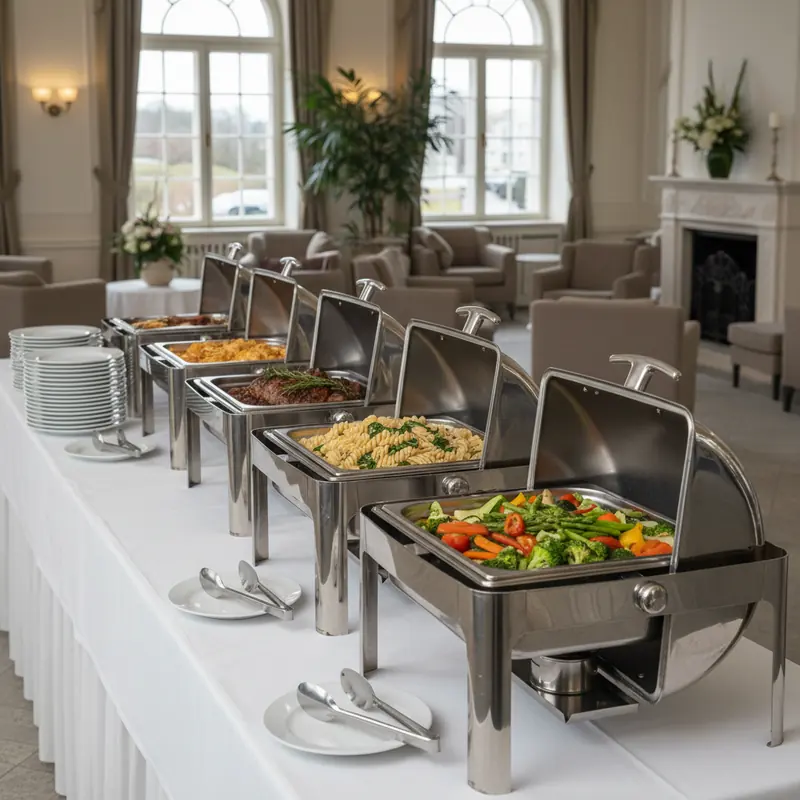
Decide whether the stations are alternatives or separate destinations
Two tables do not automatically mean two different menus. Fully duplicated stations offer the same complete selection, so a guest can choose either one. Separate-menu stations divide the food into different destinations. Partly overlapping stations sit between these arrangements: most food may be repeated, but a particular dish appears only at one. Decide which description is true before preparing any guest-facing wording.
The distinction is practical, not just a matter of naming. My Chef’s guide to catering styles discusses multiple identical buffet lines separately from food stations with different offerings. For your reception, ask whether a guest choosing either queue can collect the same selection without visiting the other. If the answer is no, explain the difference rather than presenting both stations as interchangeable.
Check whether a small reception needs a second serving point
For a small reception, a second table is useful only if the menu and room support it. Duplicating a compact spread may leave too little space for serving dishes, labels and plate collection. It can also create two unclear starting points instead of one understandable arrangement. Ask the venue and supplier to consider a single clear serving point alongside a two-station option, rather than deciding from guest count alone.
Mini Buffet Catering is a format to compare when considering compact shared dishes and limited table space. Ask whether the particular menu could sensibly be presented at separate collection points, and what additional serving equipment that would require. Do not assume that a mini buffet supplies a reception of around 50 or 100 people, or that its presentation can simply be duplicated without reviewing quantities and the available surface area.
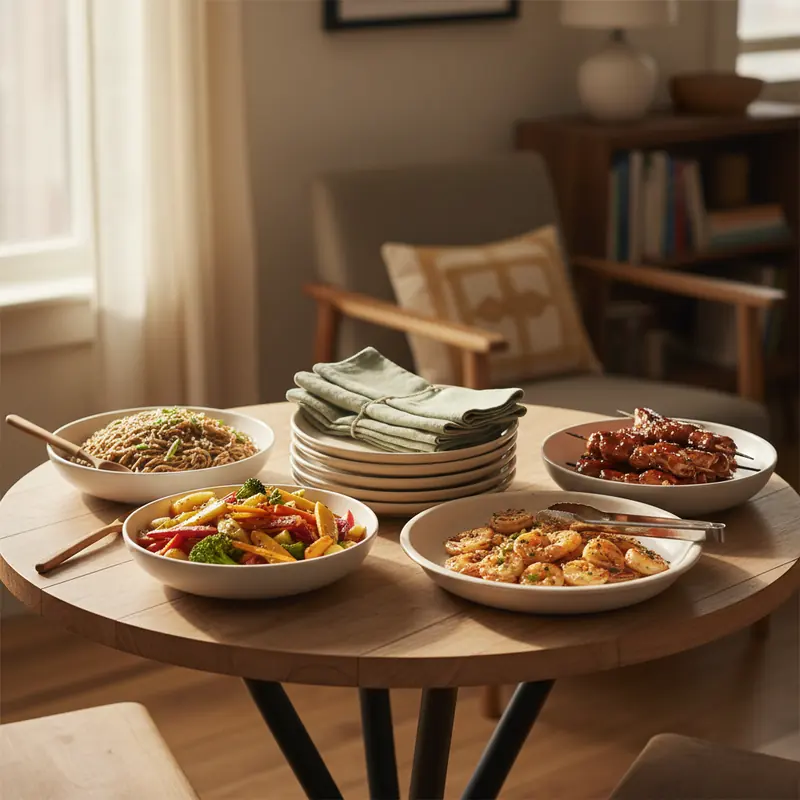
Build the A/B allocation one dish at a time
Use the proposed menu as a working allocation sheet. Give every dish its own entry, including accompaniments that guests might otherwise look for elsewhere. Record whether it starts at A, at B or at both; how much is initially displayed; and where its remaining supply will be held. Two buffet stations with the same menu need matching choices, but they do not necessarily need identical tray sizes if the supplier proposes a different replenishment arrangement.
Do not approve the sheet merely because both columns say ‘hot food’ or ‘dessert’. Those broad categories can conceal a dish that appears at only one station. Ask the supplier to identify exceptions explicitly. A single exclusive item changes the information guests need, even when the rest of the selection is duplicated. Keep the approved version with whoever will oversee service so substitutions do not quietly invalidate the signs.
Use a repeatable row for every dish
A practical fill-in row reads: ‘Dish name: ___; Station A opening allocation: ___; Station B opening allocation: ___; reserve location: ___; refill responsibility: ___; exception to the shared menu: ___.’ Repeat it for the actual menu rather than copying assumed dishes from a photograph. Ask the supplier to check each row, including any dish that needs its own confirmed serving arrangement.
- Every confirmed dish appears in the allocation, not just a category heading.
- Any item available at only one station is identified before signs are printed.
- Opening displays and reserve supplies are distinguished from the total order.
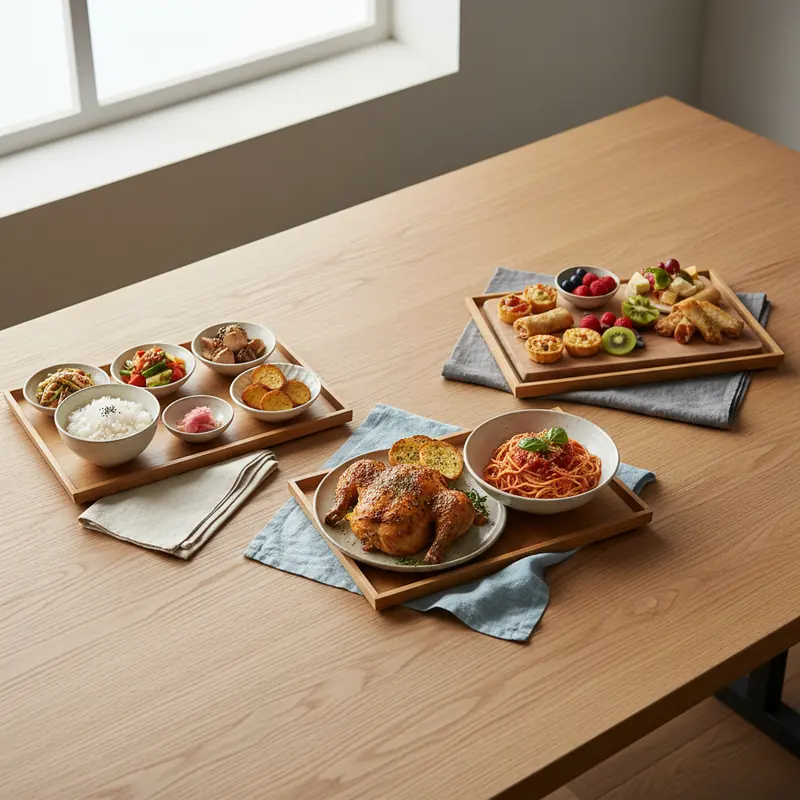
Write signs that answer the guest’s real question
Useful buffet station signs for identical menus answer ‘Do I need to visit both?’ rather than simply naming the tables. If the full menu is genuinely available at each station, a suggested entrance message is: ‘Same menu at both stations — choose either queue.’ Label the stations A and B consistently on the signs, allocation sheet and room sketch. If guests need different languages, arrange equivalent wording rather than letting one version describe a different service.
For partially overlapping menus, replace the shared-menu claim with the actual station lists. Make exclusive items noticeable before guests commit to a queue. A message such as ‘Shared selection at A and B; [confirmed dish] at B only’ is suitable only if it accurately describes the agreed menu. Do not hide the exception in small print beside the serving tray, where guests discover it after completing their first queue.
Separate the first visit from another helping
Avoid wording such as ‘Use one station only’, which can sound like a restriction on further servings. For an identical-menu setup, the intended meaning is that guests do not need to visit both stations to see the full selection. Ask the host or greeter to explain that distinction in ordinary language. Any genuine limits on particular items must come from the agreed service arrangement, not from an improvised queue-management rule.
Put the menu where guests choose a queue
Walk towards the serving area from the guests’ likely approach. Can you read the relationship between A and B before joining either line? Place the shared-menu message or station lists at that decision point, then repeat the relevant information at each queue entrance. A sign hidden behind people already waiting cannot help someone arriving at the back. Check visibility from the actual approach, not only while standing beside the table.
Keep individual dish cards as well. They answer a different question: what is in front of the guest at the serving point? Scarborough Fare’s buffet guidance recommends duplicate buffets and menu cards to identify food. Use those principles together: station-level information explains where to go, while dish-level information helps guests recognise their choices. Neither should claim that a dish is suitable for a dietary requirement unless that information has been confirmed.
Give each queue a clear plate start and serving route
Each station needs an obvious place to begin, collect a plate and move through the available dishes. If plates are visible only at A, guests may assume everyone must start there, even when B duplicates the menu. Check the actual number and placement of plates, serving utensils and serving vessels for both locations. A duplicated menu on paper is not a usable second station if it lacks the equipment needed to serve it.
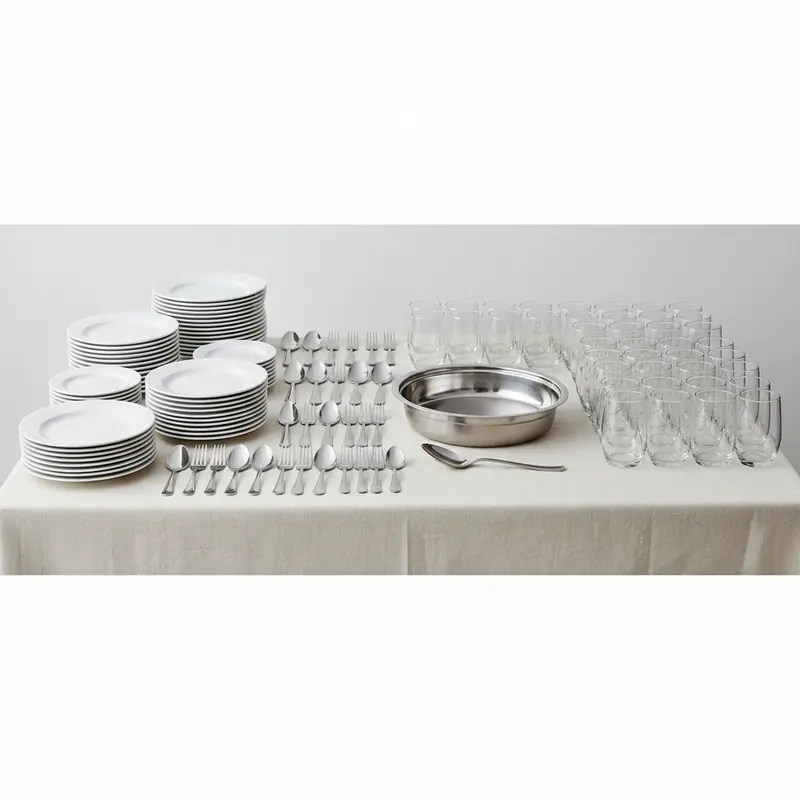
Use a Tableware Rental enquiry to confirm the specific plates, cutlery, glasses, serving dishes and quantities required for the proposed arrangement. List what is needed at A and B separately, then ask what is included and what is additional. Do not assume that a tableware arrangement also supplies tables, warming equipment, delivery, setup or collection; those responsibilities need their own written confirmation.
Decide where guests collect cutlery without having to move back against the food queue. It might be placed at seats or at a suitable collection point after the food, subject to the venue layout. Click to Table’s buffet-layout guide discusses plate starts, dish labels and cutlery at seats. Its double-sided buffet examples are not the same as two separate stations, but these placement questions are useful checks for either arrangement.
Map the exits, drinks and replenishment access together
Draw both queue starts and the points where guests leave with food. Add the main entrance, other venue exits, drinks location and route used to bring replacement trays. Look for crossings: someone leaving A should not have to push through the beginning of B to reach the reception area. Use the venue’s approved circulation space rather than treating a general online measurement as permission for your Hong Kong room.
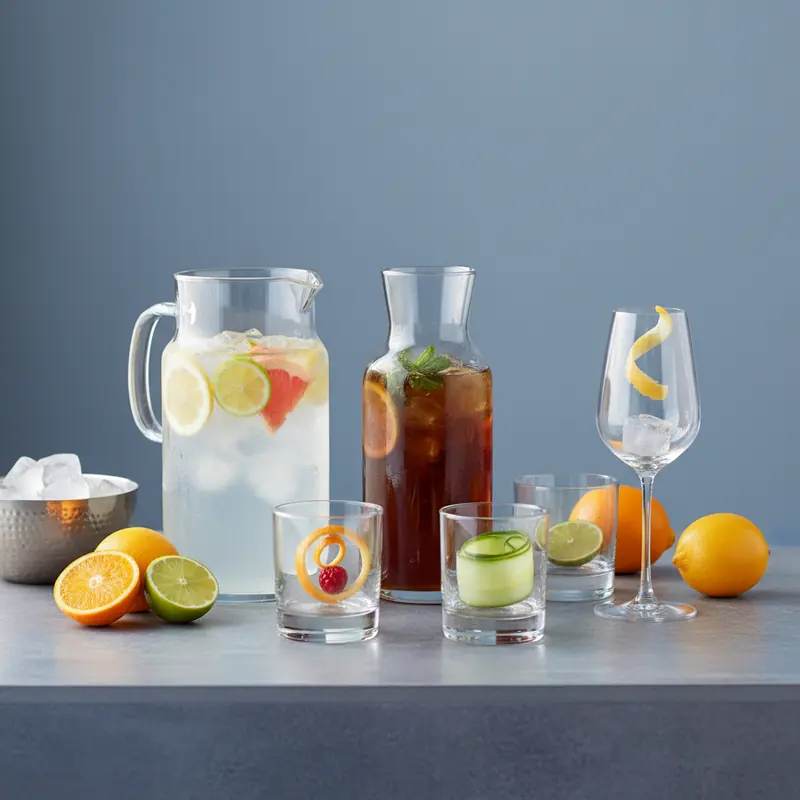
Include drinks even if they are arranged separately. Scarborough Fare’s guidance recommends keeping beverages away from the food line; for your floor plan, check whether a guest collecting a drink would block either queue or a refill route. Ask the venue to review the complete sketch, including any equipment restrictions. Two attractive food tables are not enough if the only practical replenishment route runs through the guests choosing their food.
Assign monitoring, refilling and guest guidance explicitly
Give three jobs clear ownership: checking availability at both stations, arranging replenishment, and explaining the current menu to arriving guests. One person may cover more than one job if the agreed arrangement permits, but ‘someone will notice’ is not a service plan. Ask whether these tasks sit with the caterer, venue or host, and whether any proposed staffing is included in the quotation.
Record how the people involved communicate a change. The person seeing a low tray should know whom to contact; the person directing guests should hear whether the dish will return or is no longer available. For the first serving, consider inviting guests by table or reception area, as My Chef’s guide suggests for buffet release. Agree an understandable sequence without promising that it removes every queue or assigning an unverified serving speed.
Change the message when the menus stop matching
Treat the identical-menu sign as a statement about current availability, not just the original order. If a dish is unavailable at A, check whether it is awaiting replenishment, being replaced or finished. The response should follow that confirmed status. Do not leave the sign unchanged while a greeter quietly directs people across the room to find a dish they reasonably expected at their chosen station.
For a hypothetical temporary shortage, a replacement notice could read: ‘Station A: [dish] currently unavailable; replenishment being checked. Station B: [confirmed current selection].’ Do not state a return time unless the responsible team has confirmed it. If the menus remain different, display the revised lists at the decision point. Give guests the information before they join; do not make a second full queue the default solution for people who have already collected food.
For around 50 guests, ask about the split rather than assuming it
Consider a hypothetical reception for around 50 guests where the host wants two collection points. A 50 Person Catering Package can be the starting point for a menu and quantity enquiry, but its name does not establish a two-station allocation. Ask the supplier to review each dish against the proposed A/B layout, expected arrival pattern and whether food is the main meal or part of a shorter reception.
Two stations do not automatically require ordering twice the food. Equally, dividing every tray mechanically between them does not establish that either display will work. Ask for a menu-specific proposal covering the total quantity, opening allocation and remaining supply. Confirm additional vessels, utensils, tables and replenishment duties separately. If a particular item cannot be sensibly duplicated, decide whether to change the menu or explain its single-station location before guests queue.
For around 100 guests, review the serving window and room first
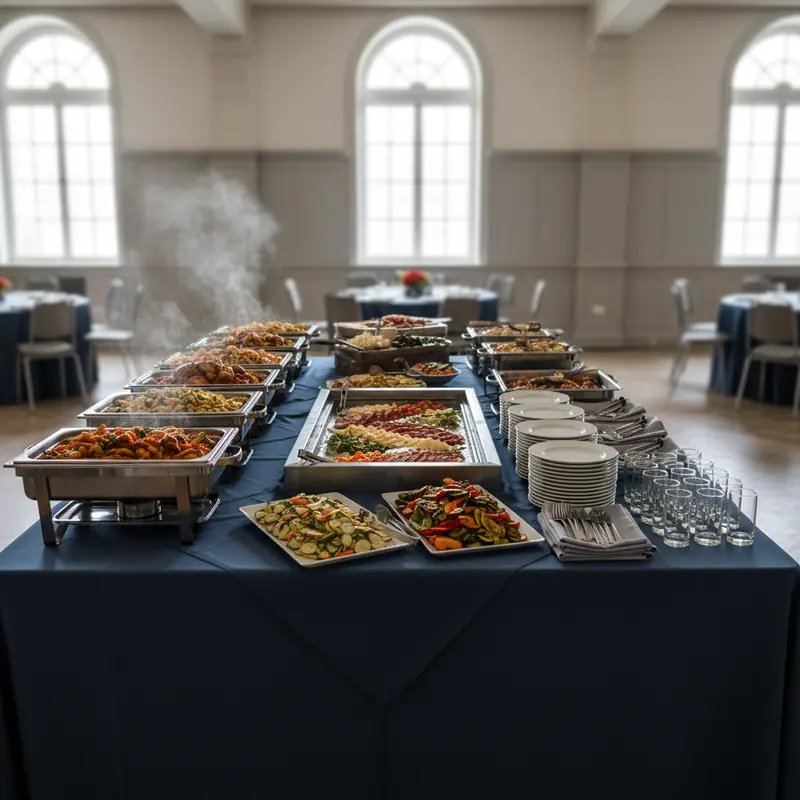
For a hypothetical reception of around 100 guests, send the supplier the proposed food-serving window and room sketch before fixing the number of stations. A 100 Person Catering Package is a place to discuss the food order, not proof that two stations, particular staffing or a queue-free service are included. Ask how the proposed menu would be allocated if guests arrive together, and how that differs if arrivals are spread through the reception.
Have the supplier and venue review entrances, usable table positions and replenishment access alongside the quantities. Ask them to identify what would need to change if two complete matching selections cannot be maintained. The answer may involve a revised layout or a clearly differentiated menu, rather than retaining identical-menu signs at all costs. Confirm the resulting equipment and staffing scope and all charges for the actual event before approving the arrangement.
Run a first-visit walkthrough before guests arrive
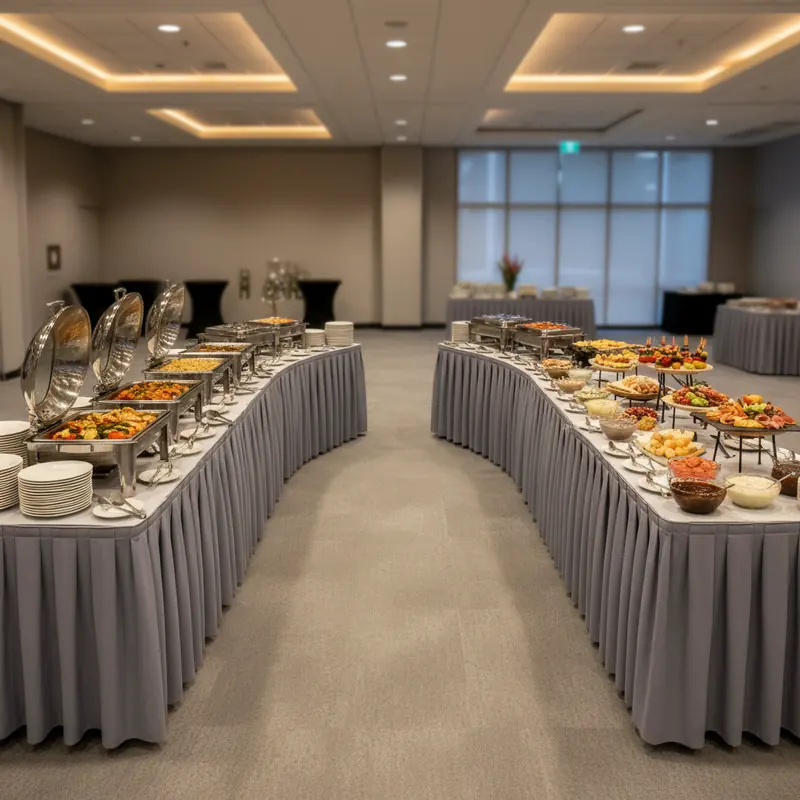
Once the stations are set, walk through as a guest who has not seen the planning documents. Start at the entrance, read the menu relationship, choose either queue, locate a plate and follow the food to the exit. Then compare the displayed dishes with the approved A/B sheet. Check whether anything visible only at the other station would make you think you had missed part of the meal.
Finish by asking the responsible people what happens if one dish becomes unavailable. They should know who checks its status, who changes the signs and what arriving guests will be told. Send YumYum Catering the date, district, guest estimate and proposed A/B sheet when requesting confirmation. A useful final agreement describes what each station offers and who keeps that information accurate; it does not rely on a promise that nobody will ever wait.
Details to confirm before ordering
- Menu relationship: complete duplicate, partial overlap or separate selections; list every single-station exception.
- Dish allocation: confirm each dish’s total quantity, opening allocation at A and B, reserve location and refill responsibility.
- Guest information: approve the exact entrance wording, station names and person responsible for changing signs.
- Equipment: confirm plates, cutlery, serving utensils and vessels at each station, with tables and warming equipment checked separately.
- Room sketch: obtain venue review of queue starts, exits, drinks location and replenishment access.
- Service duties: identify who monitors both stations, replenishes dishes and guides the first serving; confirm any charges.
- Availability changes: agree how temporary shortages, substitutions and finished items will be communicated before guests join a queue.
- Final walkthrough: compare the actual setup with the approved A/B sheet before opening service.
Questions about this decision
Can I call two stations identical if dessert is at only one?
Not without explaining the exception. Guests need to know that they can collect the shared food at either station but must go to the stated location for dessert. Display that distinction before the queues, rather than making guests discover it after taking their food.
Should both stations use the same dish order?
A consistent sequence can make the matching selection easier to recognise, but the actual layout must work with each table’s start, exit and equipment. Ask the supplier to confirm the arrangement; matching dish availability matters more than forcing a layout that does not fit the room.
Can a verbal announcement replace the signs?
Use an announcement to reinforce the message, not as the only explanation. Guests arriving later or talking during the announcement still need to understand the station choices before they queue. Keep the visible wording aligned with what the host says.
What if one queue looks shorter but a dish is missing there?
Show the missing item’s confirmed status at the queue entrance. A shorter queue is not necessarily an equivalent choice if the current selection differs. Let guests decide with accurate information, and have the responsible person check replenishment rather than guessing when the dish will return.
Does avoiding a second queue mean guests cannot return for more?
No. The purpose is to avoid repeating the first collection because guests mistakenly think the other station has a different menu. Any arrangements for additional helpings or limited items should be confirmed separately and communicated without suggesting that identical stations are two compulsory courses.
Sources and further reading
Reference only. Illustrations are AI-generated design references, not photographs of actual customer orders. Confirm current contents, prices and arrangements with our team.
For this guide:Two Buffet Stations, One Menu: How to Stop Guests Queueing Twice at Your Reception
Plan catering for your event
Considering Mini Buffet Catering? Send the date, district and the points discussed in this guide to YumYum Catering to confirm suitable options and a quotation.
Book Catering NowWhatsAppThis opens a prepared WhatsApp enquiry. Availability, details and price must be confirmed before booking.
Explore related services and designs
Compare relevant options, view design references and find the information you need before making an enquiry.
Mini Buffet Catering
Explore compact buffet arrangements for smaller gatherings, comparing a focused selection of shared dishes, table space needs and serving styles without assuming a particular package size.
Buffet Catering
Compare self service buffet layouts and dish combinations, exploring how shared hot dishes, accompanying sides and serving equipment can fit a group dining arrangement.
Hong Kong Catering Service
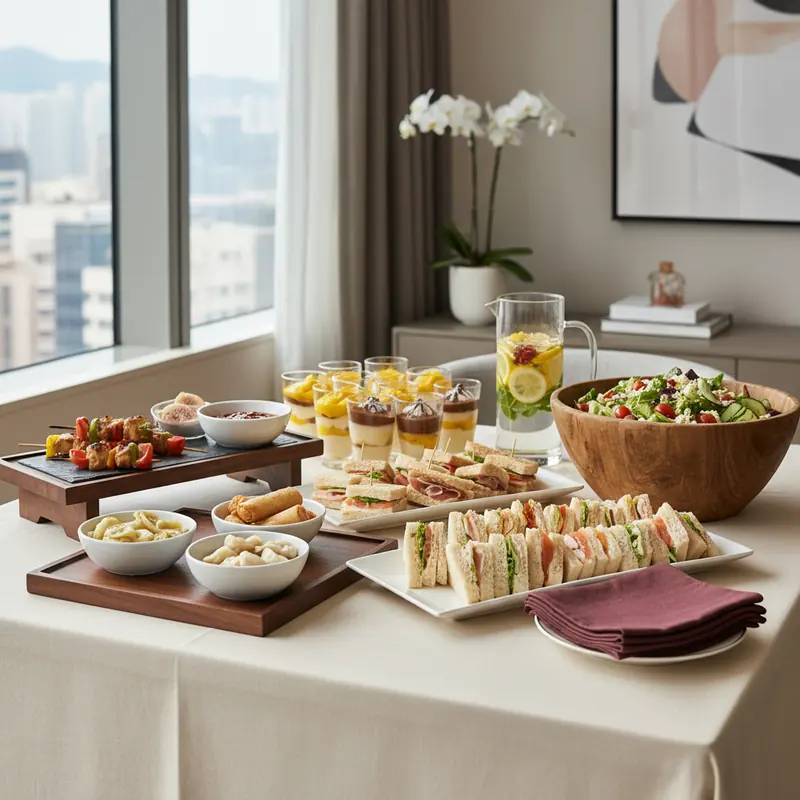
Explore catering formats for different gatherings, comparing shared dishes, individual meals and event settings before moving to a more specific menu or occasion page.
Catering Services
Compare meal presentation styles, savoury selections and dessert additions across the catering range, then explore the format that suits how you want guests to dine.
Original AI-generated navigation references; designs and order details are subject to confirmation.
Useful options for your plans
Compare compact serving arrangements for smaller gatherings with Mini Buffet Catering.
Explore self service dining layouts and dish combinations with Buffet Catering.
Compare savoury dishes, desserts and meal formats through Catering Services.
Explore Hong Kong Catering Service to compare catering formats for your next gathering.