YumYum Catering · Ordering guides
Late-Arriving Dessert Guests: How to Request a Quote for Two Serving Windows
For this guide:Late-Arriving Dessert Guests: How to Request a Quote for Two Serving Windows
Plan catering for your event
Considering Dessert Table Catering? Send the date, district and the points discussed in this guide to YumYum Catering to confirm suitable options and a quotation.
Book Catering NowWhatsAppThis opens a prepared WhatsApp enquiry. Availability, details and price must be confirmed before booking.
An event can stay open long after its first guests have eaten dessert. If another group arrives later, asking for catering throughout the event may describe more service than you need. Yet simply requesting two short dessert sessions leaves important questions unanswered: where will the second batch wait, who will manage the gap, and does the team stay onsite or leave?
To request a dessert catering quote for two serving windows, start with a written timeline and a separate portion allocation for each opening. The aim is a clear comparison, not an assumption that fewer serving minutes mean a lower bill. Use the steps below to prepare that brief for YumYum Catering. Standby, return visits and second setups are arrangements to ask about, not confirmed packages or guaranteed savings.
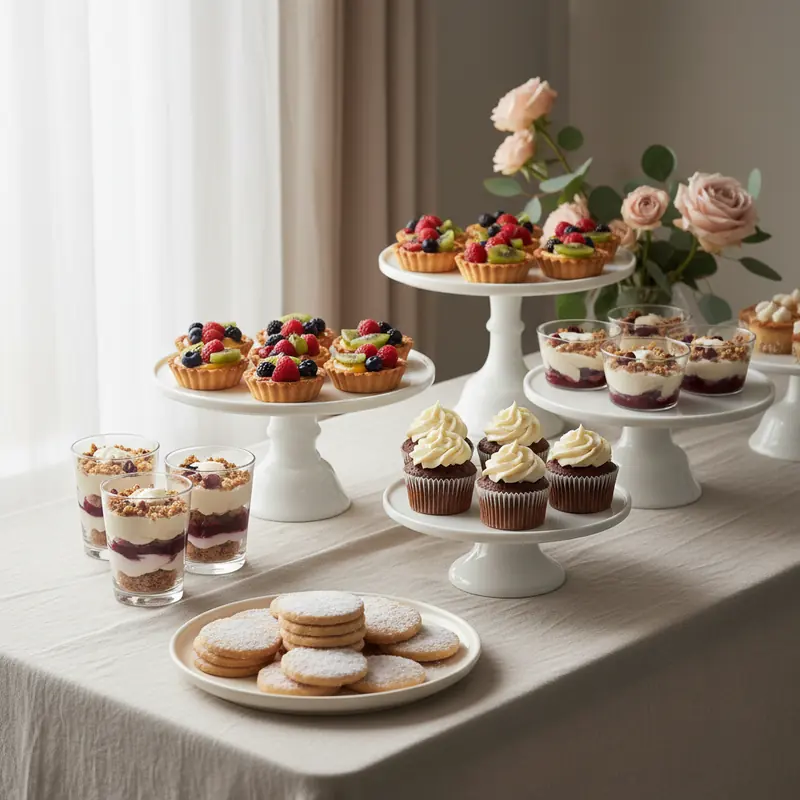
Define the two serving windows before discussing the whole event
Write down when the venue opens, when the first dessert service starts and ends, when the second starts and ends, and when everything must be cleared. Keep these as separate fields. A supplier needs to know whether the table is genuinely closed between sessions or simply less busy. If guests can continue helping themselves during the gap, describe that as ongoing access rather than a complete service pause.
If you still want a formally arranged sweet display at both openings, review Dessert Table Catering to identify the presentation and dessert selection you want to discuss. Then attach your two-window schedule to the enquiry. The service format and the timetable are separate decisions: choosing a dessert table does not establish that two setups, all-day display or continuous attendance are included.
Record setup access before each opening as well as the guest-facing times. The second session cannot be planned solely around the moment guests arrive if stands, utensils and food need to be arranged beforehand. Ask the supplier what preparation interval is needed for the proposed display, and check that the venue can accommodate it without interrupting the programme.
- Event open hours: [start–finish]; venue access for initial setup: [time].
- First dessert window: [start–finish]; second dessert window: [start–finish].
- Gap access: [dessert table closed / limited self-service / other agreed arrangement].
- Second setup access: [time]; final clearing completed by: [time].
Count guest waves without counting every person twice
Separate first-window guests, second-window guests and people likely to attend both. Two attendance figures do not necessarily represent two different groups. If early guests remain for the later opening, the caterer needs to know whether they may take dessert again. You do not need a named guest list for this initial calculation; an estimated overlap is enough to make the assumption visible.
Distinguish people from pieces. Write an expected guest count beside each window, then leave a separate field for the agreed number of dessert pieces. Ask the caterer to explain what counts as a portion for the selected menu. A dessert cup and a small pastry should not silently become interchangeable units when you compare quotations or decide how much to hold back.
If the event also includes sandwiches, hot food or other refreshments, keep those quantities outside the dessert allocation. Tell the supplier whether the second wave has already eaten elsewhere or is joining for refreshments, because that changes the brief they are assessing. Do not import a general pieces-per-person rule into a two-window order without checking the actual selection and the role dessert plays.
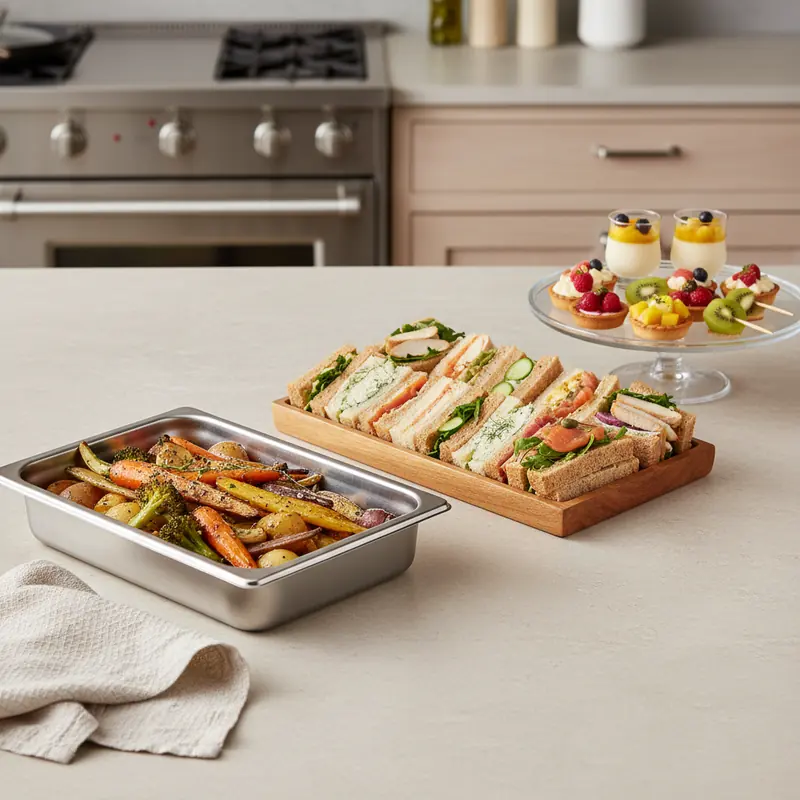
Reserve the second batch instead of relying on whatever remains
Ask for the proposed dessert quantities to be split by window and, where useful, by item. A total quantity alone does not tell you whether late guests will have a meaningful choice. If a particular item matters to both groups, request a stated allocation for each opening rather than assuming the first table will leave enough of it for the second.
Agree who can authorise releasing some of the later allocation early. There is a real trade-off if the first group asks for more: serving those pieces now reduces what remains reserved unless another agreed supply is available. Record whether the organiser prefers to protect the second batch or permit redistribution after approval. Neither preference should be left for staff to guess during a busy session.
Ask how the supplier will distinguish unused reserve stock from food already presented during the first opening. The second service should follow an agreed holding and replenishment plan, not an assumption that everything can be collected and put out again. Keep this operational discussion tied to the chosen desserts; different items may require different handling instructions.
Give drinks their own service clock
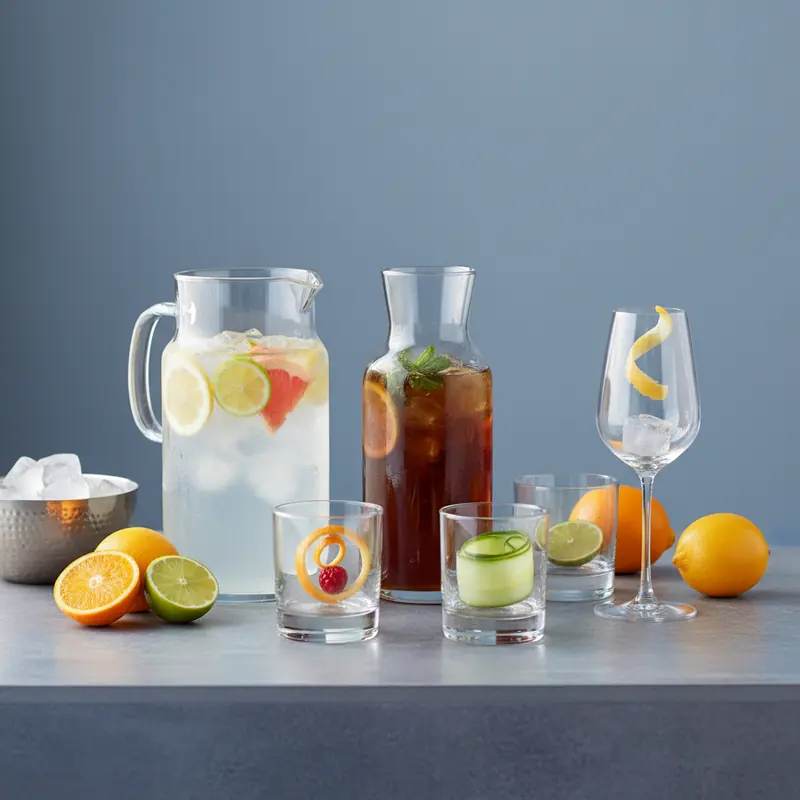
A closed dessert table does not necessarily mean a closed refreshment service. Guests may still expect coffee, tea, water or cold drinks during speeches, networking or the wait for the next group. If you need that continuity, use Drinks Catering to frame a separate enquiry about beverage selection, operating times, equipment and responsibility. Do not assume the dessert quotation includes drinks or someone to serve them.
For each part of the day, state who supplies drinks, who replenishes them and who handles cups, glasses and used items. If the venue is taking over during the dessert gap, identify the handover time and confirm what it accepts. If the catering team continues beverage duties, ask how that affects the staffing arrangement even while dessert service is paused.
Check equipment as well as people. Ask whether beverage equipment can remain powered and accessible, who oversees it, and whether its position conflicts with resetting the dessert table. A proposal to send the whole team away is incomplete if it leaves an unassigned drink station behind. Resolve that dependency before treating a return visit as a workable alternative.
Compare continuous service, standby and a return visit
Request the same dessert menu, total pieces and presentation standard across the options the supplier can actually offer. The Julie's Blue Ribbon Cookies dessert-catering guide recommends comparing equivalent service levels and identifying delivery, setup, staffing and rentals separately. It is an overseas guide, not a statement of Hong Kong fees, but that comparison method is useful here.
Ask for continuous staffed service as a baseline if it is available: what would it include from the first opening through the second? Then request alternatives without quietly reducing the later allocation, removing clearing or changing the display. If an option is not feasible, have it marked unavailable rather than forcing a misleading comparison.
Two windows with the team staying onsite
Under a standby proposal, guests receive dessert during the two agreed windows while the team remains at the venue in between. Ask which duties continue during the gap, where staff and reserve food may stay, and how standby is charged. Do not treat the gap as free time merely because no desserts are being handed out; the quotation should explain the actual arrangement.
A departure followed by a second arrival
For a return-visit proposal, ask what leaves after the first service, what stays, and what must be transported back. Request separate confirmation of the return journey, second access period, resetting and final clearing. If the supplier cannot accept a departure and return, compare the available continuous or standby arrangements instead. There is no need to assume that a named split-service product exists.
Read staffing hours beyond the minutes guests eat dessert
For each feasible option, ask Catering Staff Hire questions in terms of roles and attendance: who sets up, replenishes, manages drinks, clears used items and packs equipment? Request the proposed start and finish for each role. A serving window describes guest access; it does not by itself define the payable working period.
The overseas provider Made You Hungry's full-service catering page explains its own staffing from load-in and itemises roles and hours. That is not evidence of a Hong Kong-wide charging rule. It illustrates why you should ask YumYum Catering whether setup, breakdown and waiting are included in the hours proposed for your event rather than counting only the dessert sessions.
Check whether a minimum attendance applies to each separate call-out or to the overall booking, whether onsite standby is billed, and what happens if the venue delays access. A return visit may create another attendance requirement as well as another journey. Ask for any such terms in writing before concluding that a shorter guest-facing service will cost less.
Test a return visit against the venue's access rules
A second delivery is only useful if the team can reach the room when needed. Ask the venue about repeat supplier registration, loading access, lift reservations and any restrictions during the programme. Give the caterer those rules with the enquiry. The first arrival being possible does not establish that the same route will be available before the second dessert opening.
Distinguish a food replenishment visit from a full second setup. A replenishment delivery may still need a receiving person and an agreed place for the items; a reset may also require moving equipment through the room. Ask whether the proposed access period allows for the work actually quoted, including any venue handover or inspection requirements.
Agree what happens if the return cannot proceed as planned. Identify the organiser who will receive updates and decide whether to adjust the second opening, use an agreed alternative or keep the existing arrangement. Do not advertise a precise second-service promise to guests until the supplier and venue have accepted the timing and access conditions.
Assign responsibility for desserts throughout the gap
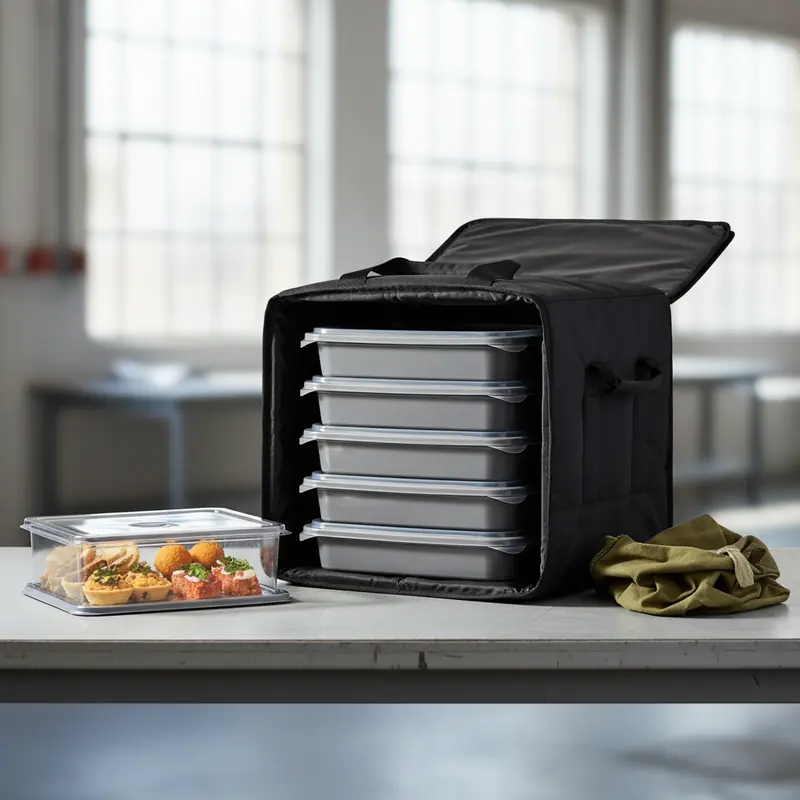
Ask where unserved stock will be held, what refrigeration or other suitable storage the selected desserts need, and who has responsibility for it between windows. Confirm the venue's actual facilities rather than assuming a pantry includes usable space. If the supplier proposes to leave, clarify whether it also takes the reserve stock away or whether a specifically agreed receiving person accepts it onsite.
Request instructions for first-window food that has already been displayed: who removes it, how it is separated from unused stock, and what may or may not be used later. Temporarily putting food away does not reset its previous storage or display history. Do not use the gap as a reason to overlook that history or to improvise holding arrangements without the supplier's guidance.
For the second opening, ask whether replenishment comes from a separately held batch, what facilities must remain available and who checks readiness before guests return. Avoid unsupported temperature or time assumptions. If the venue cannot provide the conditions needed for a proposed dessert, ask the caterer to revise the item or service plan rather than relying on the appearance of the display.
Decide what stays on the table and who clears it
Mark the status of the table during the gap: closed and cleared of food, retained as an empty display, or used for another agreed purpose. Tell the venue if stands or other equipment are to remain. If the room needs the surface for registration or a presentation, a proposal that leaves the display in place may not solve your problem even when it is otherwise feasible.
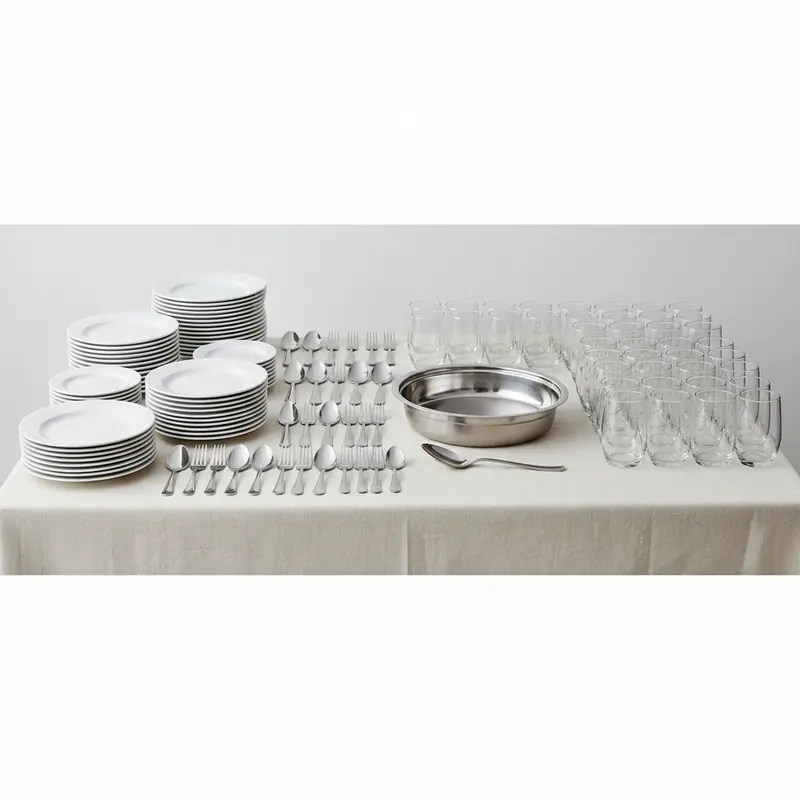
Ask whether plates, glasses, serving utensils, labels and waste collection are supplied for both windows. Clarify who replaces used items before the second opening and where the first session's used tableware goes. Keeping equipment onsite is different from leaving it ready for guests; a reset may require work even when nothing travels back to the supplier.
Separate end-of-first-window clearing from final departure. The confirmation should state who removes food, who packs reusable equipment, who handles waste and when the venue needs the area restored. If the venue or organiser performs any of those tasks, describe the boundary. Otherwise, two apparently similar quotations may end with very different clearing obligations.
Agree how to handle guests who miss the second opening
Dessert catering for late-arriving guests still needs an agreed endpoint. Decide whether the second window is fixed or whether an extension may be requested. Ask what triggers overtime or waiting charges, whether an extension depends on staff and venue availability, and how approval must be given. An organiser's hope that a few guests will arrive soon is not an agreed extension.
Name one decision-maker for timing changes and a backup contact if that person is occupied. Ask staff to refer requests to that contact rather than accepting conflicting instructions from several hosts. Include what should happen if approval cannot be reached: follow the confirmed end time, contact the backup or use another expressly agreed instruction.
If guest communications need a final collection time, base it on the accepted service arrangement and the supplier's handling instructions. Do not promise unattended pickup after the team leaves unless the handover and holding conditions have been agreed. A small late group can still need a different service format rather than an open-ended extension of the table.
Consider a boxed alternative when the later group is small or scattered
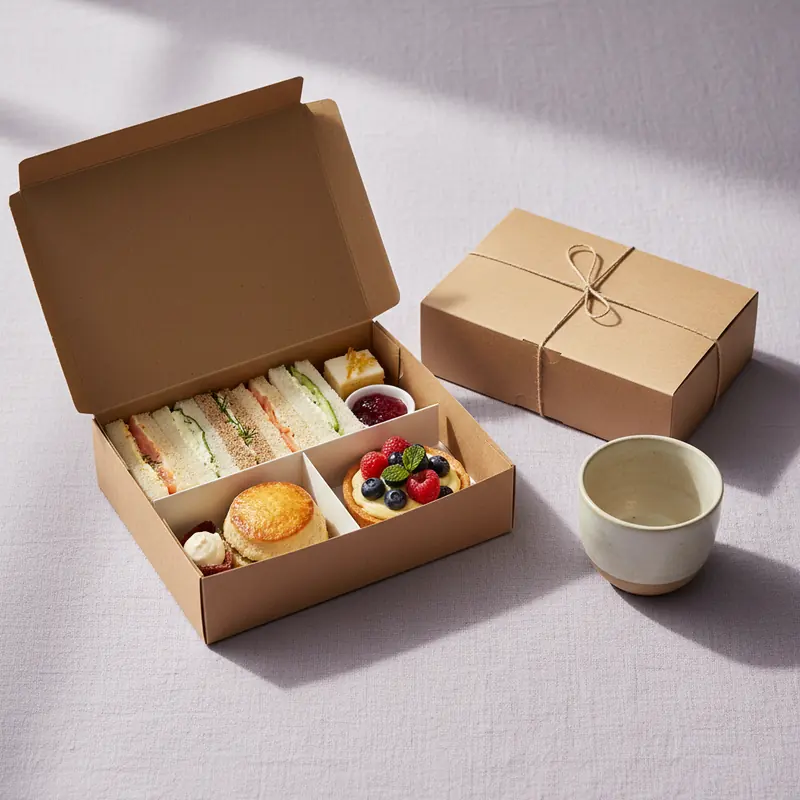
If the second wave is small or arrives at unpredictable times, ask whether Afternoon Tea Box Catering could replace a second table opening. Confirm the actual savoury-and-sweet selection and quantity with customer service. This is an alternative refreshment format, not an identical dessert-table service in a container, so compare it against what late guests actually need.
The overseas Bite Catering afternoon-tea guide distinguishes individual packaging, drop-off and onsite service, and considers arrival timing, service length and venue facilities. Those distinctions help frame the question; they do not establish YumYum Catering's availability, menu or policy for your date. Ask which format, if any, can be offered for the later group.
A box still needs a receiving person, suitable holding conditions, clear allocation and an agreed collection arrangement. Ask for storage and consumption instructions for the confirmed contents, and raise dietary requirements before selection. Packaging does not automatically remove refrigeration needs or permit indefinite storage. If nobody can manage the handover, boxes may not resolve the gap responsibility either.
Send one brief and compare the replies against it
Bring the timeline, guest overlap, portions by window, beverage duties, venue access and gap responsibilities into one enquiry. You can describe it as a split-service dessert catering quote, but immediately explain the actual two windows rather than relying on the phrase as a recognised package name. Ask YumYum Catering to confirm which arrangements are feasible and to identify assumptions or exclusions.
When the reply arrives, first check that both openings receive the agreed food and presentation. Then compare the attendance periods, standby treatment, repeat transport, resetting, equipment and final clearing. Ask for a revised written scope if any of these differ from your brief. A total without those boundaries does not tell you whether the later guests and the venue are properly covered.
Choose the arrangement whose responsibilities you can support, not simply the one with the shortest serving line on paper. Confirm current charges, availability and change terms with customer service for the specific order. Keep the accepted version with the onsite decision-maker so a programme delay, extra request or late arrival can be handled against the same agreement.
Details to confirm before ordering
- Confirm both dessert windows, initial and repeat setup access, gap closure and the final clearing deadline.
- Record guests expected in each window, estimated overlap and whether repeat servings are intended.
- Agree dessert selection and reserved pieces by window, including who may authorise early release of the second allocation.
- Separate drink-service hours, equipment and responsibilities from dessert-service hours.
- Confirm the feasible service model and its minimum attendance, standby, repeat transport and reset terms.
- Assign gap storage, displayed-food removal, tableware replacement and final clearing to named roles.
- Confirm second-entry venue access and the receiving arrangement for any replenishment or boxed alternative.
- Record the late-arrival decision-maker, extension approval process and applicable change or overtime terms.
Questions about this decision
Does a two-window enquiry mean the dessert table stays available all day?
No. State whether guests can access dessert between the windows. If access continues, the gap is not a complete closure, and the supplier needs to quote for the actual replenishment, supervision and clearing required.
Can I assume the team will leave and return to avoid standby charges?
No. A return visit requires supplier acceptance, repeat venue access and an agreed plan for food and equipment. Ask whether it is feasible and what attendance, transport and resetting terms apply.
How should I describe guests who may eat dessert in both sessions?
Give an estimated overlap and say whether repeat servings are intended. Keep that separate from the number of unique guests, then ask for a proposed piece allocation for each opening.
Is closing the dessert table enough to pause all staffing?
Not necessarily. Drinks, food holding, clearing or equipment responsibilities may continue. Ask which roles remain active and how standby or minimum attendance is treated in your quotation.
Are afternoon tea boxes automatically easier to keep for late pickup?
No. Suitability depends on the confirmed contents, facilities and handover plan. Ask for holding and collection instructions; individual packaging is not a promise of unrestricted storage or unattended collection.
Sources and further reading
Reference only. Illustrations are AI-generated design references, not photographs of actual customer orders. Confirm current contents, prices and arrangements with our team.
For this guide:Late-Arriving Dessert Guests: How to Request a Quote for Two Serving Windows
Plan catering for your event
Considering Dessert Table Catering? Send the date, district and the points discussed in this guide to YumYum Catering to confirm suitable options and a quotation.
Book Catering NowWhatsAppThis opens a prepared WhatsApp enquiry. Availability, details and price must be confirmed before booking.
Explore related services and designs
Compare relevant options, view design references and find the information you need before making an enquiry.
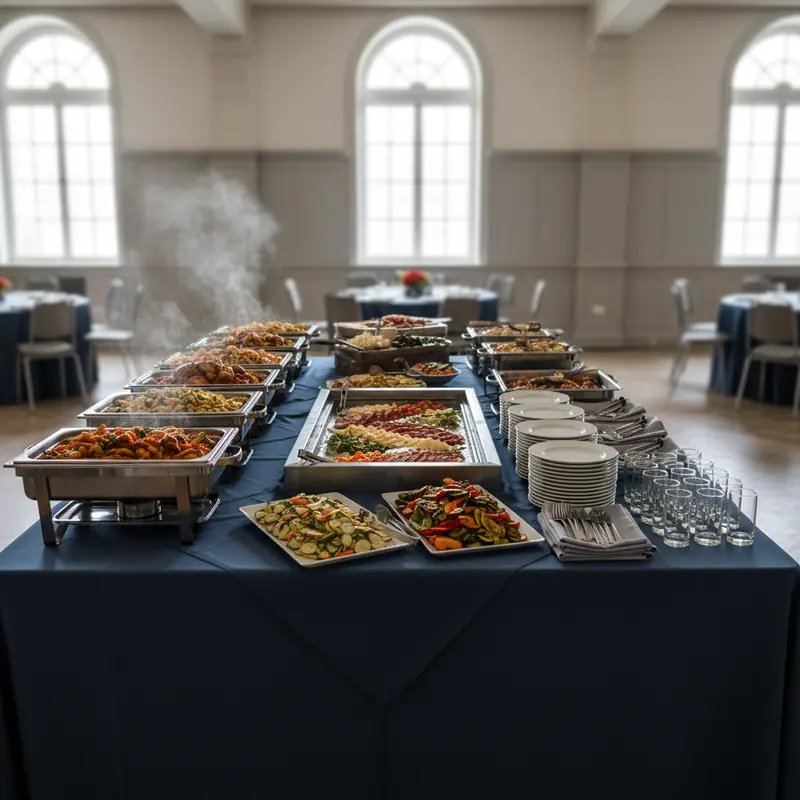
50 Person Catering Package
Compare menu formats for a larger event, exploring broader shared dish selections and serving layouts while checking the package information for stated portions, equipment and group suitability.
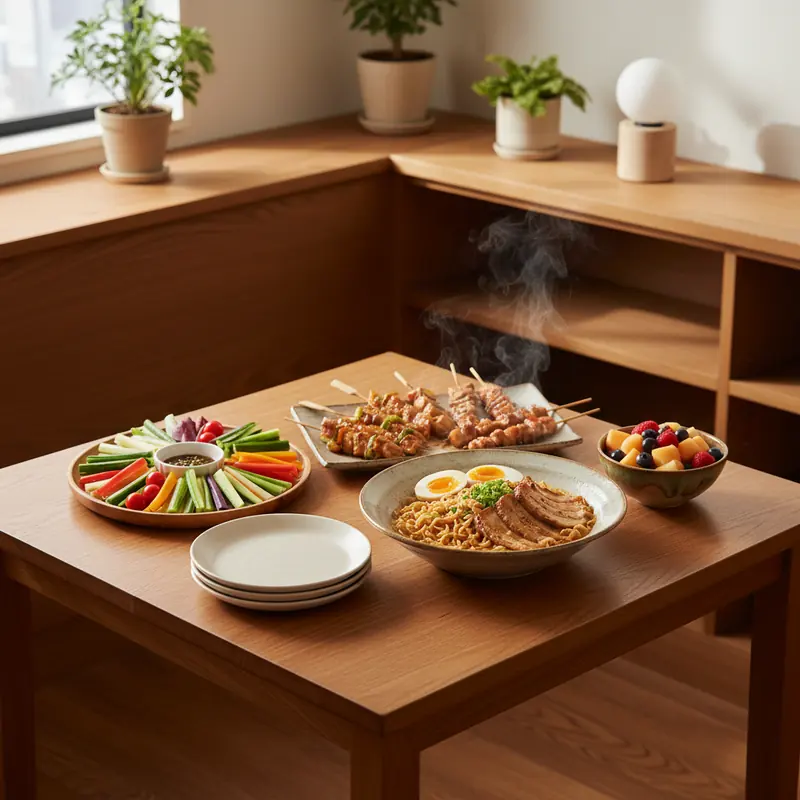
10 Person Catering Package
Compare small party menu combinations and compact sharing layouts, exploring the package page for group suitability while checking listed portions rather than relying on the illustration for quantities.
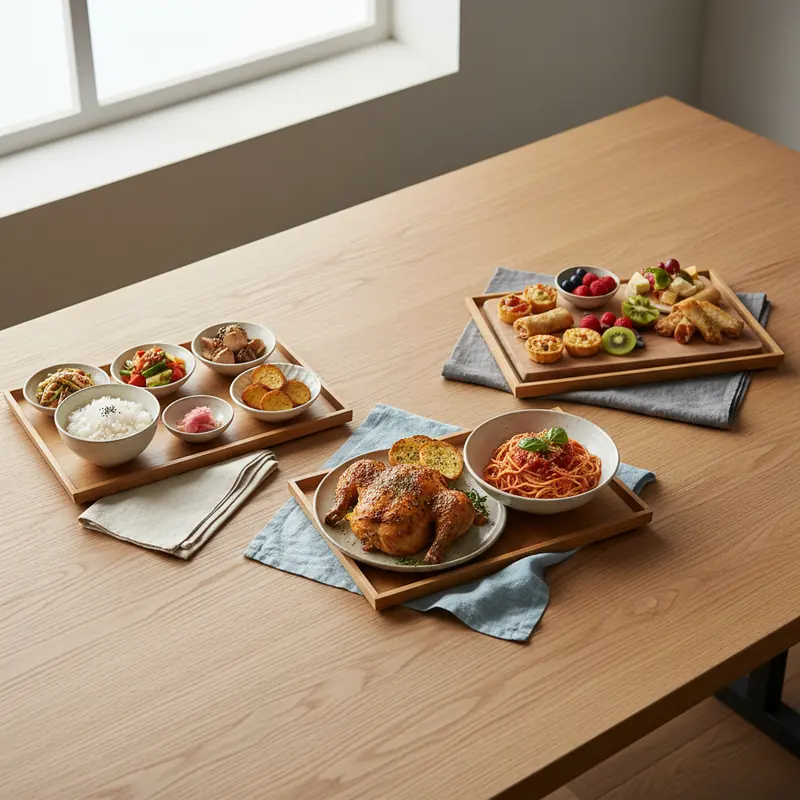
Catering Packages Comparison
Compare set menu combinations, serving formats and group suitability in one place, using the package overview to narrow your choices before exploring individual catering options.
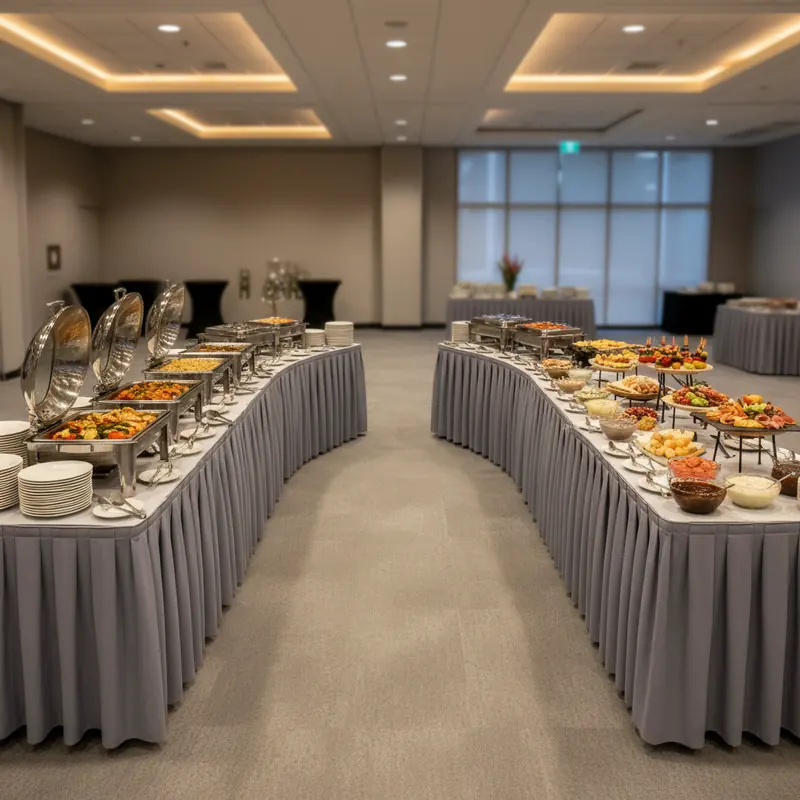
100 Person Catering Package
Explore corporate event menu planning at a larger scale, comparing food station arrangements and shared dish formats while relying on package details for portions and event requirements.
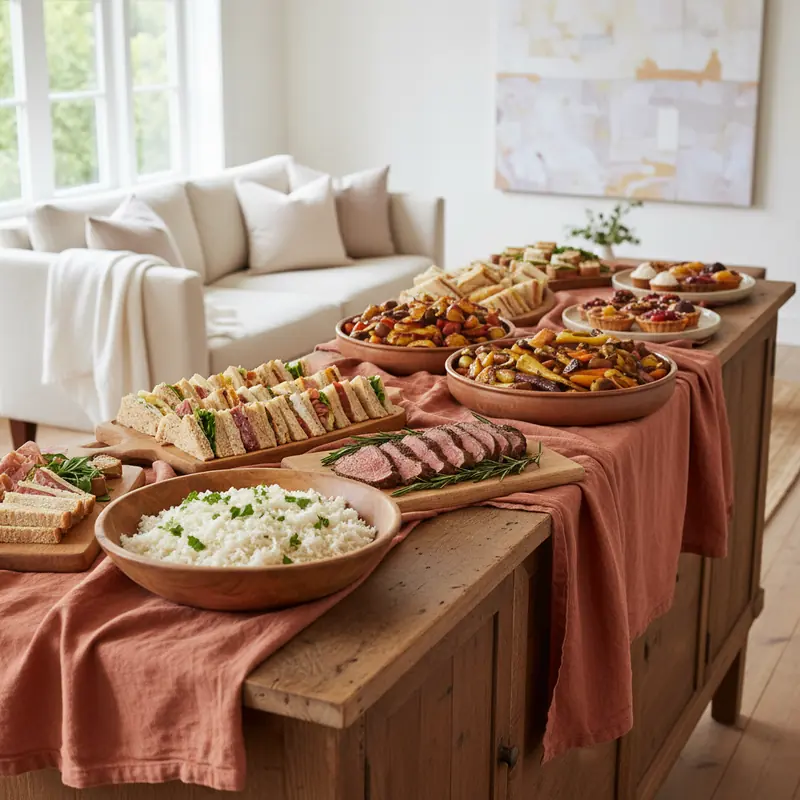
20 Person Catering Package
Explore medium gathering menu arrangements, comparing shared main dishes and snack additions while using the package details, not the image, to assess portions and group suitability.
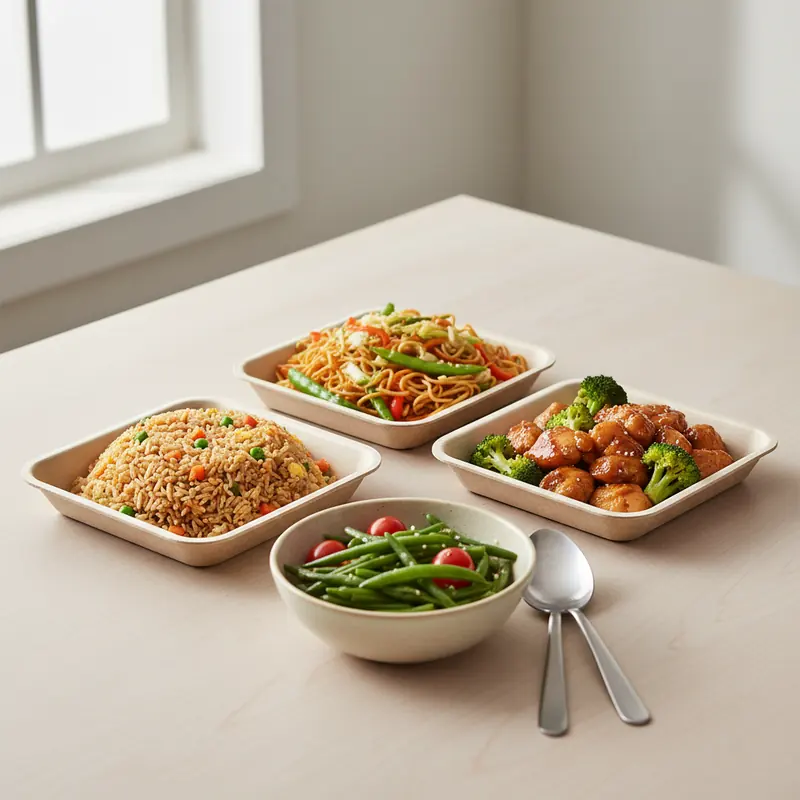
Budget Catering
Compare straightforward catering combinations, dish variety and serving formats with your budget in mind, using the page details to assess options rather than assuming discounts or fixed prices.
Original AI-generated navigation references; designs and order details are subject to confirmation.
Useful options for your plans
Explore 100 Person Catering Package to compare food station arrangements for a larger corporate event.
Compare broader menu selections and serving layouts for a larger event with 50 Person Catering Package.
Compare straightforward dish combinations and serving formats with Budget Catering.
Compare compact menu combinations for a small gathering with 10 Person Catering Package.