YumYum Gifts · Ordering guides
Sending a Housewarming Hamper with Fragile Homeware: Packing and Handover Checks
For this guide:Sending a Housewarming Hamper with Fragile Homeware: Packing and Handover Checks
Arrange a thoughtful gift
Considering Home & living gift sets? Send the date, district and the points discussed in this guide to YumYum Gifts to confirm suitable options and a quotation.
Order Your GiftWhatsAppThis opens a prepared WhatsApp enquiry. Availability, details and price must be confirmed before booking.
A ceramic mug or glass vase can make a thoughtful gift for a new home, but its journey needs more planning than its place in a beautiful basket. The practical question is how to check fragile homeware packaging in a housewarming hamper before paying, when there is still time to clarify the arrangement or choose something different.
Start by requesting the actual contents list, an explanation of the transport packaging and the proposed receiving arrangement. Keep the merchant's answers with the order confirmation. The checks below follow the gift from packing to residential handover and, if needed, a damage report. They are questions to agree for your particular Hong Kong order, not promises that every merchant or carrier offers the same service.
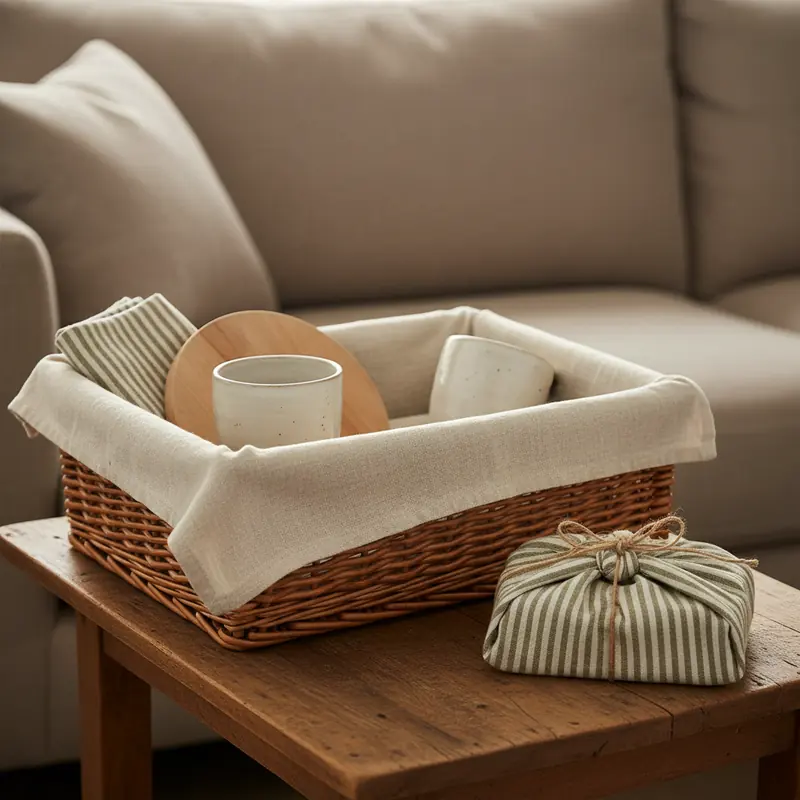
1. Identify every fragile item before discussing the wrapping
Begin with names and materials rather than a general description such as a homeware set. Ask whether the proposed gift contains glass, ceramic, a bottle or another breakable container, and whether any lids or accessories are separate. When browsing Home & living gift sets, use the category as a starting point for questions, not confirmation of a fixed ceramic or glass assortment. Establish the contents of the particular option you intend to order.
For each item, note the parts that need a specific explanation: a mug handle, drinking-glass edge, narrow stem, vase neck or projecting spout. Ask what sits next to it in the finished hamper. A ceramic cup beside a serving board raises a different packing question from a cup inside its own box. If a substitution is proposed later, revisit these questions instead of assuming that approval of the original arrangement covers every replacement.
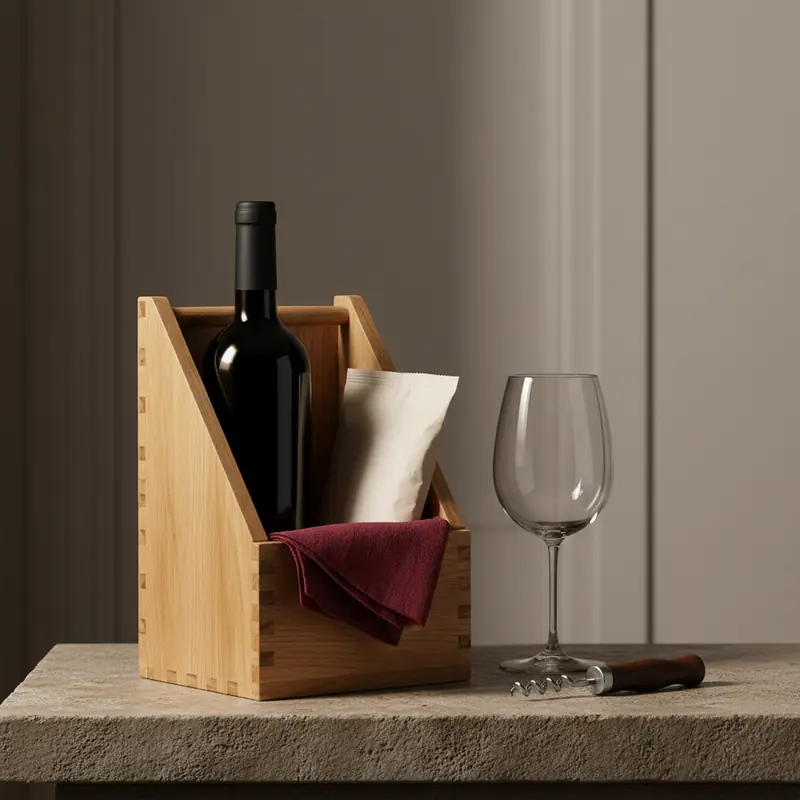
2. Separate the gift presentation from the transport package
A basket, ribbon and clear wrapping describe how the gift looks; they do not explain how it is protected during movement. While comparing Housewarming hampers, ask which layers remain around the items during delivery and which are purely decorative. Will the display basket travel inside a carton? Must the recipient remove protective wrapping before the arrangement looks like its presentation image? These are useful trade-offs to settle before choosing appearance over a clearly explained packing method.
The Easyship gift-basket shipping guide discusses individually wrapping breakable items, using protective boxes where appropriate and securing empty space. That supports asking for more than a photograph of the finished ribbon. Request a description of the packed-for-transport arrangement as well as the intended display. Any reference image should be treated as illustrative unless the merchant specifically identifies it as documentation of your order.
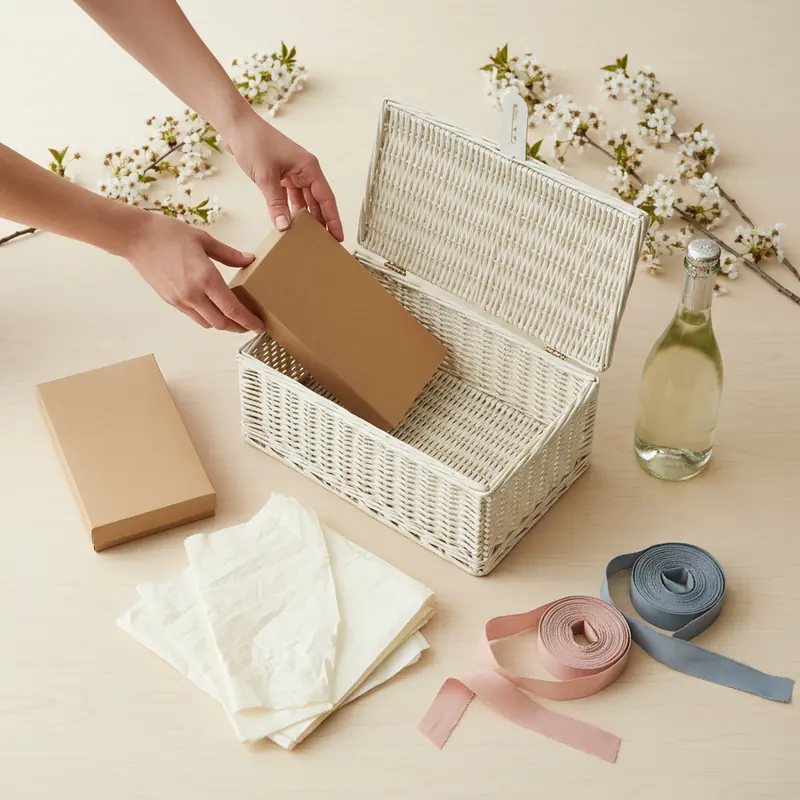
3. Ask how handles, rims and vase mouths are protected
An answer such as everything is wrapped still leaves an important question unanswered: does the protection account for the shape of each piece? DPD's glassware packaging guidance specifically identifies cup handles and vase mouths as projecting parts requiring additional protection. Use those examples to ask the merchant about the actual objects, rather than prescribing a single wrapping recipe for every hamper.
Cups and glassware: ask about the projecting and exposed parts
For a mug, ask how the handle is protected separately from the body and what prevents an adjacent item pressing against it. For a drinking glass, ask about the rim and, if present, the stem. Find out whether pieces are wrapped individually and separated after being arranged. Do not interpret a tea towel laid across the display as a complete explanation of protection; ask what performs that role during transport.
Vases: ask about the neck, mouth and accompanying pieces
For a vase, identify the neck and mouth in your enquiry and ask whether they receive protection beyond the main body. If the gift includes stems or decorative accessories, ask whether they travel separately or together and how that affects the arrangement. The aim is not to demand that every vase be packed identically, but to obtain an answer that refers to its actual shape and the selected delivery method.
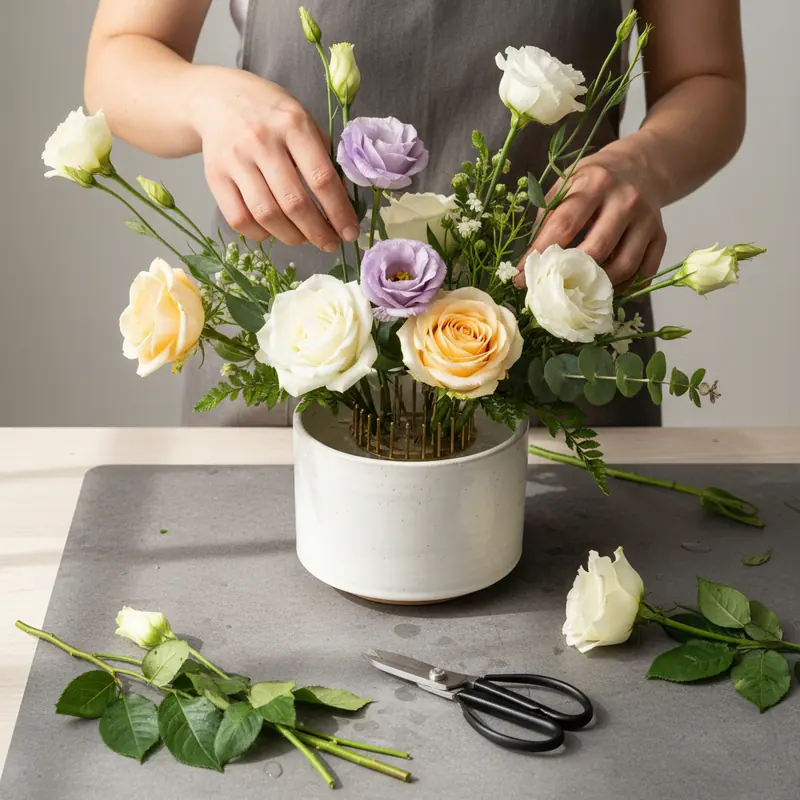
4. Check separation between homeware and heavier contents
A mixed hamper deserves a contents-to-contents check. Ask what separates cups from jars, bottles, boards and the basket's hard edges. If several fragile items are included, find out whether each has its own protected space or whether the arrangement depends on them sitting closely together. DHL's fragile-item packing guide recommends individual protection, separation and filling voids. Those principles make useful questions for a mixed gift, without turning that overseas guide into a Hong Kong packing standard.
Ask the merchant to describe the whole arrangement, including what keeps each item in position once the carton is closed. Decorative filler may form part of the display, but you still need to know how movement and direct contact are addressed. If the explanation is unclear, consider requesting separately boxed homeware or fewer hard items in the same arrangement, subject to what the merchant can actually supply.
5. Decide whether individual inner boxes suit the gift
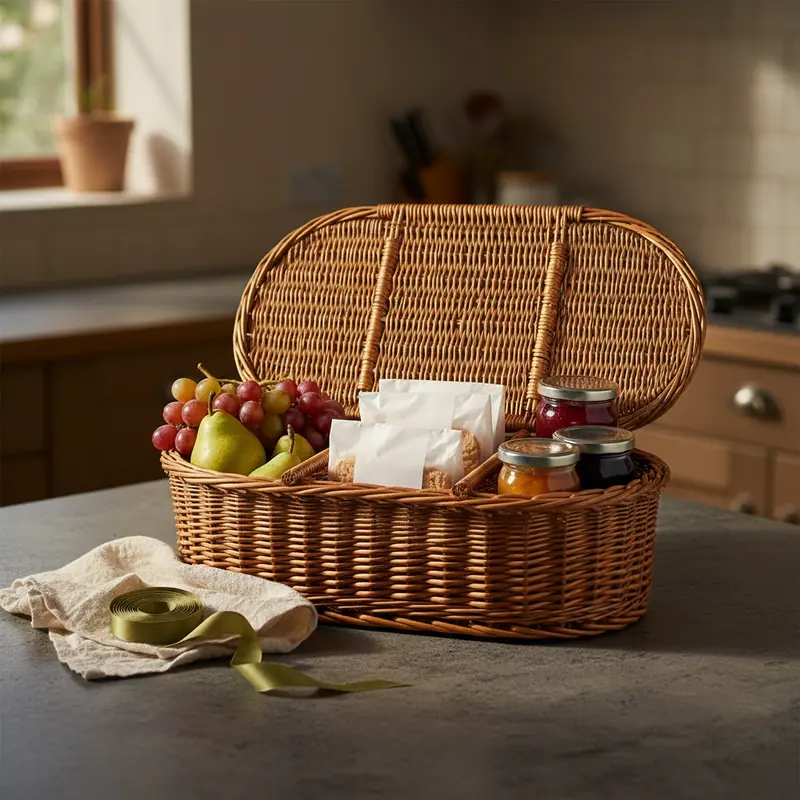
Individual inner boxes can be worth discussing when the hamper contains several delicate pieces or a shape that is awkward to protect within an open display. Ask whether the merchant proposes a protected item within the basket, a separate inner box within the transport carton, or another arrangement. Then ask how the basket or inner boxes are held within the outer carton, so that the answer covers both the object and the package around it.
DHL's guide also discusses double-box protection for particular fragile shipments. Treat that as an option to discuss, not a requirement for every housewarming gift. The appropriate arrangement depends on the contents and shipment. Avoid relying on a single cushioning thickness quoted online: the question is whether the merchant can explain a suitable complete packing approach for your chosen pieces and delivery method, including any extra packaging charge to confirm before ordering.
6. Ask what a fragile label actually changes
A fragile label is not a substitute for the packing explanation. DPD's guidance describes fragile stickers as informational within its own regional service, while DHL's guide stresses that labelling does not replace sound packaging. Neither source establishes the policy of your Hong Kong carrier. Ask the merchant whether the proposed shipment uses ordinary delivery or an explicitly agreed handling service, and what that service includes.
If special handling is mentioned, request the relevant description or terms rather than inferring it from the sticker. Clarify who arranges it, whether the selected contents are accepted and whether there is an additional charge. If no special handling has been agreed, base your decision on the confirmed packing and ordinary delivery arrangements, not on an expectation that the label alone will change the journey.
7. Define the residential handover point
An address does not fully describe a handover. Use the Gift hamper delivery in Hong Kong enquiry route to ask what is available for this order: delivery to the unit door, a lobby meeting or an authorised handover to building management. Confirm the endpoint with the merchant and check the building's receiving arrangement separately. Do not assume that a delivery enquiry automatically includes doorstep service, a selected time slot or an opportunity to unpack with the driver present.
Name the intended receiver in the order instructions and agree how that person will be contacted. Ask what delivery record will be provided and whether it identifies a resident or an authorised substitute. Keep that record distinct from an inspection of the homeware: it may document a handover without documenting the condition of every piece inside. Do not assume that a signature either eliminates a damage enquiry or guarantees a particular outcome; check the applicable terms.

8. Make a fallback plan before authorising management reception
Ask the resident whether building management is willing to receive this type of parcel and whether the resident actually wants that arrangement. If so, ask the merchant how to record the authorisation. Establish who will collect the hamper afterwards and who can check it. A parcel being accepted at reception is a different event from the resident opening it, so both steps need an owner in your plan.
Agree what should happen if reception refuses the parcel, the named recipient cannot be reached or access instructions cannot be followed. Who should be called first: the sender or recipient? Is another attempt possible, and would it involve a fee? What happens to the parcel while a new arrangement is discussed? Obtain order-specific answers rather than assuming free redelivery or permission to leave a fragile gift unattended.
9. Compare another gift format if prompt unpacking is unlikely
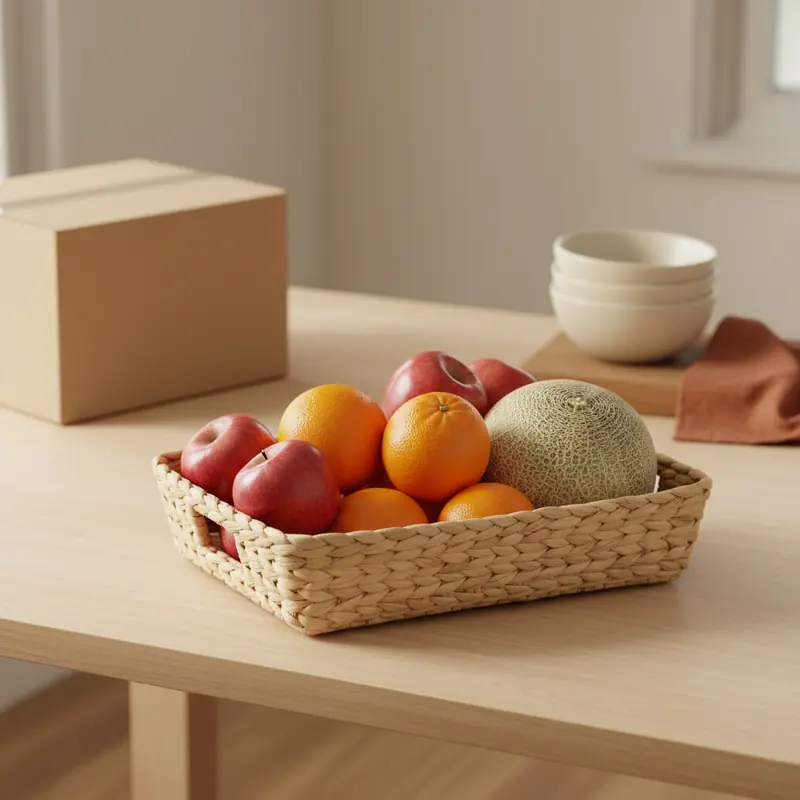
If the resident will be away or cannot check delicate homeware within the agreed reporting arrangements, consider changing the gift or delivery date. A Housewarming basket is a fruit-basket direction to compare, not another name for a fragile homeware hamper. Ask about its actual container and accessories: a fruit arrangement may still include a breakable bowl, jar or other component requiring protection. It is not automatically free of breakage or delivery risks.
Compare what the recipient must do after handover. A homeware gift needs its protective layers removed and its pieces checked; a fruit gift needs suitable attention to its contents and any accompanying merchant instructions. Neither option solves an unattended delivery by itself. If no suitable receiver is available, ask whether a different date or a simpler, non-fragile selection is possible rather than adding a gift the resident cannot readily manage.
10. Record a contact for each stage of the journey
Keep a short record with four stages: merchant packing and dispatch; carrier transport; resident or authorised reception handover; and unpacking. Against each stage, record the available contact, the information you expect to receive and the next step if there is a problem. For dispatch, ask who confirms the packed contents. For transport, ask whether delivery queries go through the merchant or another named service. This is a practical contact map, not a declaration of legal liability.
For reception, record who is authorised and who will notify the resident. For unpacking, decide whether the sender or recipient will submit any damage report. In a hypothetical example, the sender might manage the order while the recipient supplies photographs; agree that arrangement beforehand so neither waits for the other to act. Forward the relevant instructions without asking building staff to perform an inspection they have not agreed to undertake.
11. Confirm the damage-reporting route before dispatch
Ask the merchant how soon damage must be reported, which channel to use and what evidence is required. Establish whether the merchant coordinates with the carrier or whether a separate report is needed, and by whom. The PACK & SEND fragile-shipping guide recommends photographing damage and contacting the carrier or shipping provider promptly. That supports preparing a reporting route; it does not establish a universal Hong Kong deadline or entitlement to compensation.
Also ask how proposed remedies are assessed. If one cup is damaged, can an individual replacement be considered, or would another arrangement need discussion? Who gives instructions about returns, collection and possible charges? Save the answers with the order terms. A clear process helps you know what to submit, but it is not a promise of a refund, replacement, free return or decision within a particular period.
12. Document damage without disturbing the evidence unnecessarily
If damage is discovered, stop handling broken pieces. Where it can be done without touching fragments, photograph the outer carton and any visible damage, the inner packaging as found and the affected item. Record which piece is involved and whether other pieces appear affected, without continuing to unpack an area containing shards simply to complete a checklist. Preserve the order and delivery details so the report connects the condition found with the correct parcel.
Contact the agreed reporting channel promptly and describe what you observed rather than guessing when or where the break occurred. Include the order reference, delivery information and available photographs. Keep the carton, protective materials and affected contents, without further handling of fragments, until you receive instructions about what is needed and how to proceed. Do not independently return a parcel containing broken pieces before obtaining the relevant packing or collection instructions. The aim is a clear, usable report, not an assumption about who must compensate you.
Details to confirm before ordering
- Chosen contents and materials: ____; handles, rims, necks or other projecting parts requiring an explanation: ____.
- Individual protection and separation from jars, bottles, boards and basket edges confirmed as: ____.
- Transport carton, void restraint and any individual inner boxes confirmed as: ____; any additional packing charge to confirm: ____.
- Requested delivery date and district: ____; agreed handover endpoint: ____; named receiver role: ____.
- Management reception authorised and willing: ____; fallback contact if reception refuses or the recipient is absent: ____; any rearrangement charge: ____.
- Damage-reporting contact, required notification period and person submitting the report: ____; required evidence: ____.
- Merchant/carrier follow-up route and instructions for possible replacement, return or collection: ____; possible charges to confirm: ____.
Questions about this decision
Does a beautiful basket show that the homeware is ready for transport?
No. Ask separately about individual wrapping, protection for handles and rims, separation from hard items and the outer transport package. A presentation image alone does not show those details.
Must every fragile housewarming hamper be double-boxed?
There is no single packing arrangement established here for every hamper. Ask the merchant whether inner boxes or double-boxing suit the actual pieces and delivery method, and how the full package prevents movement and contact.
Can building management sign for the gift instead of the resident?
Only use that plan after checking the building's willingness to receive it and the merchant's handover arrangements. Record the resident's authorisation and the fallback if reception refuses. Acceptance at reception is not itself an inspection of the fragile contents.
What if a cup is damaged even though the carton looks intact?
Document the carton, inner protection and affected cup where possible without touching fragments, and use the agreed reporting route promptly. Describe the intact exterior as well as the internal damage; do not assume that exterior appearance settles the enquiry.
Should the sender or recipient make the damage report?
Confirm this with the merchant before dispatch. Agree who submits the order information, who supplies photographs and whether the merchant coordinates any carrier enquiry, so there is one clear route rather than separate, incomplete reports.
Sources and further reading
Reference only. Illustrations are AI-generated design references, not photographs of actual customer orders. Confirm current contents, prices and arrangements with our team.
For this guide:Sending a Housewarming Hamper with Fragile Homeware: Packing and Handover Checks
Arrange a thoughtful gift
Considering Home & living gift sets? Send the date, district and the points discussed in this guide to YumYum Gifts to confirm suitable options and a quotation.
Order Your GiftWhatsAppThis opens a prepared WhatsApp enquiry. Availability, details and price must be confirmed before booking.
Explore related services and designs
Compare relevant options, view design references and find the information you need before making an enquiry.
Gift hamper
Compare fruit and gourmet hamper directions, basket presentation and recipient preferences to narrow down a gift composition before discussing the contents that matter to you.
Gift basket delivery
Compare gift basket formats and the delivery details to discuss, including recipient arrangements and presentation, without assuming that any particular delivery timing is available.
Wine hamper
Compare wine hamper layouts, bottle presentation and accompanying gift directions for adult recipients, considering their preferences before deciding which combination to enquire about further.
Wedding gift hamper
Compare personalised hamper combinations, including wedding gift directions, by looking at contents, container styles and finishing touches that can be discussed around the recipient's preferences.
Original AI-generated navigation references; designs and order details are subject to confirmation.
Useful options for your plans
Explore Gift hamper to compare fruit and gourmet contents for your recipient.
Check Gift hamper delivery in Hong Kong when considering how your chosen basket will reach its recipient.
Explore Bespoke gift hampers to compare personalised combinations, including a wedding gift direction.
Compare Wine hamper presentation for an adult recipient who enjoys wine.