Y. Florist · Ordering guides
Floral Workshop Group Quotes: Does Everyone Get Materials and a Take-Home Piece?
For this guide:Floral Workshop Group Quotes: Does Everyone Get Materials and a Take-Home Piece?
Plan your workshop
Considering floristry classes? Send the date, district and the points discussed in this guide to Y. Florist to confirm suitable options and a quotation.
Book a WorkshopWhatsAppThis opens a prepared WhatsApp enquiry. Availability, details and price must be confirmed before booking.
An invitation can say everyone is joining a floral workshop while the quotation describes something quite different: individual making, a shared team arrangement, or a demonstration with limited hands-on participation. None is automatically the wrong format. The problem arises when the organiser expects a finished piece for every guest but the group price has never defined that outcome.
Before accepting, use a floral workshop group quote checklist to match four things in writing: who will make, what materials they can use, what must stay at the venue, and what will leave with them. Start with the actual quotation rather than the promotional image. Mark any wording such as ‘materials included’ or ‘group arrangement’ that does not specify quantities or ownership, then send one consolidated request for clarification. The questions below are booking checks, not a statement that any particular Y. Florist package includes these items.
Match the group price to the learning format
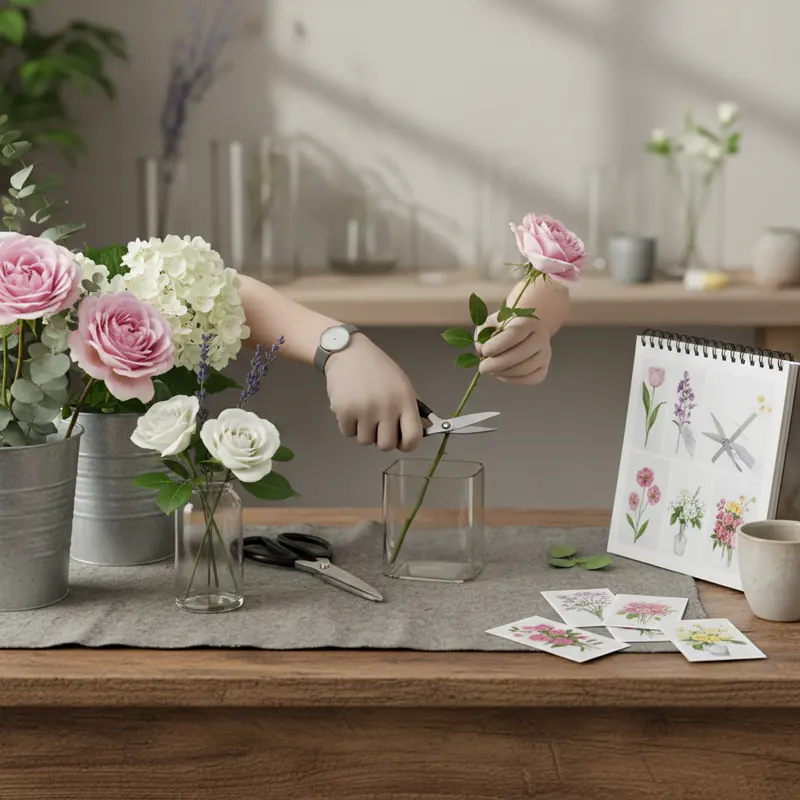
First establish whether the quotation is for places in a scheduled class, a privately arranged session, or an activity within a wider event. When comparing floristry classes, use the course information to identify the learning format, then check the quotation for your particular booking. A course description can help you choose a project, but it does not replace confirmation of the participant allocation, materials and conditions attached to your group price.
For a celebration or other private floral workshop, state your estimated number of hands-on makers and whether you want a separate piece for each. Private use of a session should not be read as unlimited materials or unlimited participation. Ask what the quoted group unit means, whether a minimum charge applies, and which changes would require a revised quotation. This is especially useful when your invitation list is still moving and the organiser has not decided whether companions will make or simply attend.
Count hands-on makers separately from people in the room
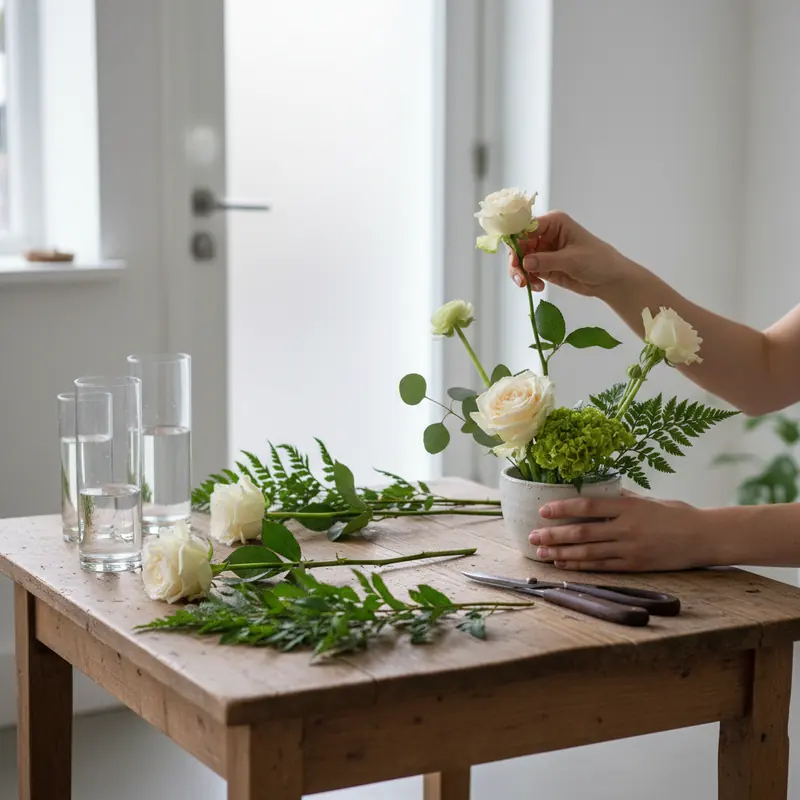
Give the florist separate counts for active makers, observers and anyone attending only part of the event. A host, photographer or colleague helping with the schedule might be present without needing a materials set. Conversely, someone originally listed as a companion might expect to join the practical activity. Ask the supplier to identify the number of making places included, rather than answering only with a maximum room attendance. If participation is undecided, request the terms for adding a making place instead of assuming spare flowers will cover it.
Then label the participation model: individual work, shared work, or demonstration only. In a shared format, identify how many people are expected to work on each piece and whether they rotate through meaningful practical steps. For a demonstration, ask whether any practice materials are provided at all. This separates access to the session from an entitlement to an individual project and helps you describe the event accurately to guests before they accept the invitation.
Translate ‘materials included’ into a usable allocation
The useful question is not simply whether flowers are included, but how the quoted materials support the agreed making format. Ask for a short description of the flowers and foliage allocated per maker or per shared project, the container or base where relevant, and the fixing or binding materials needed to complete it. For floral workshop materials per person, a clear project-level allocation is more informative than a photograph of a large communal flower bucket. You need to know what each participant is entitled to use, not just what will be visible in the room.
There is a practical reason to distinguish these items. Team Flower’s workshop-hosting guide sets out an example materials recipe per student and separately discusses how participants will take their work home. That supports asking about both production materials and transport packaging, but the guide’s example recipe is not a Hong Kong package specification. Ask your supplier which elements are confirmed, which remain subject to availability, and whether extra flowers from a shared selection are discretionary or part of the agreed allocation.
For bouquets, check the making set and the wrapping set
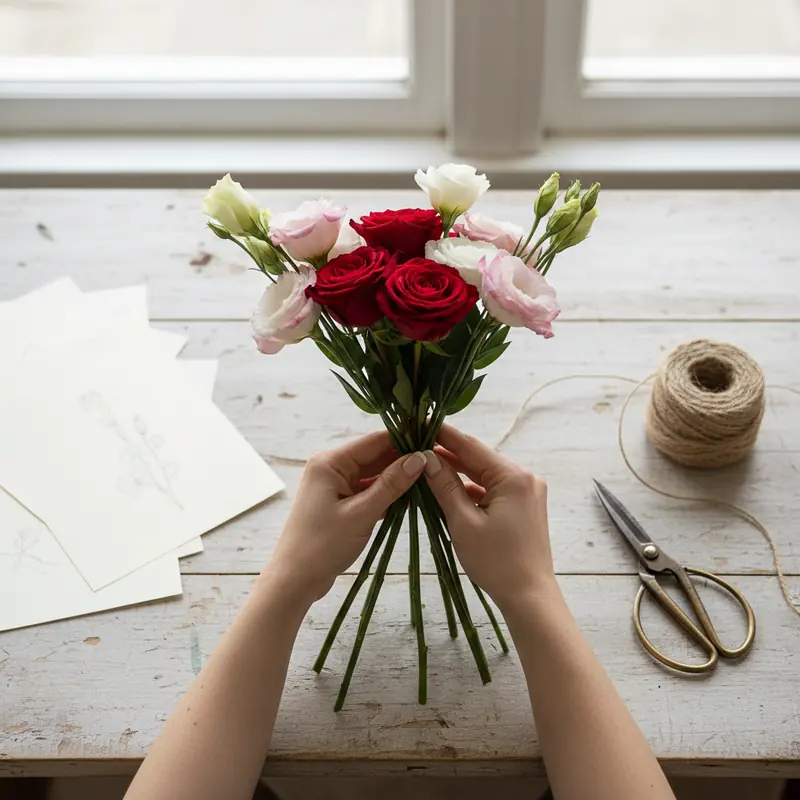
When considering a bouquet making workshop, ask whether the materials allow every booked maker to assemble and finish an independent bouquet. Confirm flowers, foliage if used, binding materials and the intended wrapping separately. A collection of stems for the whole table may be entirely appropriate, but it should still be clear how that collection is allocated. If the activity involves pairs making one bouquet, record that explicitly rather than describing it to guests as an individual bouquet-making place.
Distinguish presentation wrapping from any additional carrier or protection for the journey home. Ask whether wrapping is part of the practical lesson, added by the instructor afterwards, or available as an optional extra. Also request an approximate finished size range, if the supplier can confirm one, so participants can judge what carrying it involves. A reference image can express a wrapping style or colour direction; it cannot establish the included flower count, exact size or price.
For beginners, identify what each person actually does
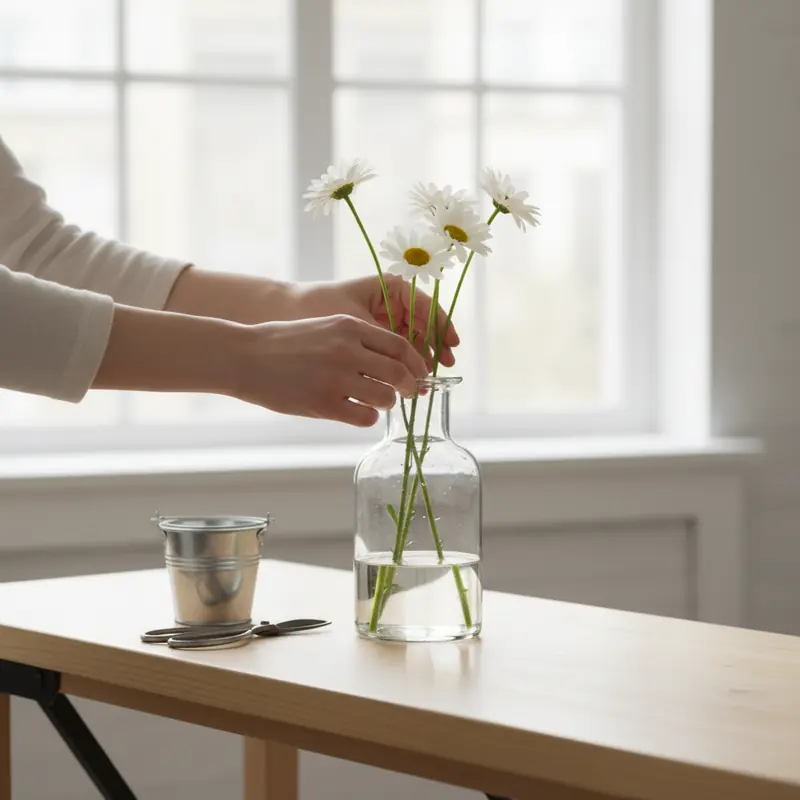
A prepared base can make a project more approachable, but it changes what participants spend their time doing. For a beginner floral arrangement class, ask which steps are completed before arrival and which each maker will practise. Useful distinctions include selecting stems, preparing them, positioning flowers and finishing the piece. You do not need every step to be unassisted; you need the description of the practical activity to match the experience you are inviting people to join.
Ask how materials are distributed after the demonstration. Will each person work with a separate selection, choose from a shared supply, or contribute to the instructor’s example? These arrangements should not be treated as interchangeable when comparing quotations. If your priority is for every guest to make a personal arrangement, state that outcome clearly and ask whether the proposed project and session structure support it. Do not infer individual completion merely from the word ‘beginner’.
Keep the demonstration piece outside the participant tally
List the instructor’s demonstration separately from participant work. It may remain with the florist, be used for teaching throughout the session, or have another agreed destination. Unless the quotation expressly says otherwise, do not count it as an extra take-home piece or use it to fill a gap in the participant total. If the organiser wants it for an event display afterwards, ask about permission, ownership and any charge before including it in the event plan.
For preserved flowers, confirm the base and any enclosure
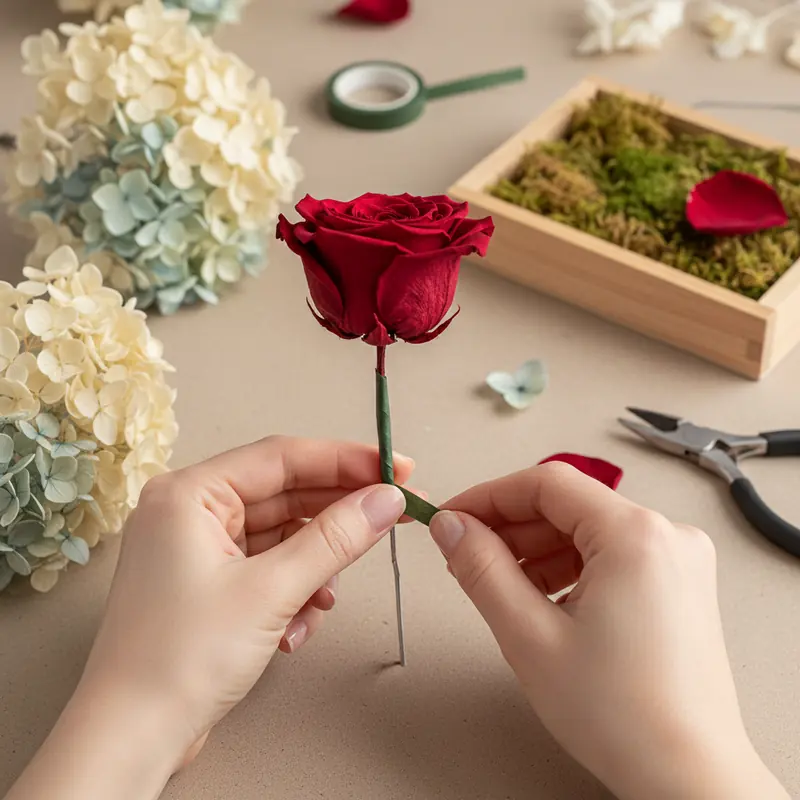
Do not carry a fresh-flower quotation’s assumptions over to preserved flower workshops. Ask what personal floral materials are included and what supports the finished design: a base, frame, container or another specified component. If the reference you like includes a cover or enclosure, ask whether that component belongs to the proposed project and is included in the quoted amount. An attractive example does not establish that every version uses the same structure.
Separate materials incorporated into the finished piece from equipment used only while making it. Wiring or fixing materials may form part of a project, while the tools used to work with them may be borrowed. Request the supplier’s own item description rather than trying to infer the contents from a photograph. Confirm any proposed colour or material substitutions before approving the brief, especially where the event depends on a coordinated appearance. No preservation period or identical result should be inferred from a workshop image.
Reconcile the finished-piece total with its owners
Write down the expected output in plain language: a personal piece for every confirmed maker, one shared piece per working group, or a stated mix of the two. For a team building floral workshop, this is a useful discussion about participation and ownership, not just visual style. Shared materials can support a collaborative installation without producing a complete arrangement for each colleague. If personal take-home pieces are essential, make that a requirement in the enquiry rather than an assumption after the quotation arrives.
Individual take-home work is a real format, but not a universal inclusion. For example, Let Hope Bloom’s private workshop page explicitly says that each participant creates an arrangement by hand and takes it home. That describes that merchant’s published arrangement; it is not a promise about another booking. Your own written confirmation should identify the finished-piece total, intended owners and any approximate size range relevant to taking the pieces away.
Decide the destination of a shared piece before the session
A shared arrangement needs a named destination even when no guest expects to own it. Will it stay at the office, leave with an appointed organiser, or be handled another way by prior agreement? Ask what happens if nobody can take it and whether any container has to be returned. Do not promise participants smaller portions of a shared installation unless dismantling, packaging and ownership have been specifically agreed; a collaborative design is not automatically a collection of separable personal gifts.
Mark tools as shared, loaned or included to keep
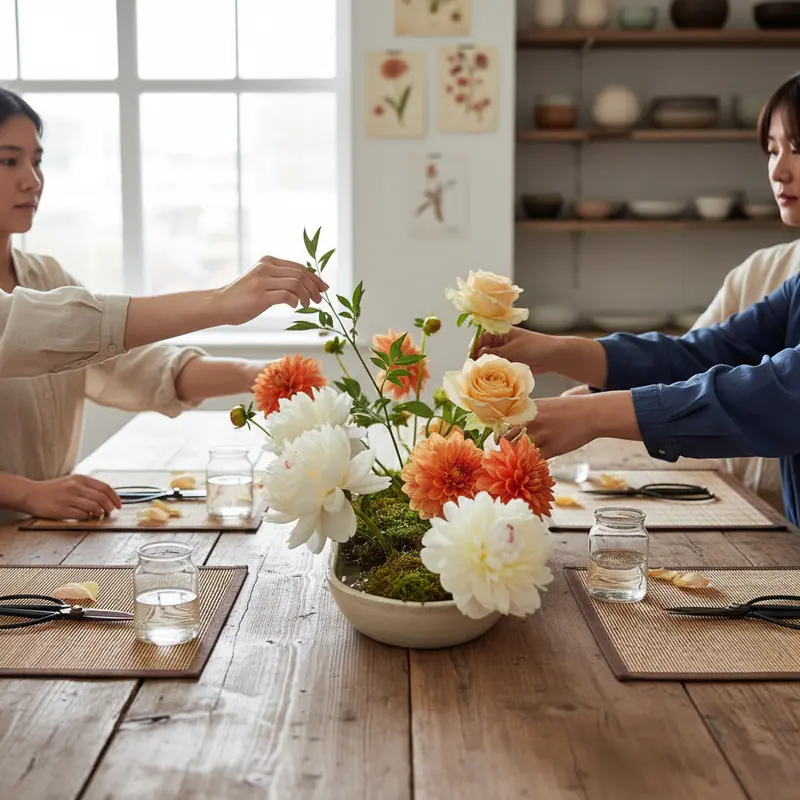
Ask for a separate equipment line covering items such as scissors and flower buckets where they are relevant to the proposed activity. Mark each as shared during the session, loaned to an individual, or included to take away. ‘Tools provided’ normally answers whether participants need to bring equipment; by itself, it does not answer who owns that equipment afterwards. Equally, a container holding a participant’s finished arrangement needs its own ownership confirmation rather than being grouped vaguely with tools.
Shared tools also affect how the practical session runs. Ask whether the arrangement lets participants carry out the promised steps within the proposed schedule, rather than demanding a particular tool ratio without knowing the project. For an off-site event, clarify who brings, distributes and collects the equipment, and what return conditions apply. If anything is supplied on loan, ask whether there are deposits or charges for missing items and where those terms appear in the quotation.
Match packaging to the pieces that will actually leave
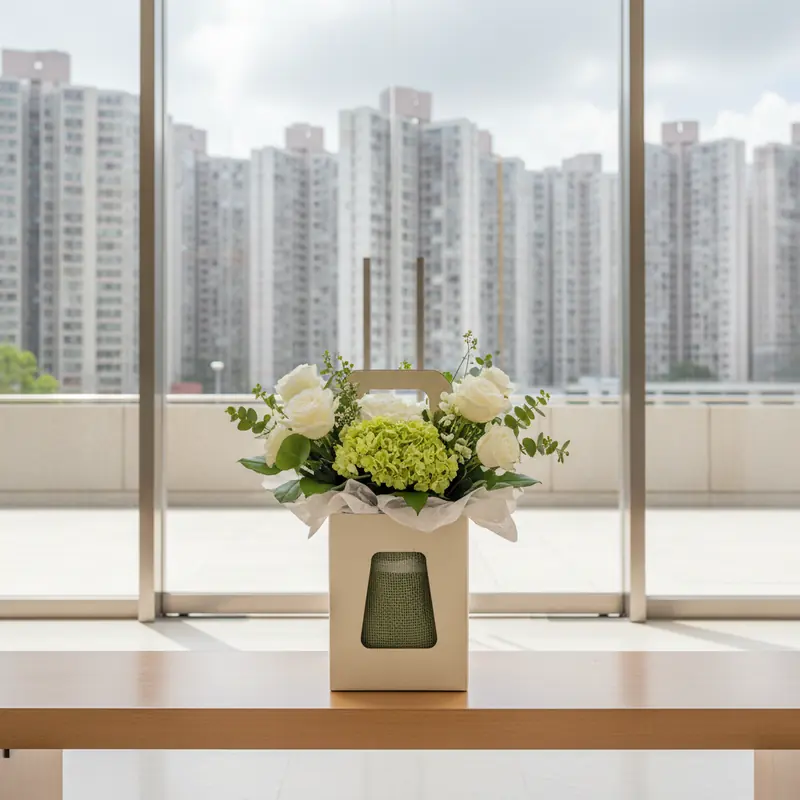
Review group floral workshop take-home arrangements as a separate handover task. A finished arrangement, its container and its carrying packaging are different items. Ask whether boxes, bags, bouquet wrapping or other proposed protection are included, and whether the quantity corresponds to the agreed outgoing pieces. For shared work, packaging may be needed per shared piece rather than per participant. For individual work, a single communal carrier does not necessarily meet each guest’s needs.
Explain the likely departure pattern without sharing unnecessary personal details. Guests leaving separately by public transport have a different carrying problem from an organiser collecting every piece together. Ask what packaging the supplier proposes for the confirmed design and whether participants need to arrange anything themselves. The aim is a workable collection plan, not a guarantee against damage. If extra packaging is chargeable, settle the choice before accepting so it does not become an unexpected decision at the end of the session.
Agree how headcount changes affect materials and output
Ask for the final maker-count deadline and the process for changes afterwards. An increase can require more than flowers: it may affect containers, packaging, workspace or instruction arrangements. A decrease may not reduce the quoted total if materials have been committed or a minimum charge applies. Rather than assuming either outcome, request the terms for your booking and ask which quantities are revised when the confirmed maker count changes.
Resolve absences separately from changes made before the deadline. If a booked maker does not attend, ask whether their allocated materials can be collected, whether someone else may use the place, or whether another arrangement is possible. None should be presumed. Record the agreed answer alongside the output count so the organiser does not promise an absent colleague a completed piece that nobody has agreed to make. Keep any later amendment attached to the same quotation version.
Compare like-for-like scope before comparing totals
Place each quotation against the same brief: making places, participation format, personal or shared material sets, outgoing pieces, packaging and equipment ownership. Dividing a group total by attendance gives a comparison average, not proof that each attendee receives a complete kit. A demonstration-led session and an individual-making session answer different needs. Decide which outcome matters to your event before judging which total is better value.
Then identify what sits outside that total. Ask whether additional containers, packaging, instructors, venue use or travel to the event location are included, excluded or awaiting confirmation. Request any applicable additional charges and conditions from customer service; there is no verified price list in this guide. A quotation with clearly stated exclusions can be easier to assess than one that simply says ‘everything included’ without defining the activity. Pause acceptance if the most important output remains ambiguous, rather than relying on a reassuring photograph or an informal summary.
Use a floral workshop group quote checklist in your reply
Reply to the quotation with a compact record that the supplier can correct: ‘Included makers: [ ]; observers: [ ]; making format: [ ]; personal or shared materials sets: [ ]; participant pieces to leave the venue: [ ]; demonstration piece: [ ]; packaging sets: [ ]; borrowed equipment to return: [ ].’ This is a blank enquiry template, not an example of an agreed package. Invite the supplier to fill gaps explicitly rather than answering only that materials are provided.
Once the reply arrives, check that its participation count, material allocation and finished-piece ownership describe the same activity. Save the confirmed quotation and amendments together, then tell guests only what that record supports. For a Y. Florist enquiry, share your preferred date, Hong Kong district, estimated makers and desired take-home outcome, and ask about current availability and request-specific terms. The strongest acceptance is not the longest email: it is a short, consistent written scope that both organiser and supplier can use on the day.
- Identify any unanswered quantity or ownership field before accepting.
- Ask for clarification to be attached to the quotation or confirmed in writing.
- Update the guest invitation only after the participation and take-home format are settled.
Details to confirm before ordering
- Confirm the quoted group unit, included makers, observer arrangements and any minimum charge.
- Specify individual making, shared making or demonstration, including which steps participants perform.
- Record flowers, supporting materials and containers per maker or shared project, with substitution conditions.
- Separate shared and loaned tools from anything participants are entitled to keep.
- Confirm participant-piece totals, ownership, shared-piece destination and the demonstration piece’s status.
- Match wrapping, boxes or bags to outgoing pieces and identify any additional packaging charge.
- Confirm the maker-count deadline, amendment terms and arrangements for an absent maker’s allocation.
- Identify any additional instructor, venue or on-site attendance charges and keep the final written scope together.
Questions about this decision
Does a group quotation mean everyone gets their own materials set?
Not by itself. Ask for the included number of hands-on makers and whether materials are allocated individually or per shared project. Attendance, making places and material sets should be identified separately.
Can the instructor’s sample count as one of our take-home arrangements?
Only if the supplier specifically agrees that it can leave with your group. Keep demonstration work outside the participant total until its ownership and destination are confirmed.
Should observers be included in the per-person comparison?
Record observers separately. An average based on everyone attending can conceal the fact that only some places include practical materials. Compare the quoted scope for makers first, then any separate attendance conditions.
Is a vase or carrying bag automatically included?
No inclusion should be inferred from a photograph. Confirm the project’s container, whether it belongs to the participant, and the type and quantity of any carrying packaging in the written quotation.
What should we do if the final group is smaller?
Ask how the booking’s change deadline and minimum-charge terms apply. Confirm whether materials and output quantities change, and what happens to any committed sets. Do not assume a refund or a completed spare arrangement.
Sources and further reading
Reference only. Illustrations are AI-generated design references, not photographs of actual customer orders. Confirm current contents, prices and arrangements with our team.
For this guide:Floral Workshop Group Quotes: Does Everyone Get Materials and a Take-Home Piece?
Plan your workshop
Considering floristry classes? Send the date, district and the points discussed in this guide to Y. Florist to confirm suitable options and a quotation.
Book a WorkshopWhatsAppThis opens a prepared WhatsApp enquiry. Availability, details and price must be confirmed before booking.
Explore related services and designs
Compare relevant options, view design references and find the information you need before making an enquiry.
preserved flower workshops
Compare preserved-flower crafting themes, material textures and arrangement formats, considering the practical tools and session details to ask about while confirming current workshop availability before booking.
bouquet making workshop
Compare bouquet-making learning topics such as stem selection, hand-tied shaping and wrapping, considering the practical materials and session details to discuss before choosing a workshop.
floristry classes
Compare floristry learning formats such as introductory, seasonal or group sessions, considering the floral techniques, materials and booking details to ask about before choosing a class.
beginner floral arrangement class
Compare beginner learning topics including flower selection, conditioning, simple arranging and care, considering the hands-on materials and class details to ask about before booking a session.
team building floral workshop
Compare collaborative floral activities, shared materials and group learning formats, considering how a team workshop theme and session arrangement could fit your participants' preferences for learning.
private floral workshop
Compare floral themes and practical learning formats for a private workshop enquiry, considering preferred materials, group needs and the session arrangements to discuss before booking.
Original AI-generated navigation references; designs and order details are subject to confirmation.
Useful options for your plans
Compare preserved flower workshops by crafting theme, materials and session details, and check current availability before booking.
Compare a bouquet making workshop by shaping and wrapping topics, materials and the session details to confirm.
Explore floristry classes to compare learning formats, floral techniques and the booking details to ask about.
Compare a private floral workshop by floral theme, materials and session format for your group's learning preferences.