Y. Florist · Ordering guides
No one at reception? Access and handover terms for an office flower subscription
For this guide:No one at reception? Access and handover terms for an office flower subscription
Arrange your flower order
Considering corporate floral subscriptions? Send the date, district and the points discussed in this guide to Y. Florist to confirm suitable options and a quotation.
Order Your FlowersWhatsAppThis opens a prepared WhatsApp enquiry. Availability, details and price must be confirmed before booking.
A recurring flower delivery can fall between two perfectly reasonable arrangements: the florist expects to hand over at reception, while the office assumes someone elsewhere in the building will accept it. When the desk is empty, neither assumption identifies who can open the office, move the arrangement or decide what happens next. The first task is therefore not to choose a delivery note saying ‘leave at reception’, but to establish an approved chain of permission and custody.
For office flower delivery when reception is unmanned, start with a route check involving your facilities contact, building management and the prospective supplier. Use the questions below to distinguish building access, authorised receipt and completed placement. Then ask for the agreed arrangement to be recorded with the quotation or service confirmation. These are points to negotiate for your particular office, not a statement that Y. Florist offers unattended entry, a particular waiting allowance or a standard redelivery service.
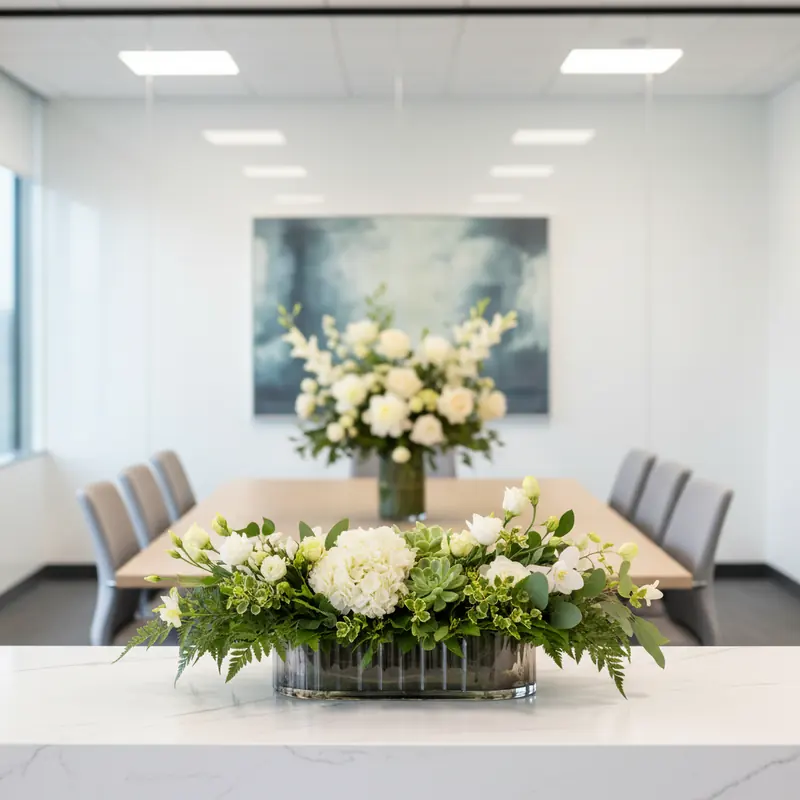
Plan office flower delivery when reception is unmanned
Begin with the entrance the supplier is actually permitted to use. Ask building management whether deliveries require a loading area, a service entrance, visitor registration, an escort or a particular lift. Record the permitted visiting period rather than assuming that a building being open means a delivery can proceed. Name the person responsible for checking these requirements and for arranging any advance registration. If approval is still pending, describe it as pending rather than giving the florist an instruction the building may reject.
This distinction is reflected in a US florist’s secure-building guide, which discusses visitor registration, floor restrictions and the difference between front-desk, mailroom and direct delivery. It is a useful prompt for questions, not evidence of any Hong Kong building’s rules. When enquiring about corporate floral subscriptions, include the approved access route and a named facilities contact so the supplier can assess the proposed arrangement rather than guess how entry will work.
- Permitted entrance and lift: [confirm with building management].
- Approved visiting period and registration process: [confirm].
- Escort required, and role providing it: [confirm or mark not required].
- Person responsible for maintaining these permissions: [role].
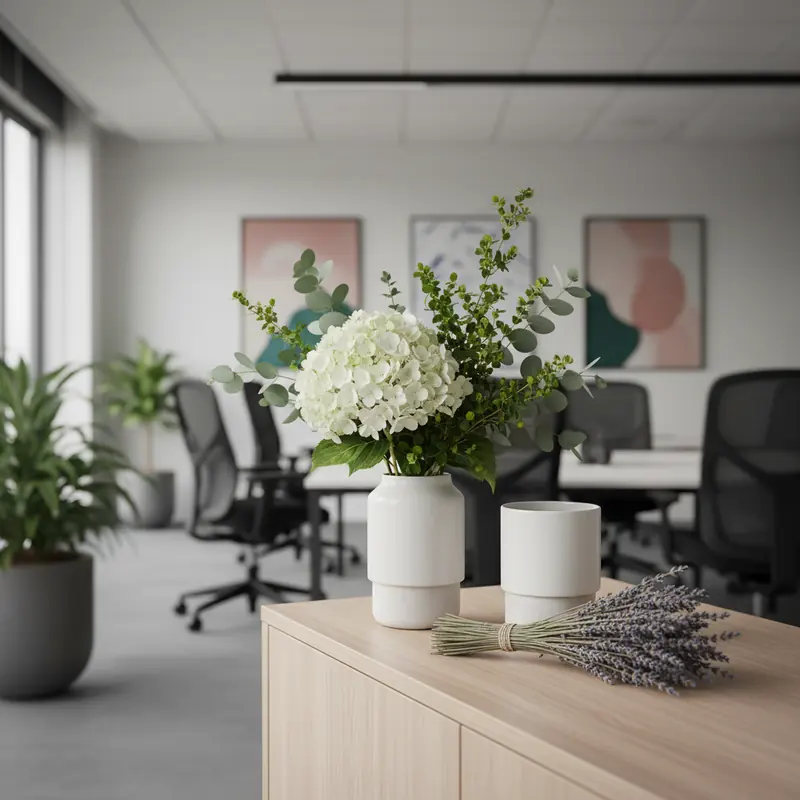
Separate the building door from the office door
An approved visitor may be allowed into the lobby but not through the tenant’s access-controlled entrance. Treat these as separate permissions. Your office contact should confirm whether a receiver will meet the delivery downstairs, escort the supplier upstairs or admit them to a specified reception area. If the arrangement includes placement, identify whether that permission extends to the display point. Permission to reach a lift lobby does not, by itself, settle any of these later steps.
An empty desk does not authorise a supplier to borrow an unapproved access card, follow another visitor through a controlled door or explore the workplace looking for someone. If no compliant route can be approved, choose between an attended handover point and a different visiting period, subject to the supplier’s agreement. Keep access codes and sensitive security instructions out of public enquiry forms or shared article comments; exchange necessary operational details through a private channel accepted by the relevant parties.
Map the route as a series of permissions
Write the route in ordinary words: approved entrance, registration point, permitted lift, tenant entrance, handover point and, if included, display point. Beside each boundary, identify who provides permission or assistance. A blank beside the office door is a practical warning: even a fully approved building visit may stop there. Resolve that gap before confirming the recurring arrangement instead of leaving the delivery person to negotiate access on arrival.
Choose a reachable receiver, not a convenient job title
‘Security can take it’ is only an arrangement if the relevant security team has agreed, building policy allows it and your office has authorised that handover. The same applies to cleaners, mailroom staff and colleagues from another tenant. A guide to unavailable flower recipients specifically makes office acceptance by reception, security, mailroom or a coworker subject to company policy. That overseas guidance supports asking the question; it does not establish permission at your site.
Name a primary receiving role and a backup role, with a business contact method that is monitored during the agreed visit. Check that the backup is available when the primary person is away, rather than simply copying two names from a directory. Explain what each receiver may approve: accepting the new arrangement, allowing entry, releasing an old vase or authorising a changed visit may require different people. A person who can accept flowers need not have authority to approve additional charges.

Define office flower subscription handover responsibilities
Separate arrival at the building, acceptance by a named receiver and placement at the display point. These are different events. If the agreed service ends at an authorised mailroom handover, the office still needs someone responsible for moving the flowers upstairs. If it includes placement, agree what the supplier must be permitted to reach and what work is included there. Do not use a vague phrase such as ‘delivered to office’ where the parties could reasonably understand different endpoints.
Before confirming a flower subscription, ask the supplier to record the authorised receiver and the agreed fallback if access is refused. Also agree what record, if any, will identify the handover endpoint: for example, a receiver acknowledgement or an agreed notification. Ask whether the proposed recording method is available rather than assuming a signature or photograph service exists. A delivery photograph does not itself prove that entry was authorised, that a receiver accepted custody or that placement formed part of the service.
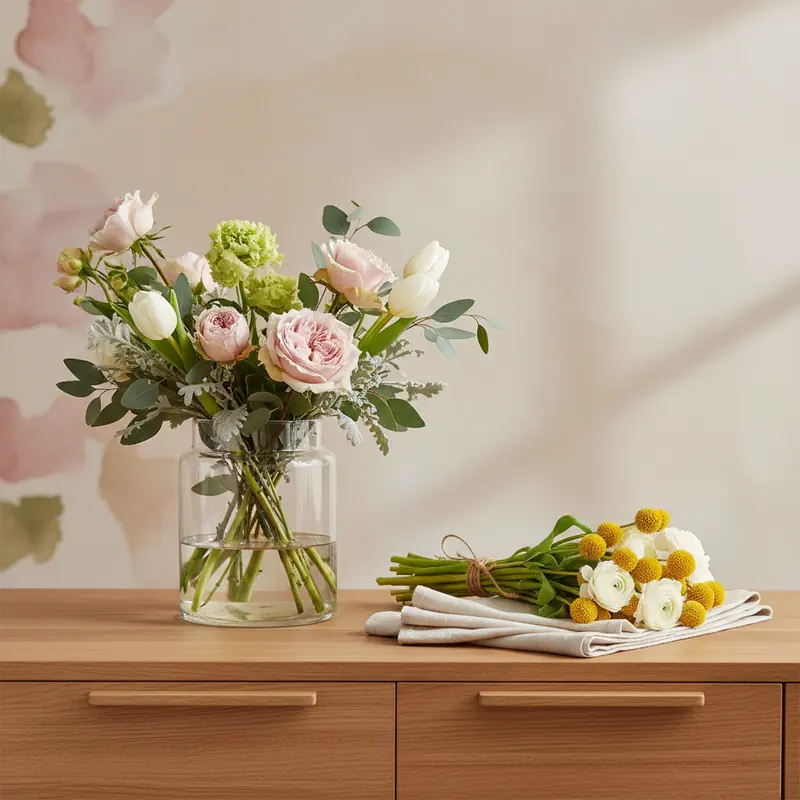
Decide whether unattended placement is permitted
Unattended placement should be an explicit option to discuss, not the automatic fallback when nobody answers. First check whether building management and the office permit it at all. If they do, identify one approved location and the access permission needed to reach it. ‘Somewhere near reception’ leaves too much discretion, especially if the desk sits behind a locked door or the obvious alternative is a shared corridor. If permission is absent, record that flowers must not be left unattended.
If the parties accept unattended placement, discuss who is responsible after the agreed placement event, how the office will be notified and who checks the arrangement afterwards. Those responsibilities need written agreement; an image or message cannot create them retrospectively. Also specify what happens if the approved spot is inaccessible or occupied. The supplier should not have to substitute another location without authority, and a notification should not be treated as a guarantee against loss or interference.
Example: someone can receive, but cannot take it upstairs
Consider a hypothetical office whose front desk is unstaffed on the agreed delivery day. A building mailroom has approved receipt, but its staff do not take items to tenant floors. The florist can complete a handover there only if that is the agreed endpoint. The office must then name its own colleague to collect and position the arrangement. Describing the mailroom as a receiver does not quietly make its staff responsible for the final display.
This option may avoid the need for supplier access through the tenant’s door, but it creates an internal transfer task. Before choosing it, confirm who will perform that task during the relevant working period and whether the proposed arrangement can be handled by that person as presented. If nobody can do so, ask whether an attended placement visit is feasible instead. The comparison is between two complete handover chains, not between an apparently convenient reception note and a more detailed one.
Example: the whole office is closed
Now consider a hypothetical office closure where no tenant representative will be present and the building does not accept deliveries for that office. This is not the same problem as a temporarily empty reception desk. There is no authorised receiver and no approved unattended location. The useful decision is whether a different attended visit can be agreed, or whether that particular delivery should be changed under the confirmed terms. An instruction to ring reception cannot solve a closure.
Notify the supplier through the agreed channel when a closure becomes known, and ask for confirmation of any change rather than assuming a message has amended the schedule. If the closure is discovered only on arrival, apply the failed-access process instead of asking the supplier to improvise a storage location. Record whether future recurring visits remain unchanged. Altering one delivery does not necessarily alter the whole arrangement, and neither party should have to infer which dates the instruction covers.
Set the failed-access decision chain
Agree what happens if the receiver does not answer, registration is rejected or the office door cannot be opened. List the order of contacts and distinguish a person who can resolve entry from a person who can approve a return or a revised visit. Include the supplier’s operational contact in that chain so the driver is not left negotiating commercial terms at the building entrance. The plan needs a decision-maker, not simply a collection of telephone numbers.
Ask the supplier to confirm how waiting will be handled, who can authorise any extension and what happens when the agreed contact attempts receive no response. There is no need to invent a universal waiting allowance. Instead, require a clear stop point and an agreed next action, which might be return pending instructions if the supplier accepts that arrangement. Silence should not be treated as permission to enter, leave the flowers elsewhere or incur unspecified additional work.
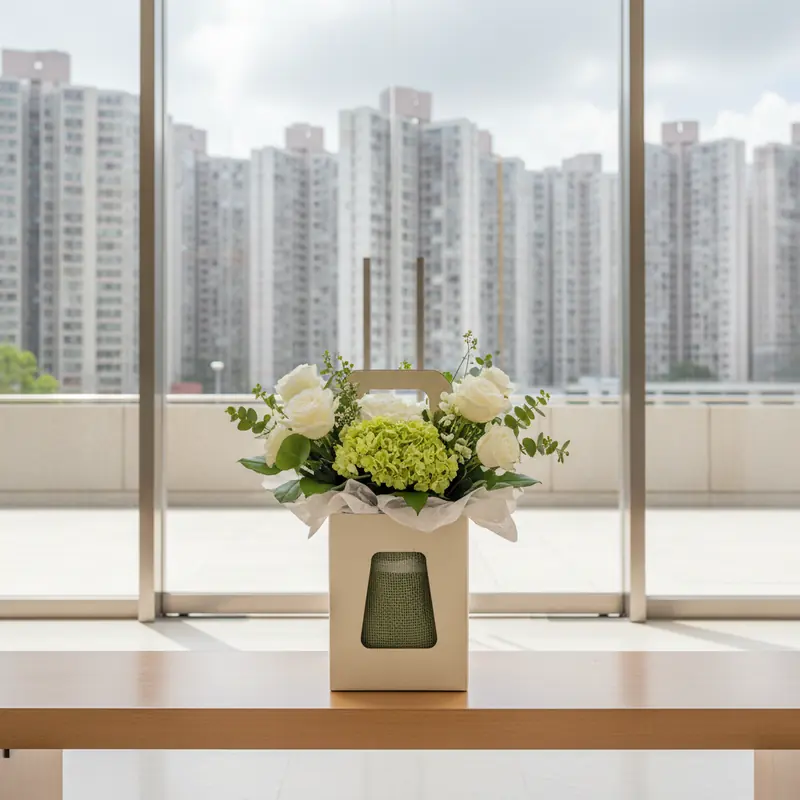
Write flower subscription delivery access terms without open-ended costs
Ask separately about the consequences of an unsuccessful attempt: whether return is possible, whether another visit can be offered and what approval is needed before any extra charge or additional personnel are arranged. Do not assume that a recurring order includes free redelivery, indefinite waiting or a second visit on the same day. Timing, availability and charges must be confirmed for the individual request with customer service, rather than inferred from the fact that deliveries are recurring.
A useful instruction identifies who can accept a revised quotation and how that acceptance will be recorded. It should also say what happens while approval is pending, so a driver’s call does not put a receptionist or junior colleague under pressure to approve expenditure outside their role. Compare proposals on the same basis: one ending at authorised receipt and another including permitted placement are not necessarily offering the same scope, even when both describe the visit as delivery.
Separate new delivery from hired-item collection
A replacement arrangement arriving does not prove that the previous vase has been returned. If flower rental is part of the agreed display, confirm who holds the hired items and who can authorise their collection. Identify the containers covered by the arrangement and the person who will make them available. The supplier may have permission to deliver to reception without permission to retrieve something from a meeting room or a locked storage cupboard.
The distinction is illustrated by a floral decorating contract that separately addresses venue access, hired-item custody and coordinated collection. That is an overseas event contract, not a rule for Hong Kong offices or Y. Florist’s terms. Use it only as a prompt to ask when custody starts and ends, how the items are identified and how missing or damaged items will be recorded and reviewed under your own confirmed agreement.
Record two exchanges, even during one visit
Treat receipt of the incoming display and release of the outgoing container as separate confirmations. If the old item is unavailable, record which item remains with the office, who will locate it and who will arrange the next collection discussion. Do not describe a missing collection as completed simply because the new flowers were accepted. Equally, do not assume that leaving an old container beside reception authorises anyone passing through to remove it.
Check access again for an agreed orchid visit
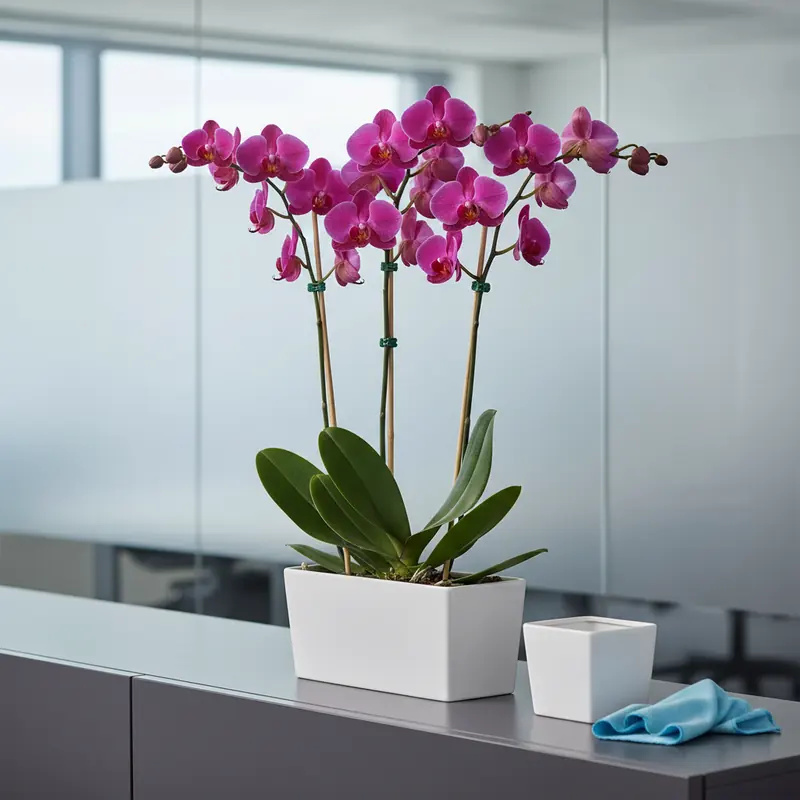
For office orchid rental, check access for any agreed rotation visit and the handover of the planter. The word ‘rental’ alone does not establish a rotation interval, a replacement guarantee or permission to enter an empty workplace. Ask whether the proposed visit involves accepting an incoming display, collecting an outgoing planter or both, and whether the same authorised person can oversee each part.
An orchid placed inside the tenant area may be beyond the access permission used for deliveries to a building desk. Identify who can escort the visiting person to the planter and who can approve its release. If that person is unavailable, use the agreed contact and stop procedure rather than treating the visit as routine access. Keep this discussion about entry and custody: the practical question here is whether the agreed exchange can take place, not how the orchid should be cared for.
Turn the discussion into a written handover brief
Bring the route, receiver, endpoint and failure instructions into one short operational brief that both office and supplier can recognise. Ask the relevant building contact to confirm the permissions within their control; a supplier cannot grant tenant or building access on your behalf. Mark unresolved items clearly and avoid presenting the arrangement as ready while an essential receiver or entrance approval remains unconfirmed. Keep necessary business contact details in the private operational version rather than circulating them widely.
Finally, give one office role responsibility for updating the brief when staffing, access rules or closures change. A previous successful visit does not establish permanent permission, and a substitute receiver needs to know the same limits as the original contact. Before proceeding, ask Y. Florist to confirm current feasibility, the agreed service endpoint and the terms applicable to your request. The aim is a workable handover when reception is empty, with a clear decision available when that handover cannot happen.
- Approved route and visiting period: [details confirmed by the responsible building or office contact].
- Primary receiver, backup and authority limits: [roles].
- Completion point and agreed record, if available: [define].
- Unattended placement: [not permitted, or separately approved location and responsibilities].
- Failed access: [contact order, waiting agreement, stop point and decision-maker].
- Outgoing items: [custodian, release authority and collection permission, if applicable].
Details to confirm before ordering
- Confirm the preferred start date, office district and occasions when reception will be unstaffed; flag any known closure affecting the proposed visit.
- Obtain approval for the entrance, visiting period, registration, lift and any escort needed, with a role responsible for keeping that approval current.
- Name a primary receiver and backup, and distinguish entry, receipt, collection and spending authority.
- Define whether the service ends at authorised receipt or includes permitted placement, and agree any available completion record.
- State whether unattended placement is prohibited or separately approved, including the location, notification and custody arrangements.
- Agree contact attempts, waiting, the stop decision and how return, revised visits or additional costs require confirmation.
- If hired containers or planters are involved, identify their custodian, authorised release person and separate collection access.
Questions about this decision
Can building security sign for flowers when our reception is empty?
Only if building policy permits it, security has agreed and your office authorises that handover. Confirm whether acceptance downstairs is the agreed delivery endpoint and who will move the arrangement afterwards. Do not assume security provides either service.
Does a delivery photo count as permission to leave the arrangement?
No. Permission and the approved location need to be agreed beforehand. A photograph may form part of an agreed record if that option is available, but it does not create entry permission or automatically settle custody responsibilities.
What if the backup contact answers but cannot approve extra costs?
Use the separate commercial decision contact named in the brief. Agree in advance what the supplier should do while approval is pending and when the attempt must stop. A reachable backup should not be assumed to have spending authority.
Can the new arrangement be accepted if the previous hired vase is missing?
Ask the supplier to confirm how that situation will be handled. Record the incoming handover separately from the outstanding collection, identify the vase still held by the office and agree who will resolve its return. Do not mark both exchanges as complete.
Should we share a door code in our first enquiry?
No. Begin with the district, preferred date, reception staffing issue and broad access requirements. Once feasibility is being confirmed, use a private agreed channel for necessary operational information and follow building-approved registration or escort arrangements.
Sources and further reading
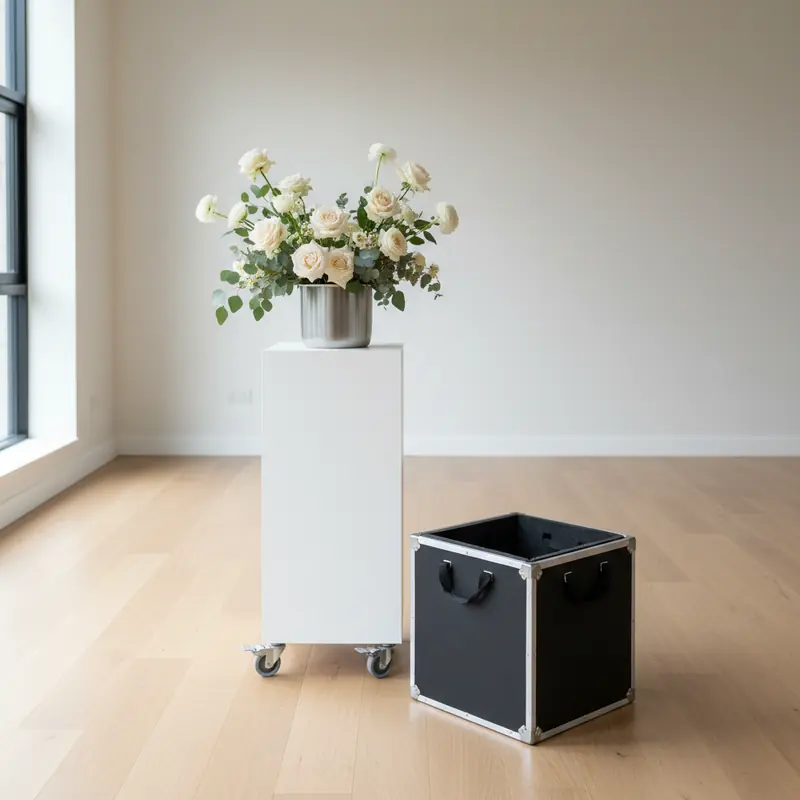
Reference only. Illustrations are AI-generated design references, not photographs of actual customer orders. Confirm current contents, prices and arrangements with our team.
For this guide:No one at reception? Access and handover terms for an office flower subscription
Arrange your flower order
Considering corporate floral subscriptions? Send the date, district and the points discussed in this guide to Y. Florist to confirm suitable options and a quotation.
Order Your FlowersWhatsAppThis opens a prepared WhatsApp enquiry. Availability, details and price must be confirmed before booking.
Explore related services and designs
Compare relevant options, view design references and find the information you need before making an enquiry.
flower subscription
Compare floral palettes and arrangement formats for a recurring flower enquiry, considering the display space and changing style preferences while confirming availability and applicable subscription terms.
corporate floral subscriptions
Compare recurring corporate floral display styles and placement needs, with arrangement scale and changing colour palettes to discuss alongside availability and any applicable subscription terms.
flower rental
Compare temporary floral display formats and placement options, considering arrangement scale and presentation while asking which rental arrangements are currently available and what terms apply.
office orchid rental
Compare office orchid planter styles, display scale and placement, considering rotation preferences and care responsibilities as discussion points when asking about rental or subscription arrangements.
Original AI-generated navigation references; designs and order details are subject to confirmation.
Useful options for your plans
Explore a flower subscription to compare recurring floral styles and discuss current availability and applicable terms.
Explore corporate floral subscriptions to compare recurring display styles and discuss availability, placement needs and applicable terms.
Compare flower rental display options and ask about current availability, handling arrangements and applicable terms.
Explore office orchid rental to compare planter choices and discuss rotation, placement and care responsibilities.