Y. Florist · Ordering guides
Office Flowers on a Fixed Monthly Budget: Subscription, Orchid Rental or One-Off Orders?
For this guide:Office Flowers on a Fixed Monthly Budget: Subscription, Orchid Rental or One-Off Orders?
Arrange your flower order
Considering corporate floral subscriptions? Send the date, district and the points discussed in this guide to Y. Florist to confirm suitable options and a quotation.
Order Your FlowersWhatsAppThis opens a prepared WhatsApp enquiry. Availability, details and price must be confirmed before booking.
A fixed monthly office flower budget needs two things to line up: what the office wants on display and when money must leave the account. A proposal described as monthly may not answer both questions. Weekly deliveries, a four-week renewal and a calendar-month allowance can produce different payment patterns, even when the presentation looks similar.
Start with one shared brief rather than three separate shopping lists. Record the reception display you want on ordinary working days, the meeting rooms that need flowers only on selected dates, and the maximum payable within each calendar month. Then use the same brief to compare a fresh-flower subscription, an orchid rental arrangement and individual orders. The aim is not to declare one universally cheaper; it is to find a scope you can approve without relying on unconfirmed extras or payments being shifted into another month.
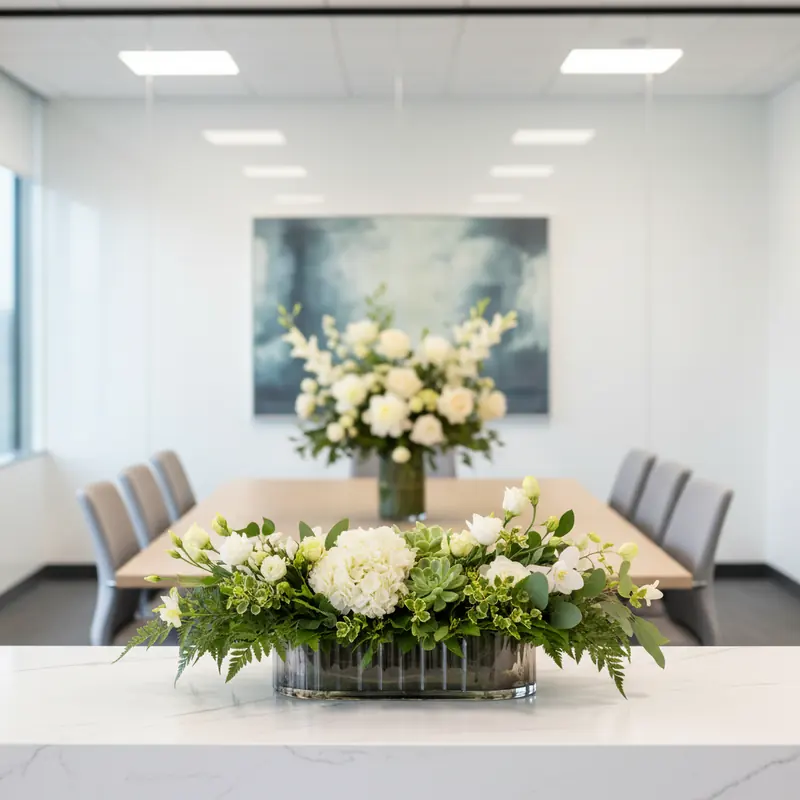
Define what your fixed monthly office flower budget must cover
Write the ceiling as a calendar-month payment limit, with a clear rule for what counts towards it. Include the floral arrangement, delivery, any agreed on-site work, container charges and approved additions where these are payable. If your finance team instead measures expenditure by the period receiving the service, record that separately. A charge attributed to next month in an internal report can still require payment this month; the supplier's payment schedule and your accounting treatment are different records.
Also separate service costs from refundable deposits and advance payments. A deposit may tie up cash without being a permanent cost, while an advance payment may cover displays beyond the month in which it is due. Neither should disappear from a cash-planning sheet. Ask finance whether these payments sit within the flower allowance or require a separate approval. Do not assume a possible future refund creates spending room before the money has actually been returned.
Brief the reception and meeting rooms separately
For a hypothetical office, consider a reception counter used throughout the working week and a meeting room used for selected visitor appointments. Those are different display requirements. Reception may justify a continuing arrangement, while the meeting room may need a dated order rather than a second ongoing commitment. Mark each location as essential, occasional or optional before requesting proposals. Otherwise, a quote covering one display point can look attractive beside a quote covering two, despite answering less of the brief.
For each location, note the available footprint, acceptable height, preferred visual direction and required display dates. Add the district and permitted delivery or collection window, without circulating a full address at the initial comparison stage. A photograph or simple dimensions can explain a restricted counter or shared meeting table. State whether you want an arrangement delivered ready to position or expect someone to assemble it on site; that difference affects the work being compared, not just the appearance.

Assess a subscription against the everyday display requirement
If your reception needs a regular fresh-flower presentation, an enquiry about corporate floral subscriptions can start from the display points and payment ceiling you have already defined. Ask whether a suitable arrangement is currently available for that brief, then request the proposed delivery frequency and billing cycle separately. Do not treat a recurring service label as confirmation that a fixed calendar-month package exists or that every refresh is included.
Check what arrives at each visit: finished arrangements, replacement flowers for an existing vessel, or stems requiring work by your team. Ask who removes the previous display and whether the design can vary within an agreed size and colour direction. The comparison method in ReVased's office subscription cost guide distinguishes frequency, vase provision, delivery and who does the arranging. Use those as questions, not as evidence of Hong Kong prices or Y. Florist's service inclusions.

Evaluate orchid rental by the written responsibilities
When considering office orchid rental, ask which display and planter are proposed, whether the vessel is borrowed, when it must be returned and what rotation or replacement is included, if any. Name the person responsible for arranging access and reporting a requested change. The word rental alone does not establish a visit schedule, complimentary maintenance or unlimited replacements, so leave those assumptions out of your comparison until confirmed in writing.
A local example, Give Gift Boutique's flower and plant rental overview, discusses office reception and meeting-room displays alongside differing flower and orchid replacement arrangements. This illustrates why visits and containers belong in the comparison. It does not establish a standard frequency for every supplier, nor guarantee how long an individual display will meet your presentation needs. For budgeting, ask what happens commercially if an additional visit or replacement is requested between the agreed dates.
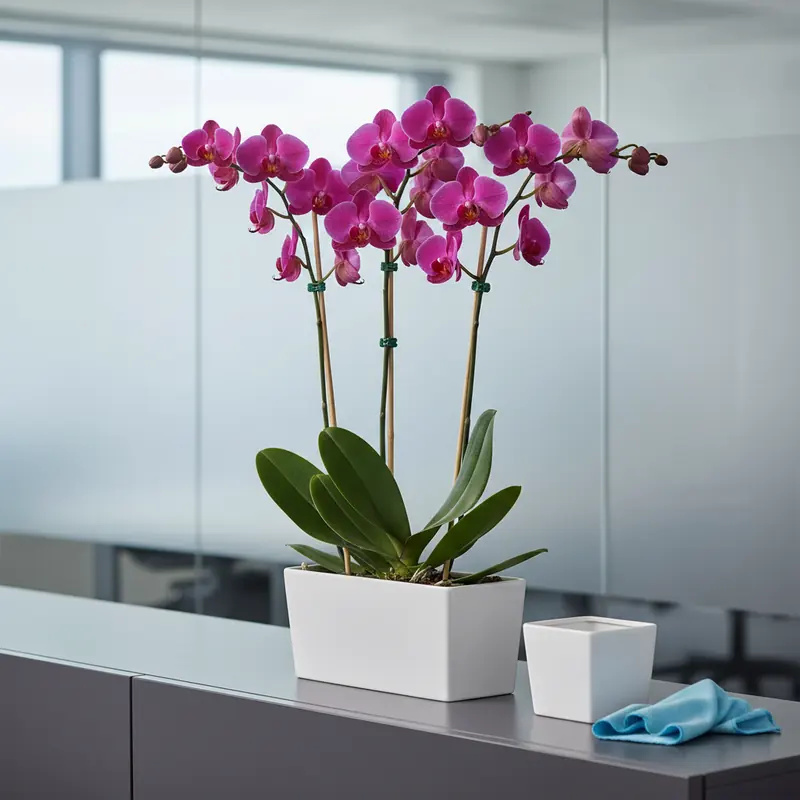
Compare one-off orders by the dates they serve
An occasional meeting may be better assessed as a dated requirement than as part of an all-month display. When enquiring about corporate flower arrangements, specify the meeting date, number of display points, table dimensions and required arrival window. Ask whether the proposed order is a single purchase and request an itemised scope. The service category itself does not prove that only one-off arrangements are offered or that collection is unnecessary.
Put each planned event into the relevant month's sheet, including any separate delivery, positioning or collection charge that the supplier confirms. An arrangement ordered for a particular meeting should not automatically be counted as reception coverage for the rest of the month. Equally, do not assume a reception arrangement can be moved into the boardroom without leaving an important display point empty. Compare the locations and dates actually served, rather than treating every arrangement as interchangeable.
Map delivery dates and payment dates onto one calendar
Ask each supplier to list the actual proposed delivery dates alongside invoice dates and payment due dates for the initial term and its renewal boundary. A weekly service can have a different number of deliveries in different calendar months. Blossom Florist's subscription FAQ explicitly addresses the extra weekly delivery occurring in some months when explaining its week-based plans. That is a reason to inspect the calendar, not to assume another florist uses the same charging method.
Keep one row per charge, with the service date or coverage period beside it. Then group the amounts by the month in which payment is due. Separately show any known advance payment made earlier. If the supplier offers a monthly average, retain it as a comparison note, but do not substitute it for the payment schedule. A plan can look comfortable on average while placing a renewal and a separate meeting order in the same payment month.
Four weeks is a cycle, not a calendar month
For a four-week proposal, request the next renewal dates rather than relabelling the fee as monthly. Ask which deliveries each payment purchases and how a cycle crossing a month-end is shown on the invoice. For a per-delivery proposal, ask whether the invoice follows individual deliveries or groups them into another billing period. These questions reveal the cash pattern without needing invented prices or assumptions about how the supplier will handle a boundary date.
Use one comparison sheet for all three options
Build the sheet around your requirements, with a column for each proposal. Use rows for locations covered, required display dates, floral format, scheduled visits, container arrangement, staff tasks, payment dates and additional-order terms. Enter the supplier's exact scope rather than reducing everything to a headline total. Mark an unanswered item as awaiting confirmation, not included. This makes it easier to spot a quote that depends on your receptionist arranging flowers or your facilities team returning vessels.
Once the scope is comparable, enter the amounts from the written quotations into the corresponding payment months. Keep optional work outside the committed total until approved, but show it visibly as a possible exposure. If a proposal exceeds the cap, change a requirement explicitly: fewer display points, fewer required occasions or a different presentation. Do not make it appear to fit by deleting a confirmed collection charge, ignoring an advance payment or assuming an unquoted concession.
Make handover, containers and collection visible costs
A delivery is not always the whole handover. Ask whether the supplier brings the arrangement to the agreed display point, whether any positioning work is included, and who deals with packaging and the previous vessel. For borrowed containers, record how they are identified, where they wait for collection and what return condition is required. Confirm any collection fee or charge connected with missing or damaged items before accepting the arrangement.
Then check the office side of the appointment. Building registration, access windows and the availability of a receiving colleague can determine whether a planned visit is workable. Ask what happens if access is refused or nobody can receive the delivery, including whether redelivery would require another payment. These are quote questions, not assumed charges. Give the supplier one routine contact and a backup role so an ordinary absence does not leave the handover without an owner.
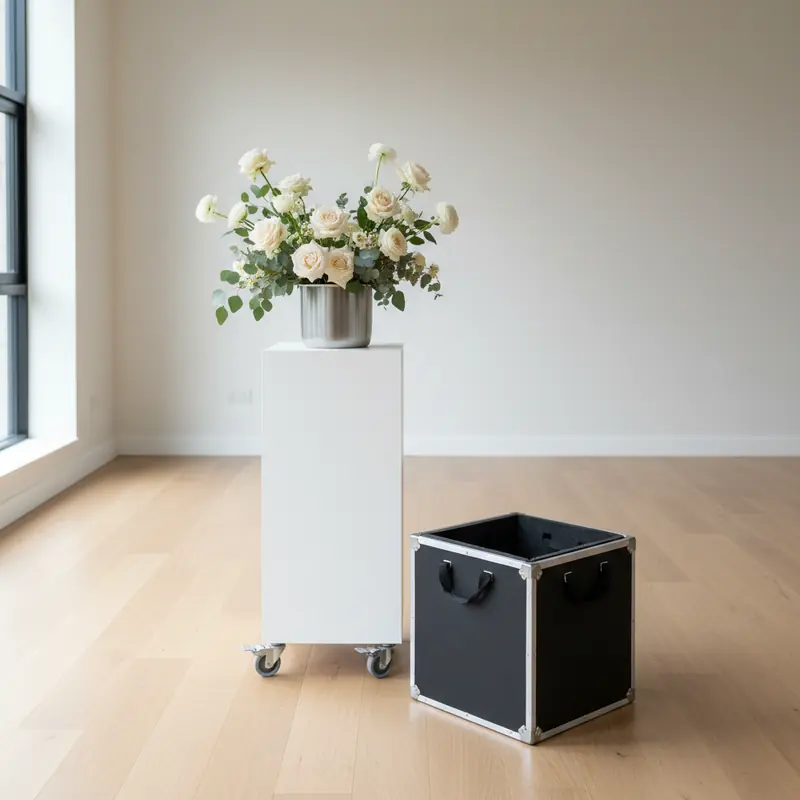
Read the renewal and change rules before accepting
If you are still establishing the basic recurring arrangement, use a flower subscription enquiry to confirm current availability, payment timing and change procedures. Keep the frequency of flowers, the period bought by an advance payment and the month of the actual debit as separate questions. Request the minimum commitment, whether renewal is automatic, the notice required to cancel and the point at which a change becomes chargeable.
Office closure also needs an explicit answer. Ask whether deliveries can pause, move to another date, be redirected or simply continue under the original agreement. Record the consequence for payments and any borrowed items. Similarly, ask how a change in display size or location is approved during the term. A flexible-sounding conversation is not a substitute for written terms that explain what happens to the remaining commitment and the next scheduled payment.
Protect a separate allowance for unexpected meetings
A mixed approach can separate routine presentation from occasional needs: one agreed reception display, with meeting flowers approved only when required. Before committing to the routine service, reserve part of the monthly ceiling for those additions if they matter to your office. Decide internally who can use that allowance and what information is needed for approval. A supplier should still confirm whether a particular extra order is feasible and what it would cost.
Do not assume an unused allowance creates a supplier credit or rolls into next month. It may simply be unspent internal budget. Likewise, an extra arrangement should not be treated as included because it uses a similar colour scheme to the recurring display. Request a separate written confirmation showing the date, location, scope and payment timing, then update the month's remaining allowance before the order is authorised.
Test the busiest month, not only the first month
Before deciding, review the proposed term against the office calendar. Identify months containing important meetings, closures, a renewal payment or more scheduled weekly deliveries. These are the months in which a seemingly suitable plan may compete with other approved spending. Ask the supplier to clarify any uncertain payment boundary before signing, rather than relying on a quiet first month as evidence that the whole arrangement fits.
Use the test to make a practical choice. A recurring fresh-flower arrangement may suit a reception requirement that justifies its confirmed schedule. An orchid arrangement may suit the desired presentation when its written responsibilities and payment dates fit. One-off orders may suit offices whose requirements are concentrated around selected meetings. A mixed plan is worth considering only if its committed payments leave enough room for the additions your team actually expects.
If the proposed month exceeds the ceiling
Change the brief before approving the order. Ask which display point is essential, which meeting genuinely requires flowers and whether a different confirmed schedule could meet the need. If the answer is to reduce service, record the resulting gap in display coverage so colleagues understand the trade-off. Moving a payment date may help cash timing if agreed, but it does not itself reduce the total commitment or remove a future month's obligation.
Approve a defined scope, then track changes against it
The final approval should identify the display points, required dates, presentation limits, service tasks, container arrangements, payment schedule and renewal decision. Keep the accepted quotation with the monthly comparison sheet so the person checking invoices can see what was authorised. If something remains unresolved, return it as a specific question rather than letting a blank cell become an assumption. Current availability, prices and all service terms must be confirmed directly with Y. Florist for the individual request.
After approval, log changes as they happen: an added meeting, a rescheduled visit, a container return or a revised payment. Before renewal, compare the service you required with the commitment you are being asked to make next. That review gives you a useful basis for retaining, reducing or changing the arrangement. The right choice is the one whose documented coverage and payment pattern fit your office, not the one carrying the most reassuring monthly label.
Details to confirm before ordering
- State the calendar-month payment ceiling and how deposits or advance payments will be approved.
- List essential and occasional display points, required dates, dimensions and the office district.
- Request the same floral, delivery, positioning and collection scope for every proposal.
- Obtain actual delivery dates, payment due dates and the first renewal boundary.
- Confirm container ownership, return conditions and responsibility for additional visits or replacements.
- Record minimum term, renewal, cancellation, closure and failed-handover arrangements.
- Set an internal extra-order allowance and name the role authorised to approve its use.
- Check the busiest proposed month against the ceiling before accepting the written quotation.
Questions about this decision
Should a refundable container deposit count as flower spending?
Show it separately from the service cost, but include it when checking cash payable that month. Ask your finance team whether it uses the same approval limit. Do not deduct an expected refund until its timing and return conditions are confirmed.
What if a supplier quotes only an average monthly cost?
Ask for the underlying delivery schedule and payment due dates. An average can help compare overall commitment, but it cannot show whether an individual calendar month stays within your cash ceiling.
Does an orchid rental quote automatically include replacements?
No inclusion should be inferred from the name alone. Ask what changes or replacements are included, when they occur and how an additional request would be quoted. Confirm the planter and collection responsibilities separately.
Can a one-off meeting arrangement replace the reception display?
Only if that is practical for the dates and locations in your brief. Check the presentation, handover and any agreed use restrictions with the supplier. Also record whether reception would be left without the display your office requires.
What is the quickest way to compare proposals without confirmed prices?
Complete the scope rows first and mark amounts as pending. You can identify different display coverage, missing collection arrangements or unclear renewal terms, but you cannot honestly rank affordability until written prices and payment dates are available.
Sources and further reading
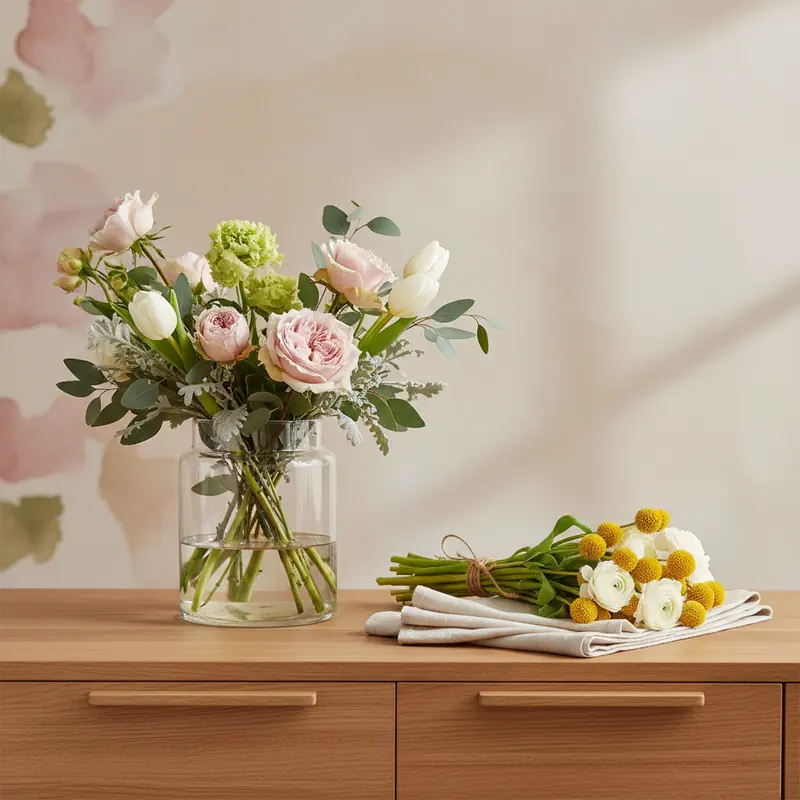
Reference only. Illustrations are AI-generated design references, not photographs of actual customer orders. Confirm current contents, prices and arrangements with our team.
For this guide:Office Flowers on a Fixed Monthly Budget: Subscription, Orchid Rental or One-Off Orders?
Arrange your flower order
Considering corporate floral subscriptions? Send the date, district and the points discussed in this guide to Y. Florist to confirm suitable options and a quotation.
Order Your FlowersWhatsAppThis opens a prepared WhatsApp enquiry. Availability, details and price must be confirmed before booking.
Explore related services and designs
Compare relevant options, view design references and find the information you need before making an enquiry.
flower subscription
Compare floral palettes and arrangement formats for a recurring flower enquiry, considering the display space and changing style preferences while confirming availability and applicable subscription terms.
corporate floral subscriptions
Compare recurring corporate floral display styles and placement needs, with arrangement scale and changing colour palettes to discuss alongside availability and any applicable subscription terms.
flower rental
Compare temporary floral display formats and placement options, considering arrangement scale and presentation while asking which rental arrangements are currently available and what terms apply.
office orchid rental
Compare office orchid planter styles, display scale and placement, considering rotation preferences and care responsibilities as discussion points when asking about rental or subscription arrangements.
Original AI-generated navigation references; designs and order details are subject to confirmation.
Useful options for your plans
Explore a flower subscription to compare recurring floral styles and discuss current availability and applicable terms.
Explore corporate floral subscriptions to compare recurring display styles and discuss availability, placement needs and applicable terms.
Compare flower rental display options and ask about current availability, handling arrangements and applicable terms.
Explore office orchid rental to compare planter choices and discuss rotation, placement and care responsibilities.