YumYum Bakery & Cakes · Ordering guides
How to Split One Macaron Order Between a Dessert Table and Take-Home Boxes
For this guide:How to Split One Macaron Order Between a Dessert Table and Take-Home Boxes
Arrange your baking order
Considering Macaron Dessert Table? Send the date, district and the points discussed in this guide to YumYum Bakery & Cakes to confirm suitable options and a quotation.
Order MacaronsWhatsAppThis opens a prepared WhatsApp enquiry. Availability, details and price must be confirmed before booking.
A macaron order can look straightforward until the same sweets appear twice in the planning notes: once under dessert table and again under take-home gifts. The important question is not how many purposes the macarons serve, but whether those purposes require different physical pieces. A sealed box can decorate a table and later leave with a guest without becoming two boxes or two sets of macarons.
If you are deciding how to split a macaron order between a dessert table and favour boxes, start by drawing two lines on your order sheet: loose macarons for eating at the event, and macarons packed into gifts. Then identify whether the display uses the first line, the second, or both. The method below turns that decision into a count you can discuss with YumYum Bakery & Cakes, without assuming a particular box size, package or quantity per guest.
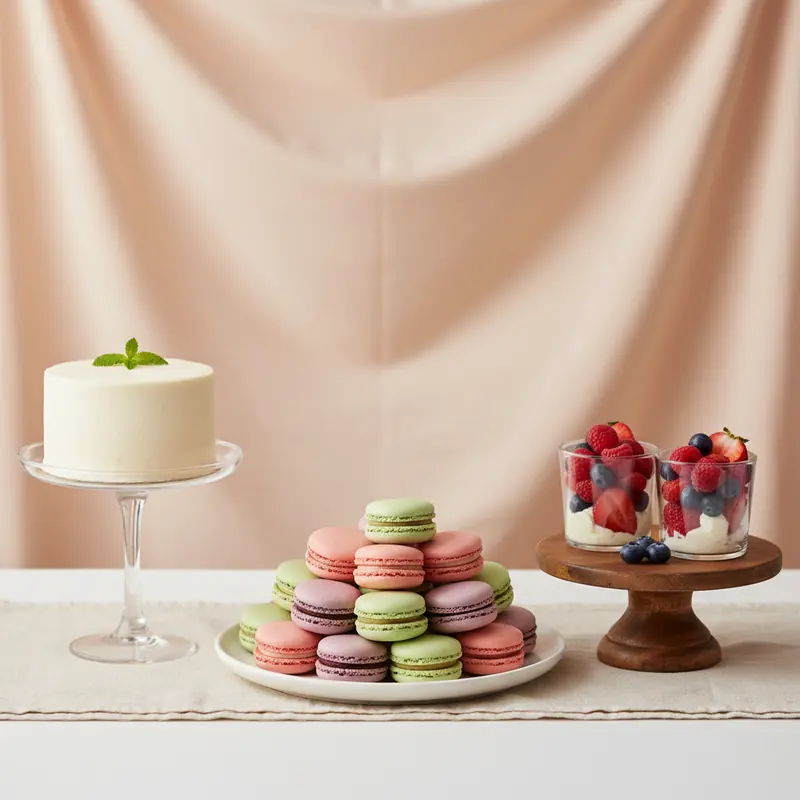
Are the Take-Home Boxes the Display, or a Separate Allocation?
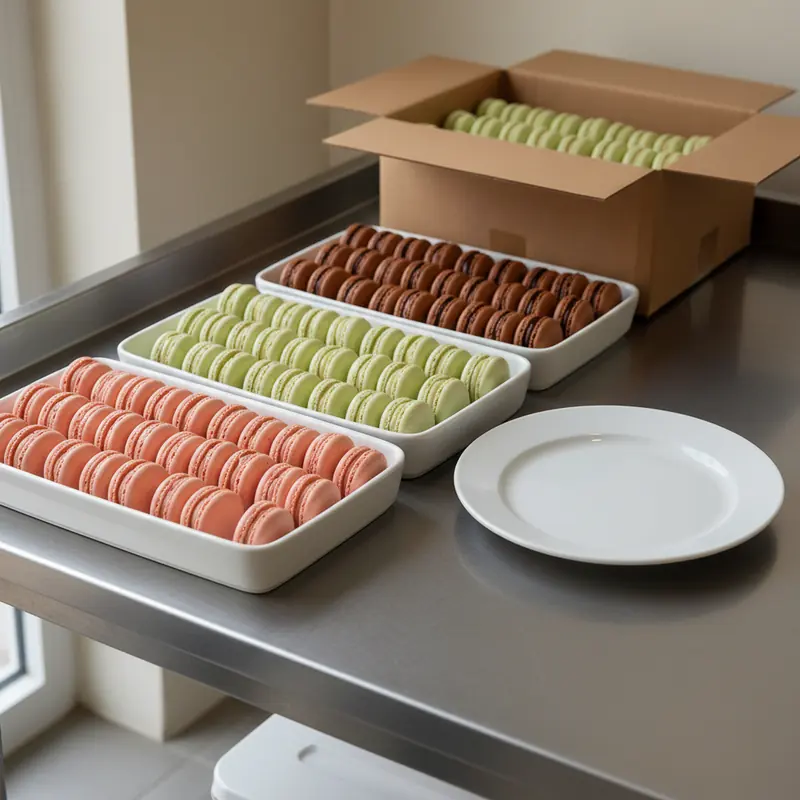
Choose between two arrangements before discussing quantities. In arrangement A, guests take loose macarons from plates or trays, while separate sealed boxes are reserved for gifts. Both supplies belong in the order. In arrangement B, the sealed gift boxes themselves form the display, perhaps on a welcome table or at place settings. Moving those boxes to a collection point later does not create another requirement for their contents.
This distinction reflects real display choices rather than a special ordering formula. The Sugar & Stories display guide describes loose macarons on trays or plates and boxed favours used as departure gifts or place settings. Those examples support deciding what will actually be on your table; they do not establish the box formats or service arrangements available for your Hong Kong order.
If you want loose sweets as well as gifts, use the Macaron Dessert Table page to explore the display service, then confirm the pieces needed for the first setting and any later refills. Do not assume a display quotation includes take-home boxes. For a mixed arrangement, add only the genuinely separate loose stock to the contents already assigned to boxes.
Decide Who Receives a Box Before Counting Boxes
Attendance and gift distribution are different counts. A box for every guest requires a different recipient list from a box for every household or couple. Write the distribution rule in words before entering a number. This prevents one organiser from ordering by household while another prepares a place-setting plan that assumes a gift at every seat.
Use a separate gift-recipient tally rather than copying the attendance total into the box column. Decide how your rule treats children, hosts, suppliers or people who leave before the gift handout, where relevant. The aim is not to increase the order automatically, but to make any inclusion intentional. Names and private contact details are not necessary on the bakery's allocation sheet; a confirmed number of recipient units is enough for this calculation.
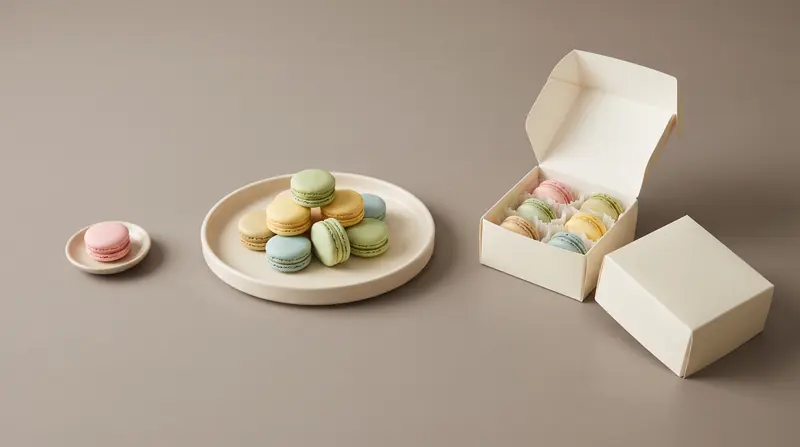
When reviewing a Macaron Gift Box, compare the arrangement you would like inside it, then ask which actual box format and capacity can be supplied. Record that confirmed capacity beside the box count. A picture of an attractive box is not a packing specification, and a two-person household does not automatically need two boxes if your agreed rule is one per household.
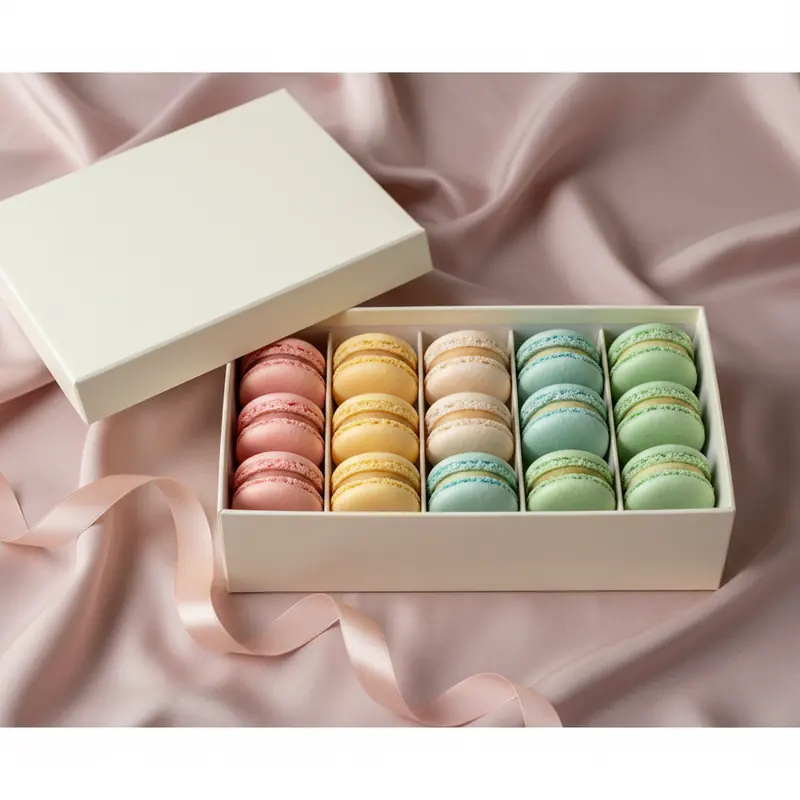
Build a Sheet That Tracks Both Pieces and Boxes
Keep one master allocation sheet instead of separate display and favour notes that cannot be reconciled. Give every row a purpose, a box count where applicable, pieces per box, first-setting pieces, refill pieces, unallocated reserve pieces, flavour or colour details, and a responsible person or role. Add a physical-piece subtotal to each row. A box row uses box count multiplied by pieces per box; a loose-stock row uses its actual piece count.
The need to distinguish these formats is practical. The BKLYN MACS catering page discusses dessert-table macarons, favour boxes and packaging separately, and asks customers for event or quantity information. Its overseas products and conditions are not specifications for this order. The allocation sheet here is an editorial counting method for bringing your own requirements together, not a supplier's published package.
Use one total without adding the same stock twice
For separate loose stock and gifts, use this calculation: total physical macarons = first setting + later refills + box count × pieces per box + unallocated reserve. Boxes remain a second control total, not an extra addition to the macaron total. If you also show a display subtotal containing both the first setting and refills, treat that subtotal as a summary only; do not add it again.
- Purpose or allocation code; box count and confirmed pieces per box where relevant.
- First setting, later refills and genuinely unallocated reserve, each recorded once.
- Flavour or colour breakdown, physical-piece subtotal and person authorised to change the allocation.
Work Through a Separate Display-and-Gift Example
Consider a purely hypothetical order: 36 loose macarons for the first setting, 24 loose macarons held for refills, 40 gift boxes containing two macarons each, and 10 additional macarons with no assigned use. The loose display allocation is 60 pieces, the sealed gifts contain 80 pieces, and the unallocated reserve is 10 pieces. The full order is therefore 150 physical macarons and 40 filled gift boxes.
These figures demonstrate bookkeeping only. They are not a suggested serving allowance, a statement that a particular two-piece box is available, a minimum order or a promise that this combination can be supplied. The useful feature is that every piece has one home in the sheet. The 24 refill pieces already belong to the display allocation, even though they have not yet reached the table.
Ask someone who did not prepare the sheet to describe what should arrive. They should be able to say that the gifts contain 80 of the 150 macarons, not that 150 loose macarons arrive in addition to 40 filled boxes. Keep that wording in the enquiry and packing confirmation. A grand total without its component allocations leaves too much room for a different interpretation.
Recount When the Sealed Gifts Are the Entire Display
Now change the hypothetical arrangement: the same 40 two-piece boxes form the entire display, and there are no separate loose macarons for guests to take. With 10 additional unallocated reserve pieces, the total becomes 90 macarons, not 150. The 80 pieces inside the boxes are counted once, whether the boxes are initially at the entrance, moved beside the seating plan or handed out at departure.
A room plan may show boxes at several locations at different times. Mark those entries as movements of the same stock, rather than separate purchase lines. For example, write that the entrance display transfers to the departure station. Otherwise, a coordinator reading only the room plan might reasonably interpret both stations as needing their own complete supply.
Also decide whether guests may open a box during the event. A gift eaten on site is still one gift distributed; it does not leave an untouched replacement available for departure. If you want both an on-site serving and a take-home gift, specify two separate allocations. That is a deliberate change in the offer to guests, not a correction to the same-box display calculation.
Assign Flavours and Colours Within Each Allocation
After the physical totals are clear, use the French Macarons page to explore choices, then ask which flavours and colours can be supplied for your order. Put the confirmed choices against each allocation, rather than attaching a single colour palette to the entire enquiry. A gift-box assortment and a loose display may need different combinations even when they belong to one order.
For the hypothetical two-piece gifts, write the intended contents of each box, not just the combined flavour totals. An overall quantity of two flavours does not tell the packing team whether to pair them in every box or make separate single-flavour boxes. For loose stock, distinguish the first setting from refills if the initial colour balance matters. Confirm whether flavour and shell colour choices can be combined as requested rather than assuming they are interchangeable.
A shared production batch is not a shared physical piece
The bakery may confirm that one flavour can be produced together for several uses, but your allocation sheet still needs separate destinations for those pieces. Shared production does not allow one macaron to count as both a boxed gift and a loose serving. Check the flavour totals against the allocation totals after any substitution, and pass ingredient or allergy questions to the bakery for specific confirmation rather than inferring suitability from a colour or flavour name.
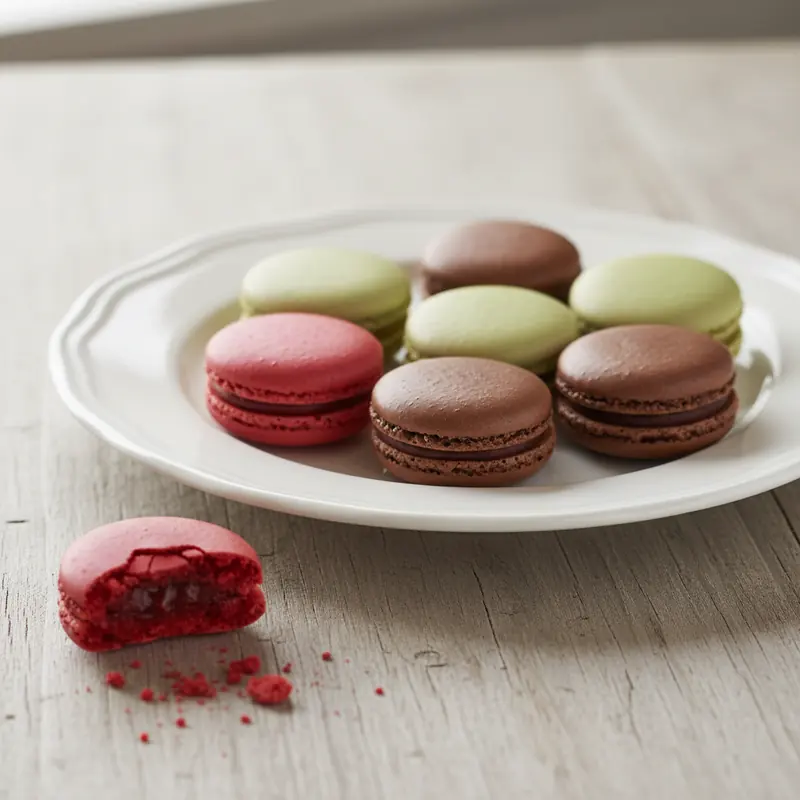
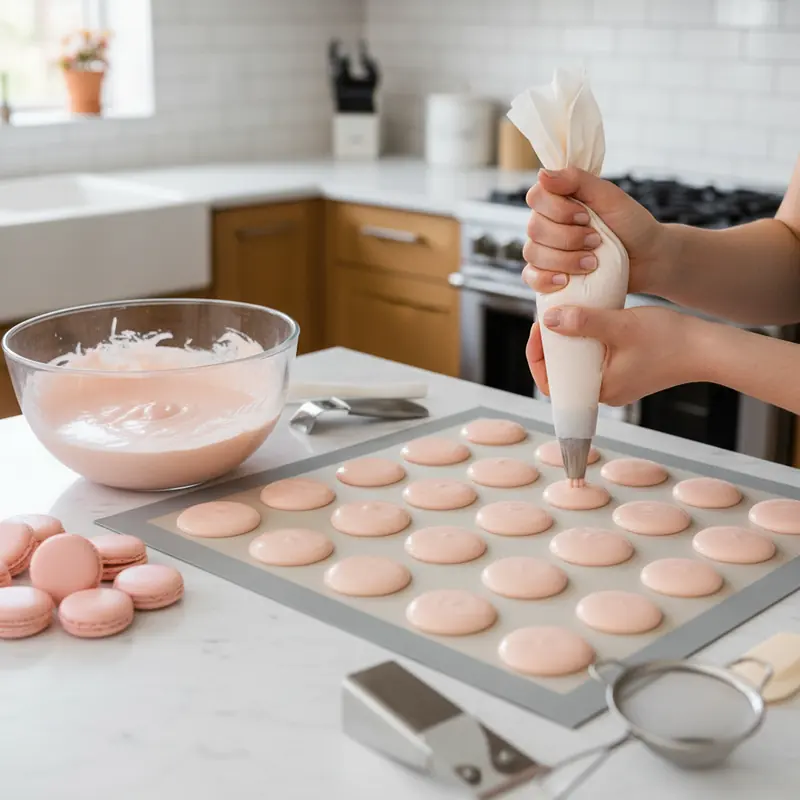
Protect the Allocations With Clear Packing Labels
Agree labels that describe what each container is for: first setting, later refills, sealed gifts or unallocated reserve. Include the expected piece count or filled-box count and the flavour breakdown where useful. A transport tray and a serving tray are not necessarily the same item, so ask how the loose macarons will be packed and what must happen before they reach the display.
Keep sealed gifts out of the refill supply unless the designated organiser authorises a change. If a box is opened to supply the display, remove it from the available gift count and transfer its contents to the loose allocation. Record the change on the same sheet used by the person handing out gifts. Otherwise, the table team sees a successful refill while the departure team still expects a box that no longer exists.
The reserve label needs equal care. Once reserve pieces are assigned to a refill or a replacement box, they are no longer unallocated. Move the quantity between categories rather than leaving it in both. If the reserve is intended specifically for complete replacement gifts, record how those gifts would be packed and confirm any additional packaging separately; spare macarons alone are not the same as ready-to-hand-out boxes.
Reconcile the Bakery's Quote With the Allocation Sheet
Send the reconciled quantities when discussing Macaron Wholesale, including the piece count for each flavour or colour and the number to be packed as gifts. Ask the bakery to confirm any batch conditions, minimum quantities or rounding requirements before accepting the final count. Combining uses in one enquiry does not itself establish eligibility for a bulk rate or discount.
Use Macaron Prices as the starting point for a quotation discussion, then request clear treatment of the macarons themselves, box materials, assembly, display equipment or setup, and professional logistics. These may be grouped differently in the quote, but ask what each line includes. A loose-piece comparison cannot tell you the full cost of an assembled gift, and an image cannot establish which display items are included.
Give any extra pieces a named destination
If, purely hypothetically, a supplier asks to change the 150-piece example to 156 pieces, the additional six must go somewhere on the sheet. If you choose to keep the display and gifts unchanged, unallocated reserve rises from 10 to 16. Alternatively, assign them to a named use and update that subtotal. Confirm the revised packing and quotation; never let a rounded production total silently change the box contents or the promised number of gifts.
Check Two Units at the Venue Handover
For Macaron Delivery, confirm professional logistics, the applicable fee, the delivery arrangement and whether any setup is included with customer service. Name the receiving role and the handover point within the venue arrangements. The receiver should have the latest allocation sheet, not an early attendance estimate or an unconfirmed screenshot of a display idea.
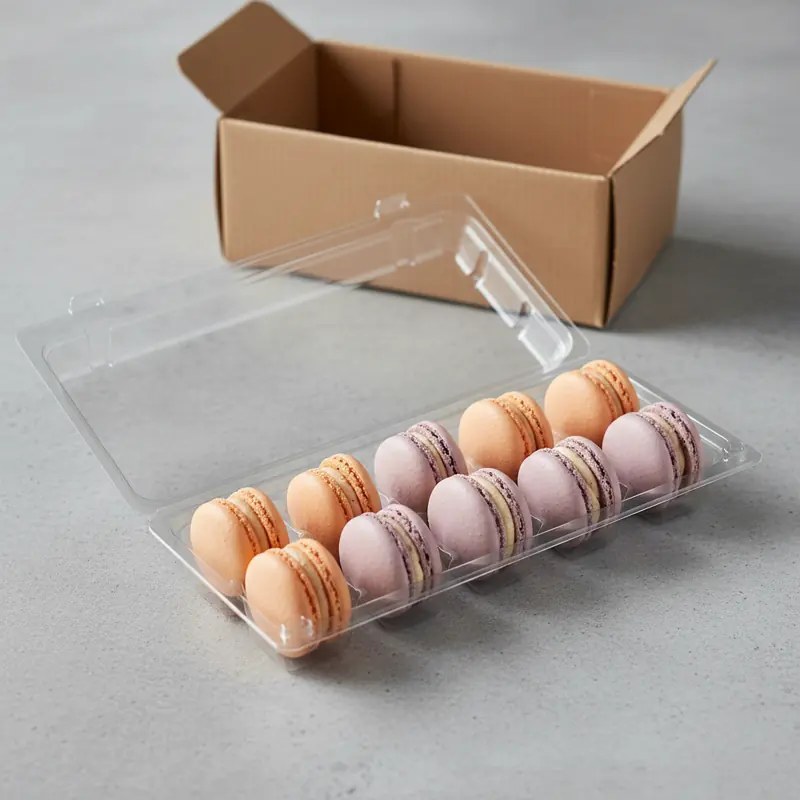
At receipt, reconcile both the total macarons and the filled boxes against the agreed packing information. In the 150-piece hypothetical example, the receiver expects 40 filled boxes accounting for 80 macarons, plus 70 outside those gifts across first setting, refills and reserve. Those 70 are not all automatically for immediate display. Check labels and the agreed breakdown; ask the bakery how sealed contents will be identified without assuming every gift should be opened for counting.
Record discrepancies separately from changes in allocation. A missing container is a delivery query; moving correctly received reserve pieces into the first setting is an event decision. Keeping these distinct helps the organiser ask the right person to resolve the issue. Confirm who may authorise substitutions and who will communicate a revised gift count before any stock is moved.
- Receiving role has the confirmed total pieces, filled-box count and container breakdown.
- Loose display stock, refills, gifts and reserve can be identified separately.
- The refill organiser and gift-distribution organiser know who can approve a transfer.
Keep One Confirmed Version From Enquiry to Gift Handout
The most useful macaron display and favour box quantity checklist is one the bakery, venue receiver and event organiser can all interpret in the same way. Put a revision label on it and circulate a replacement when the recipient tally, box capacity or packing arrangement changes. Update the totals and distribution instructions together. An older sheet should not remain the working copy for one part of the event.
Before confirming the order, read it as a short sequence: what arrives, what is displayed first, what stays behind for refills, what remains sealed for recipients, and what has no assigned use. Then read it backwards from departure: how many gifts must still be available, and which stock is protected for them? This catches a conflict that a mathematically correct grand total can miss.
Do not balance the order by assuming leftover loose display macarons will later become take-home gifts. Ask the bakery and venue about storage, handling and whether any proposed repacking is appropriate; do not promise guests that displayed leftovers will be suitable. A clear split agreed before the event gives you a dependable quantity plan without relying on uncertain leftovers, unconfirmed packaging or last-minute borrowing between allocations.
Details to confirm before ordering
- State whether the display uses separate loose macarons, sealed gifts or both.
- Confirm whether gifts are issued per guest, household or couple, and record the resulting box count.
- Confirm the actual box capacity and intended flavour combination in each box.
- Record first-setting pieces, refill pieces, boxed contents and unallocated reserve without overlap.
- Reconcile flavour and colour subtotals, including any supplier-confirmed quantity adjustments.
- Check what the quotation includes for contents, packaging, assembly, display items and professional logistics.
- Assign the receiving role, refill role, gift-distribution role and authority to change allocations.
- Ask the bakery and venue to confirm handling arrangements; do not rely on repacking displayed leftovers.
Questions about this decision
Do displayed favour boxes need a separate display quantity?
Not if those same sealed boxes are the complete display and later become the gifts. Count their contents once. Add a separate display quantity only for additional physical macarons, such as loose sweets available for guests to take.
Should the number of favour boxes match the number of guests?
Only if your distribution rule is one box per guest. A household-based or couple-based rule needs its own recipient tally. Confirm the rule before calculating box contents or planning where gifts will be placed.
How do I avoid double counting macarons for wedding favours when the plan changes?
Move quantities between allocations on one master sheet. Do not leave transferred pieces in the original category. If a sealed gift is opened for display use, update both the loose-piece allocation and the number of gifts still available.
Can spare macarons automatically replace missing gift boxes?
Not necessarily. You also need the appropriate packaging, an agreed packing arrangement and enough pieces for each replacement. Distinguish loose reserve stock from complete spare gifts and ask the bakery what can be prepared.
Does one combined order guarantee a lower price?
No. Ask for a quotation based on the confirmed flavour quantities, loose stock, filled boxes, packing work and any display or logistics requirements. Apply batch or minimum-order conditions only after the bakery confirms them.
Sources and further reading
Reference only. Illustrations are AI-generated design references, not photographs of actual customer orders. Confirm current contents, prices and arrangements with our team.
For this guide:How to Split One Macaron Order Between a Dessert Table and Take-Home Boxes
Arrange your baking order
Considering Macaron Dessert Table? Send the date, district and the points discussed in this guide to YumYum Bakery & Cakes to confirm suitable options and a quotation.
Order MacaronsWhatsAppThis opens a prepared WhatsApp enquiry. Availability, details and price must be confirmed before booking.
Explore related services and designs
Compare relevant options, view design references and find the information you need before making an enquiry.
French Macarons
Compare macaron shell colors, visible filling styles and serving arrangements to explore a French macaron selection, whether you prefer a restrained palette or a varied dessert presentation.
Bento Cake
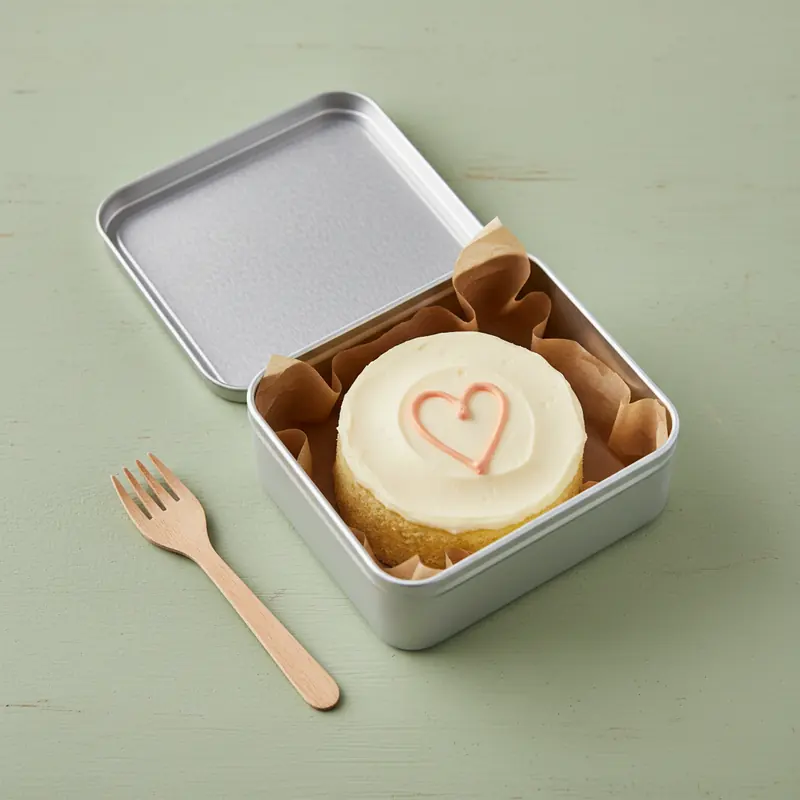
Explore compact cake proportions, simple frosting designs and lunchbox presentation to compare bento cake styles for a personal gift or a small shared celebration.
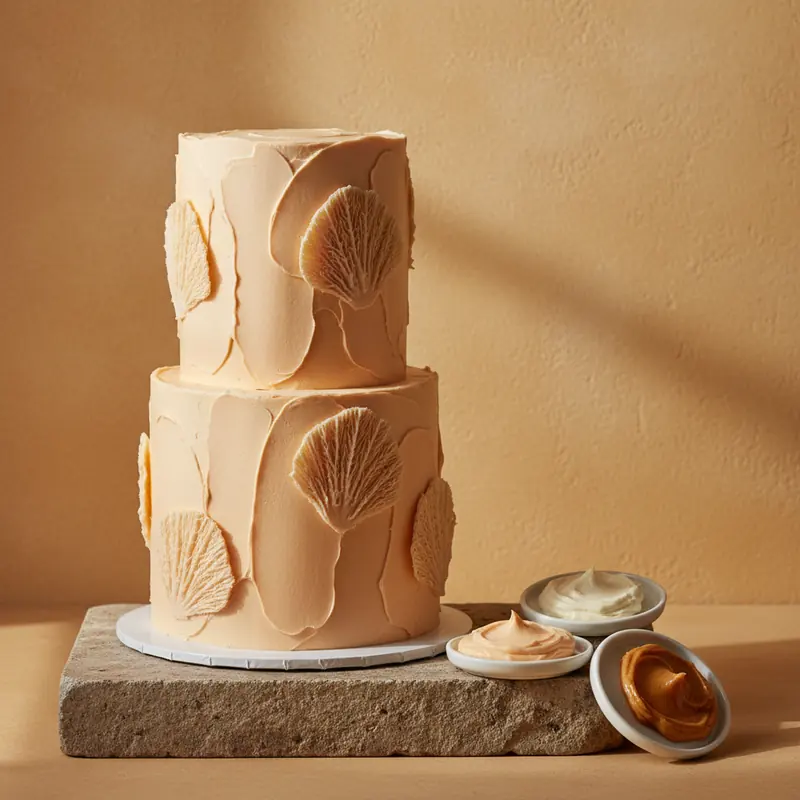
Custom Cake
Explore cake shapes, color palettes and decorative finishes to compare how a custom design could suit your celebration, from understated frosting to sculpted details.
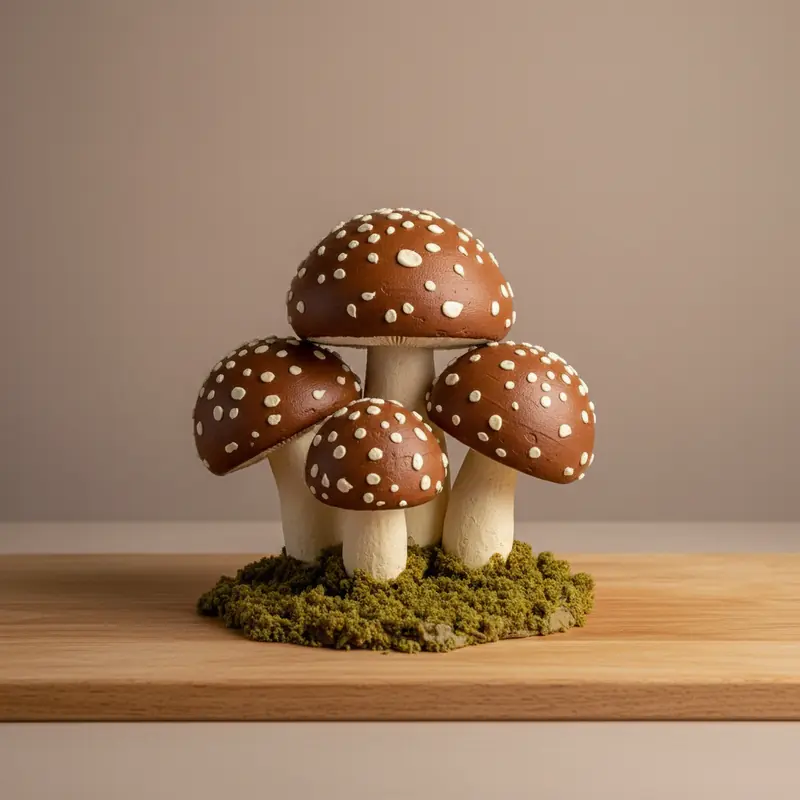
3D Cake
Compare sculpted cake silhouettes, surface details and decorative themes to explore how a three-dimensional design could become a distinctive centerpiece for your planned celebration.
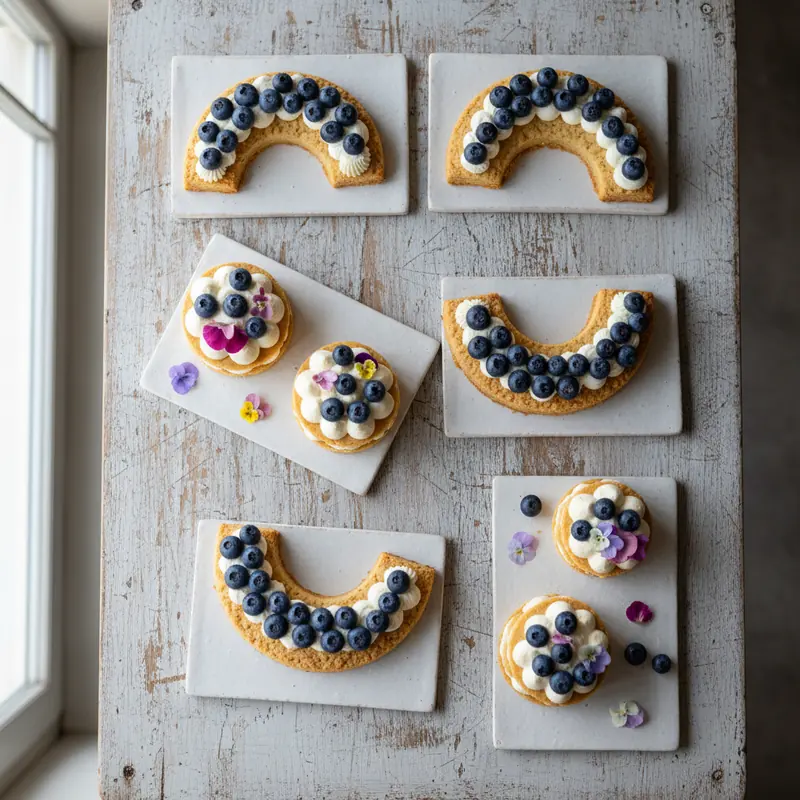
Number Cake
Compare layered biscuit bases, cream piping and topping arrangements for a number cake concept, exploring decorative options without depicting or assuming a specific age or numeral.
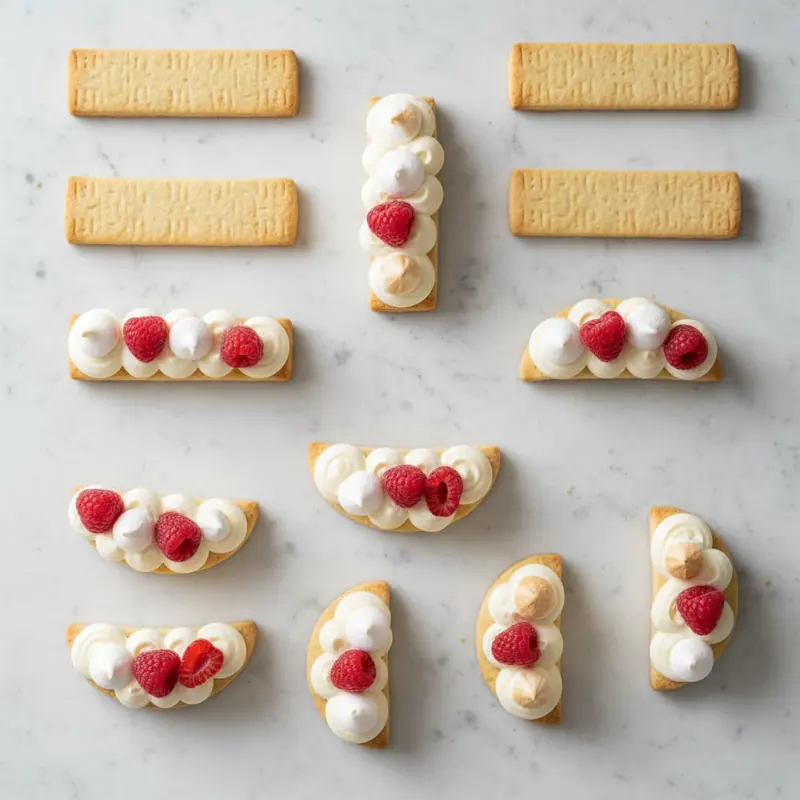
Custom Letter Cake
Explore cream tart layers, topping combinations and color palettes for a custom letter cake, comparing decorative components without assuming a particular initial or personalized written design.
Original AI-generated navigation references; designs and order details are subject to confirmation.
Useful options for your plans
Explore French Macarons to compare shell colors, filling styles and serving presentation.
Browse Bento Cake to compare compact designs and lunchbox presentation for a personal celebration.
View Number Cake to compare cream piping and toppings for your chosen cake concept.
Explore Custom Letter Cake to compare topping combinations and color palettes for a personalized cream tart design.