Y. Florist · Ordering guides
Festive Plants Across Office Floors: What Should a Loading and Allocation Sheet Track?
For this guide:Festive Plants Across Office Floors: What Should a Loading and Allocation Sheet Track?
Arrange your flower order
Considering bulk kumquat plant orders? Send the date, district and the points discussed in this guide to Y. Florist to confirm suitable options and a quotation.
Order Your FlowersWhatsAppThis opens a prepared WhatsApp enquiry. Availability, details and price must be confirmed before booking.
A signature at the loading bay can confirm a handover without telling the office administrator where every festive plant has gone. When several departments in the same Hong Kong building share an order, the practical question is not simply whether the vehicle arrived. It is whether each agreed item reached its intended floor, what remains elsewhere and who is responsible for the next move.
A festive plant loading and allocation sheet should connect those events without confusing them. Start with the written order confirmation, give each batch a destination code and decide how staff will record its changing location. The framework below is an editorial recommendation for organising that record, not a supplier-issued logistics standard. It does not confirm delivery scope, handling arrangements or installation; those still need to be agreed for the particular order.
Start with one approved order baseline
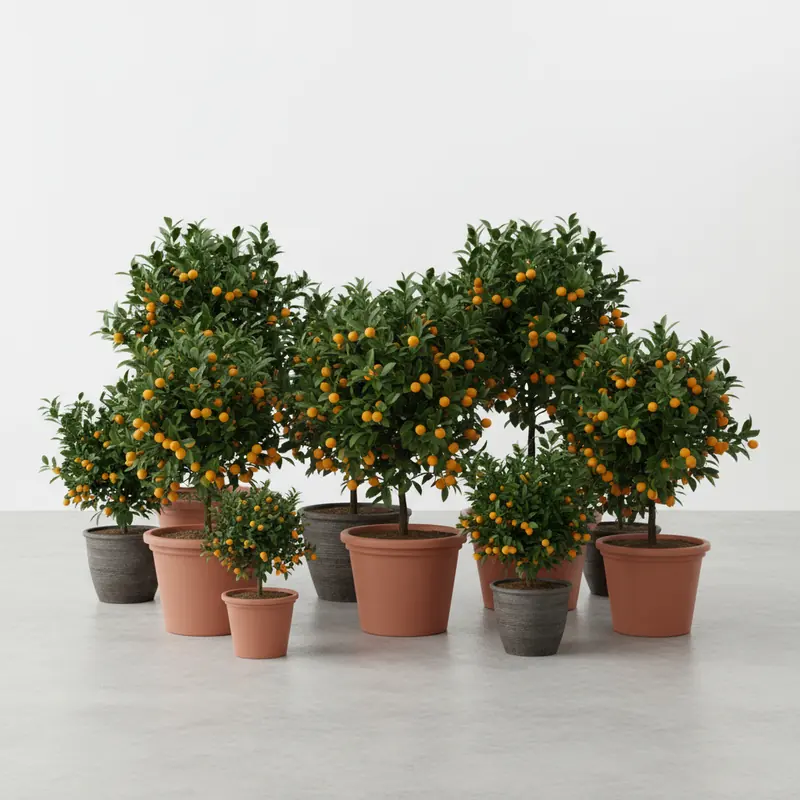
Use the confirmed order details as the parent record before splitting quantities across floors. For bulk kumquat plant orders, the commercial enquiry and confirmation remain separate from your internal allocation sheet: supply, minimum quantity, floor-delivery scope and charges require order-specific confirmation. Copy the agreed product references and quantities into the sheet, rather than treating a department's request or an earlier quotation as authorised stock.
The header should identify the order reference, sheet version, revision status, customer approver and person maintaining the record. Add a field for the confirmation being used, such as the relevant written revision reference. Distinguish a working draft from the version released for loading. If procurement changes the order, update the baseline only after the change is approved; otherwise the loading team and floor recipients may be checking against different instructions.
- Order reference: [complete from the confirmed order]
- Sheet version and status: [draft / approved for issue / superseded]
- Customer approver and record owner: [authorised roles or names]
- Written confirmation reference: [document or message reference]
Make each row a batch-and-floor allocation
Use one row for each product batch and destination floor. Split a batch again when different rooms need separate handovers or placement instructions. A row should connect the batch or label reference, selected product, plant and planter description, confirmed quantity, destination floor, department and final position code. This structure keeps a change to a single destination visible instead of burying it in a building-wide plant total.
If the festive programme also needs you to buy indoor plants, choose the product and confirm its overall dimensions before assigning that foliage its own batch. Do not merge it with kumquats simply because both arrive in pots. Give each product family its own unit description, too: a potted plant, a complete floral arrangement and a transport container are different things. The quantity column should always say what is being counted.
- Batch or label reference: [assign a unique reference]
- Confirmed product reference and plant/planter description: [complete]
- Quantity and counting unit: [leave unfilled until confirmed]
- Destination floor, department and position code: [complete]

Record the complete item, not just the pot count
Two plants described loosely as the same size may not occupy the same space once their containers and foliage are considered. Record confirmed overall height including the planter, overall width or crown spread, and any relevant container dimensions. Mark an unknown measurement as awaiting confirmation rather than estimating it from a photograph. PlantJai's large floor plant guidance discusses real height, crown width and checking access before ordering; these are useful reasons to keep dimensions beside the product reference.
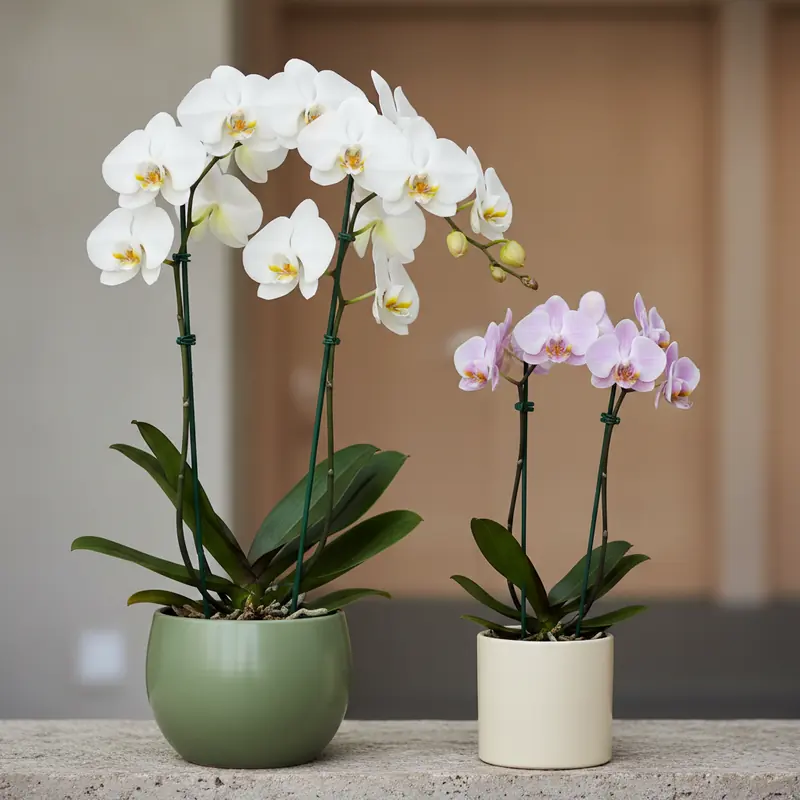
Keep visually distinct potted products on separate lines even when they share a destination. For example, if an office has separately ordered orchids as well as kumquats, an orchid is not a substitute for an unresolved kumquat allocation. A reference image can help the recipient recognise the intended product category, but it cannot establish the actual plant form, supplied planter or dimensions. Use the confirmed description as the checking reference and ask about any mismatch.
Give every destination a code people can actually use
A hypothetical code such as F-A/REC/KQ-A could mean floor A, reception, kumquat batch A. It is an invented illustration, not an actual order or building address. Whatever format your team chooses, place the same code on the allocation row, the corresponding item label and the authorised location plan. Include a plain-language destination alongside it so a colleague does not have to decode an unfamiliar abbreviation during handover.
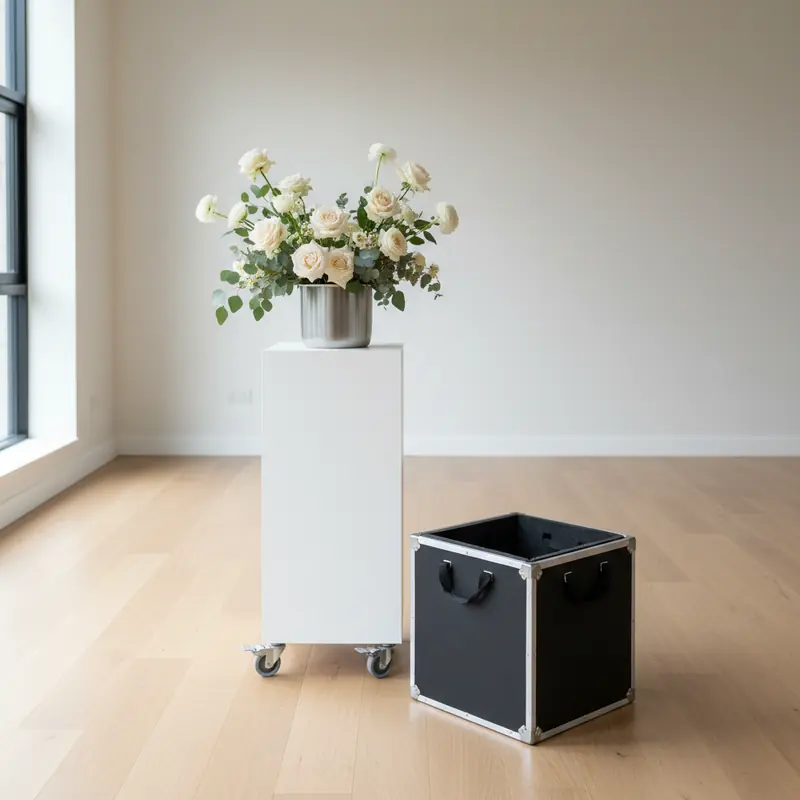
Where reception or meeting rooms also have corporate flower arrangements, allocate those separately by product reference, quantity and position code. Record whether final placement is included in the agreed scope or is an internal task. Receiving flowers on the right floor is not the same as placing them on the intended table, and neither action establishes that installation work was ordered. Keep those distinctions visible even when one person coordinates the whole floor.

Keep requested access separate from confirmed access
Create separate fields for the customer's requested unloading window and the window confirmed by the relevant parties. Record the loading location, goods-lift booking, permitted floors, doorway or route restrictions and any stairs that need review. Flora Houses' order and delivery information flags special festive delivery arrangements and conditions when destinations cannot be reached by lift. Those are that merchant's terms, not Y. Florist's, but they illustrate why a request alone is not a confirmed access arrangement.
If access details change, identify the person who obtained the new confirmation and record when the sheet was updated. Building management and the carrier should confirm applicable lift dimensions, load restrictions and actual handling arrangements; the sheet is not a method for calculating lift capacity or deciding how staff should move a large plant. A tall vase arrangement may also have a different overall profile from a low arrangement, so keep each item's access information tied to its own reference.
- Unloading window: [requested] / [confirmed, with confirmation reference]
- Loading location and goods-lift arrangement: [confirmation needed / confirmed]
- Route restrictions and reachable floors: [record for carrier review]
- Access confirmation owner: [building or delivery coordination contact]

Name the handover owner at every boundary
Write down who is responsible for vehicle-to-unloading-point handling, unloading-point-to-floor transfer and floor-to-final-position placement. These can be different parties, and an internal porter should not discover an unagreed task only after the carrier leaves. For every boundary, record the agreed handover point, giving party, receiving party and what acknowledgement is required. An owner field makes an unresolved transfer actionable rather than leaving everyone to assume that another team will finish it.
PlantShop.hk's shipping policy asks for an available recipient, reachable telephone contact and access information, and discusses doorway, lift and unloading details for large plants. Its terms are merchant-specific; the useful planning lesson is to connect access with a person who can respond. In your sheet, use an authorised working contact for each floor and a backup role where appropriate. Share those details only with people who need them to fulfil the order.
Use loading labels to identify contents, not packaging
Before departure, the agreed loading contact should compare the issued allocation version with the items being loaded and record the verified loaded quantity for each row. Labels should remain readable and connect back to the same batch reference used by recipients. If a batch is split between consignments, record the dispatch reference for each part so a later arrival cannot be mistaken for a shortage or a duplicate delivery.
Packaging deserves its own reference when it hides or groups the contents. A floral box or protective carrier does not automatically represent a single ordered unit, and loose transport materials should not increase the plant total. Record the relationship between the packing reference and the ordered items it contains. The receiving team then has a way to distinguish missing products from empty packaging without assuming that the number of containers equals the number of completed allocations.

Separate loading milestones from current locations
Keep confirmed ordered quantity, verified loaded quantity and acknowledged floor receipt as separate milestone fields. They describe different events, not quantities to add together. A plant may have been loaded earlier and now be on its intended floor; adding both entries would count the same item twice. Record the time and responsible person for each milestone, while using a separate current-status field to show where the item is at the latest checkpoint.
For the current-status tally, use mutually exclusive categories: not yet loaded, on the vehicle or in transit, at an agreed staging point awaiting transfer, received at the intended floor, or held as an unresolved exception. Assign each expected item to only one category at a time. Track any unmatched extra item separately rather than allowing it to balance a missing ordered product. This makes the tally useful even when a wrong item has physically arrived.
Reconcile the order and the dispatch separately
At a checkpoint, the quantities in those current-status categories should account for the confirmed quantity of each order row. Separately, use the dispatch record to trace what was loaded and where those items went. If something is returned or re-dispatched, preserve that movement with a reference instead of erasing its earlier loading entry. A mismatch is a prompt to investigate identities and movements, not permission to change the confirmed order quantity until the totals look right.
Get a meaningful receipt from each destination floor
A floor-by-floor kumquat delivery checklist should ask the recipient to check the batch reference, product description, counting unit and received quantity against the current allocation row. Record the receipt time and recipient, along with any difference noticed. If the lobby contact signs only for goods staged downstairs, describe that acknowledgement accurately. It should not populate every floor's received field or imply that a departmental recipient has checked the items.
Where the intended floor is temporarily unavailable, record the actual authorised staging location and the person responsible for onward transfer. Keep the destination unchanged until an authorised allocation change is agreed. This preserves the difference between where a plant belongs and where it happens to be now. The next team can then find it without reading an unexplained note such as 'delivered to building' and assuming the work is complete.
Confirm placement without counting the item again
Use a separate placement field for awaiting positioning, positioned at the agreed code, or outside the confirmed placement scope. If the internal team moves an already received plant from a floor holding area to reception, update placement rather than adding another received unit. A floor receipt does not itself establish that installation, accessories or decorative work has been completed, and a placement acknowledgement should refer only to the work actually agreed.
Give every discrepancy an owner and an approval status
Use an exception record linked to the affected row for a shortage, wrong-floor arrival, mismatched product, apparent damage or proposed substitution. Capture what was expected, what was observed, the actual location, the person following up, the next action and its approval status. Do not hide an unresolved difference inside a general comments cell. Receipt records should describe what arrived; they should not be treated as approval of an unagreed alternative.
For a wrong-floor arrival, keep the intended destination visible and assign the authorised onward transfer rather than quietly rewriting the floor to match the mistake. For a proposed replacement, obtain the customer's approval before changing the product reference or allocation. A shortfall needs a recorded resolution, which could be a confirmed further dispatch or another expressly agreed outcome. Do not mark it resolved merely because someone has sent a message asking for help.
- Affected batch, intended destination and actual location: [complete]
- Difference observed and quantity affected: [record without guessing the cause]
- Follow-up owner and next action: [name the responsible role]
- Approval status and resolution reference: [pending / approved / resolved with evidence]
Keep temporary floral assets on a separate track
Only add rental-related fields if the same programme includes a separately confirmed temporary floral arrangement. If you are considering flower rental, ask which options and terms, if any, are available for the event. Floral rental and purchasing kumquat plants are different arrangements: the rental page does not establish that kumquats can be rented or that collection is included with a plant purchase.
For a confirmed temporary floral batch, record asset ownership, the agreed collection contact and any confirmed collection window alongside its destination. Keep a requested collection time marked pending until confirmed, and identify which containers or other assets fall within the arrangement. A delivery receipt should not close those later obligations. Conversely, do not create a return task for purchased plants simply because a rented floral display shares the same reception area.
Close the sheet with evidence, not a single tick
Before closing, have the record owner review each row against the approved baseline, current-location tally, floor receipts and exception log. A dispatch can be complete while an internal floor transfer remains open, so record those statuses independently. If follow-up remains necessary, keep its owner visible and leave the relevant part open. Closure should show what has been reconciled and what scope has been completed, rather than simply that the vehicle has departed.
When a late change is approved, issue a new version and tell the loading contact and affected floor recipients which instructions it replaces. Retain the previous version as superseded rather than allowing parallel copies to circulate. Before the next festive delivery, review where records became ambiguous: missing labels, unclear handover boundaries or unacknowledged floor changes. Use those findings to improve the next sheet, while keeping product availability, delivery arrangements, placement work and fees subject to written confirmation with Y. Florist for the actual order.
Details to confirm before ordering
- Identify the written order baseline, current allocation version and authorised customer approver.
- Assign a unique batch reference and plain-language destination to each product-and-floor allocation.
- Confirm the counting unit, product and planter description, and overall dimensions; flag unknowns.
- Distinguish requested from confirmed unloading and lift arrangements, with an access confirmation owner.
- Name the parties responsible for unloading, floor transfer and final placement at each handover boundary.
- Prepare separate loaded milestones, current-location statuses and intended-floor receipt fields.
- Give discrepancies a follow-up owner, approval status and resolution reference before closing affected rows.
- Add ownership and collection fields only for separately confirmed temporary floral assets.
Questions about this decision
Can the lobby recipient sign for the entire building?
They can acknowledge the handover they are authorised to check, but the record should say whether it covers lobby staging or receipt on the intended floors. Do not convert a lobby acknowledgement into floor receipts that have not happened.
Should a batch delivered to the wrong floor count as received?
Record its actual location as an exception, not as completed receipt at the intended destination. Keep the destination code visible, name the person responsible for the agreed transfer and update the floor receipt when that handover occurs.
What should we enter when a plant's overall dimensions are unknown?
Mark the dimensions as awaiting confirmation and identify who will obtain them. Do not infer overall height, crown width or planter size from a reference image, and do not treat an unverified measurement as access approval.
How do we record a last-minute department change?
Log the requested change, obtain the appropriate approval and issue a revised allocation version. Notify the people handling the affected batch and retain the previous version as superseded so the old floor instruction is not used.
Does the allocation sheet confirm delivery to every floor?
No. It records the arrangements and movements that have been agreed or observed. Delivery boundaries, internal transfers, final placement and any charges must be confirmed separately for the order; a customer-created sheet cannot expand the supplier's scope.
Sources and further reading
Reference only. Illustrations are AI-generated design references, not photographs of actual customer orders. Confirm current contents, prices and arrangements with our team.
For this guide:Festive Plants Across Office Floors: What Should a Loading and Allocation Sheet Track?
Arrange your flower order
Considering bulk kumquat plant orders? Send the date, district and the points discussed in this guide to Y. Florist to confirm suitable options and a quotation.
Order Your FlowersWhatsAppThis opens a prepared WhatsApp enquiry. Availability, details and price must be confirmed before booking.
Explore related services and designs
Compare relevant options, view design references and find the information you need before making an enquiry.
Hong Kong florist
Compare bouquet and arrangement formats for different gifting needs, then consider colour preferences, occasion and handover details before discussing suitable floral options.

order flowers online
Compare floral styles and practical ordering considerations, including arrangement format, colour preferences and the details to prepare when discussing an online flower request.

Kowloon flower delivery
Compare bouquet and floral box formats for a Kowloon destination, considering address, access and handover preferences while asking about current delivery availability and any applicable arrangements.
next day flower delivery
Compare bouquet or arrangement options for a planned next-day gift, considering the destination, recipient availability and handover details to confirm before ordering flowers.

Causeway Bay flower delivery
Compare floral formats for a Causeway Bay destination, considering the recipient's setting, arrangement size and address or access details to discuss when planning the handover.

flower delivery Yuen Long
Compare floral formats for a Yuen Long destination, considering the occasion, arrangement scale and precise address details needed when discussing access and the intended handover point.
Original AI-generated navigation references; designs and order details are subject to confirmation.
Useful options for your plans
Compare Kowloon flower delivery options and confirm current availability alongside the address, access and handover preferences.
Plan next day flower delivery by comparing floral formats and confirming the recipient's destination and handover details.
For Causeway Bay flower delivery, compare floral formats and discuss the destination's address, access and handover details.
Compare floral formats and occasion choices with a Hong Kong florist before discussing your preferred colours and handover details.