YumYum Gifts · Ordering guides
Corporate flower workshop take-home gifts: bouquet, box or wreath for the journey home?
For this guide:Corporate flower workshop take-home gifts: bouquet, box or wreath for the journey home?
Plan your workshop
Considering Corporate flower class? Send the date, district and the points discussed in this guide to YumYum Gifts to confirm suitable options and a quotation.
Book a WorkshopWhatsAppThis opens a prepared WhatsApp enquiry. Availability, details and price must be confirmed before booking.
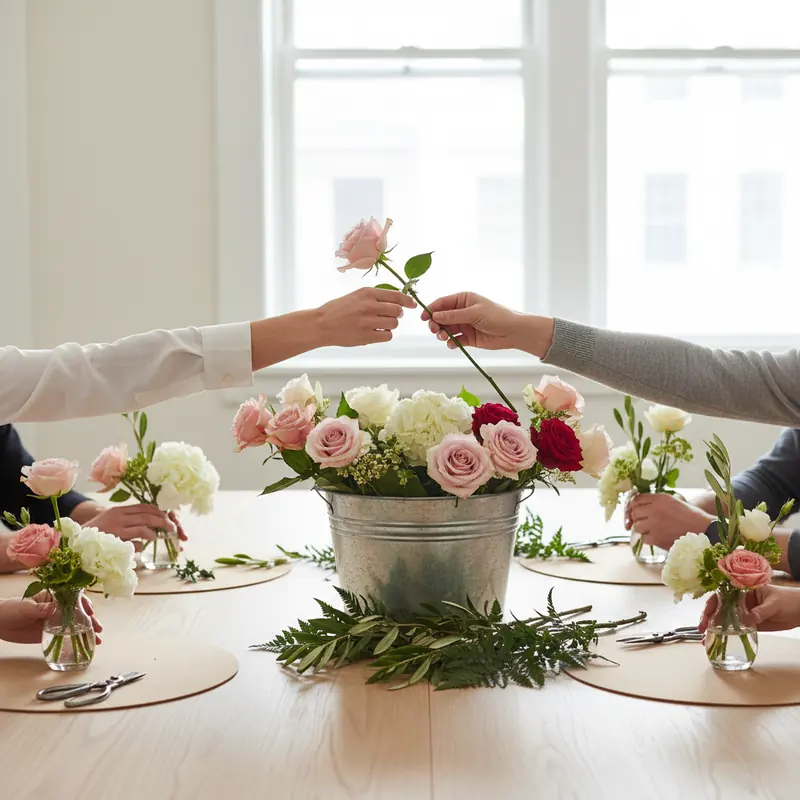
The workshop may finish around a shared table, but the gifts leave in different directions. One colleague needs a hand free for a rail journey; another is carrying a laptop; a third may collect several pieces for a team. A design that looks compact on the table can become a very different object once its wrapping, handles and protective outer packaging are added.
Good corporate flower workshop take-home packaging starts with those departures. First record how people will leave, then ask the supplier to assess a complete packed example against that journey. This guide separates the questions for hand-tied bouquets, preserved-flower pieces, dried arrangements and seasonal wreaths, before bringing them together in a brief you can send with your enquiry. All packaging formats discussed are options to confirm, not a statement of what a particular workshop includes.
Start with the journey home, not the flower style
Collect a short route profile rather than asking only whether everyone can take a gift home. Record the travel mode, any changes between services, the walking involved, other bags being carried and whether the participant can maintain the required carrying position. Keep individual collection separate from pooled transport: a colleague carrying one piece through a station has a different problem from someone loading several pieces into a vehicle.
When preparing a Corporate flower class enquiry, put the group size, likely departure arrangements and packaging constraints alongside the creative brief. You do not need colleagues' home addresses to identify these constraints. Ask about broad route categories and carrying needs, leaving room for people to flag a practical difficulty privately rather than explain it at the exit.
Use the least flexible journey as a design check, not as a reason to abandon the activity. If some participants need a hand free and cannot hold a broad arrangement level, flag that before selecting a project. The supplier can then be asked whether a smaller format or a different pack is feasible, rather than being asked to solve an unsuitable design after it has been made.
Separate the flower material from the finished shape
Preserved and dried describe material directions; bouquet, box, vessel and wreath describe forms. They are not interchangeable packing categories. A preserved-flower piece might sit in a display box, another container or a glass-containing design. A dried project might be hand-tied or arranged in a vessel. Ask what participants will actually make before deciding how they will carry it.
This distinction is reflected in the overseas provider The Roaming Petal's private workshop descriptions, which describe take-home bouquets with flowers, greenery and wrapping, fresh or dried options, and separate centrepiece and wreath formats. That is an example of different project structures, not evidence that another supplier includes equivalent materials, boxes or transport. For your event, obtain the proposed form and its packaging inclusions together.
Check the actual collection point and walking route
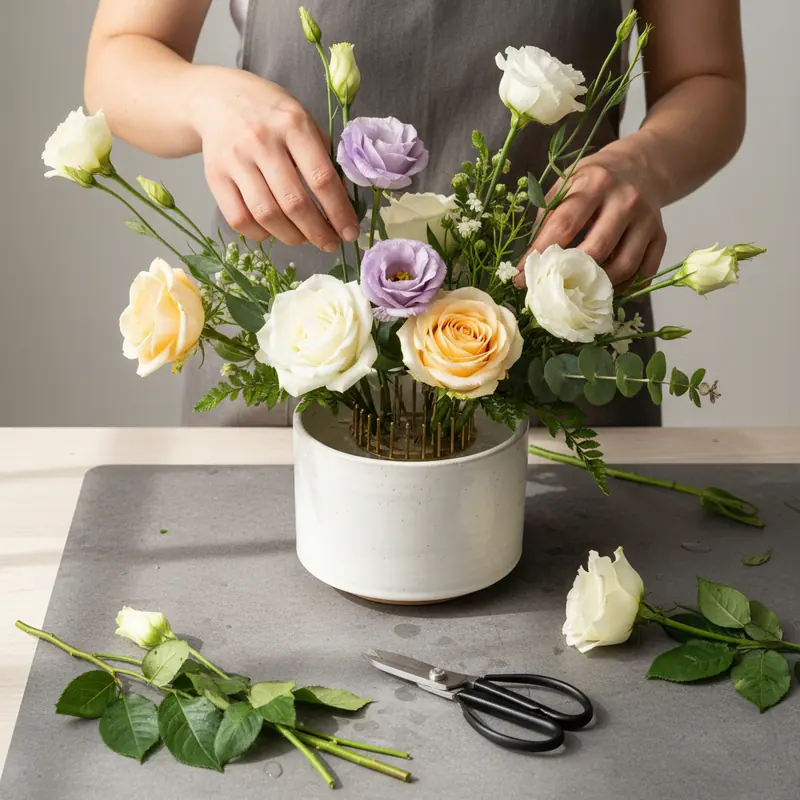
The journey begins where the packed work is handed over, not at the nearest familiar landmark. Confirm whether collection is at the workshop table, a reception area or another agreed point. Ask how participants move from there to the building exit while holding the packed piece. A route description should distinguish a direct vehicle collection from a walk followed by public transport.
If your group is considering a Flower class Kwun Tong, confirm the actual activity address, departure collection point and walking or interchange route before choosing a format. The district name alone does not establish a fixed classroom, a short station walk, parking or a delivery service. Apply the same address-and-route check to any proposed venue, including an activity held at your own office.
For bouquets, measure the wrapping as well as the flowers
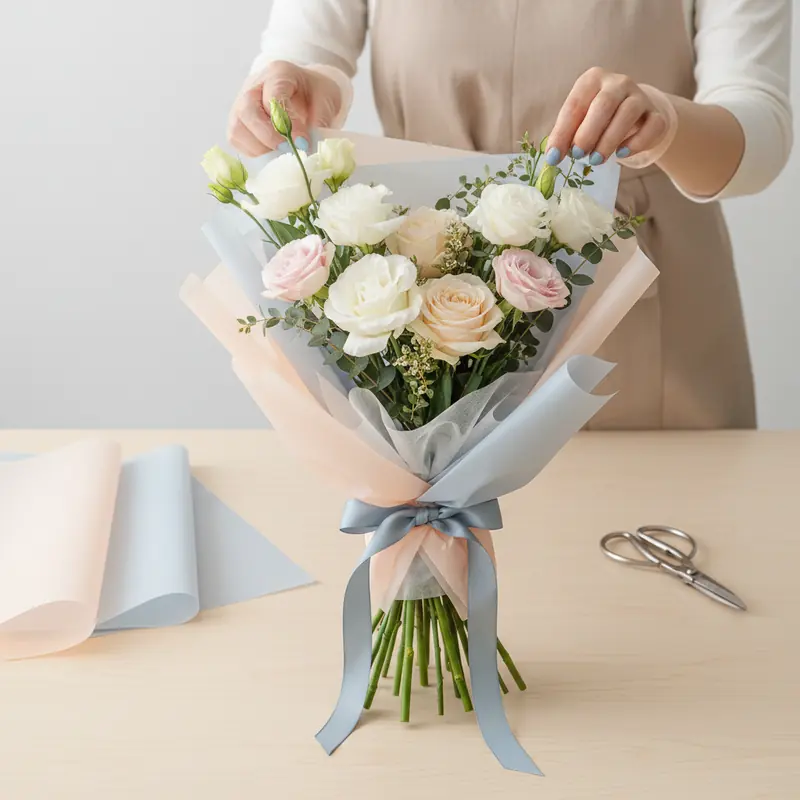
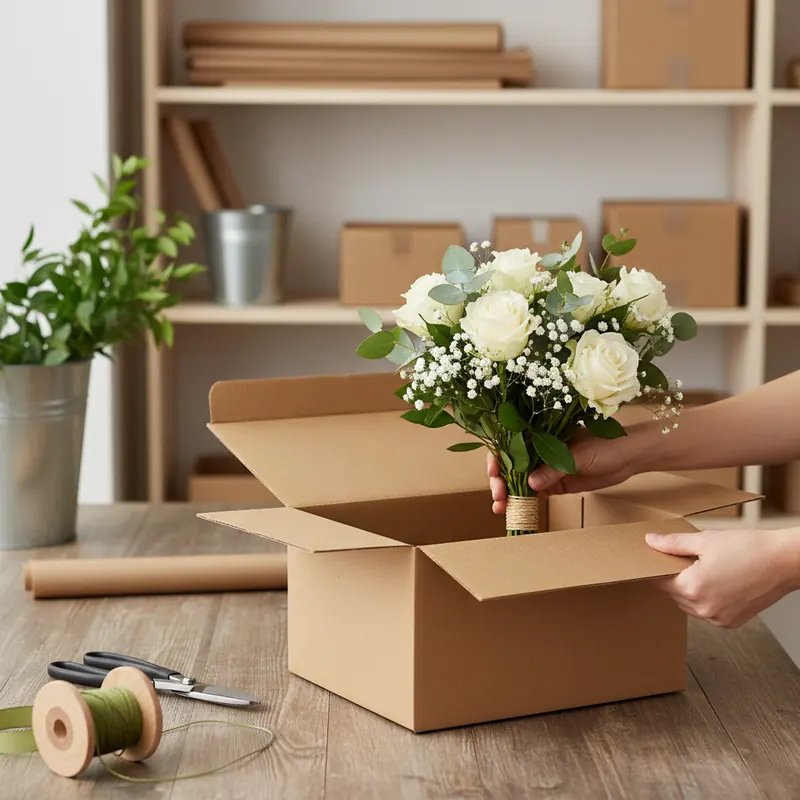
A hand-tied bouquet needs to be assessed at its widest packed point, which may be the wrapping rather than the flower heads. If you are considering a Korean bouquet class, ask how far the finished paper spreads, where the bouquet is intended to be gripped and whether a separate carrying bag or outer support is proposed. The visual style does not establish how it will travel.
If the project uses fresh flowers, ask the supplier what hydration arrangement is required for the planned journey and how any water-containing element is secured against leakage. Confirm which direction the bouquet must stay in and what participants should do on reaching home. Do not assume decorative paper provides either a leak barrier or resistance to pressure from other bags.
Ask to see the full carrying envelope
Request an example showing the bouquet in its intended take-home packaging, not just a close-up of the flowers. Ask for the overall height, widest width and depth, including any projecting paper. If the supplier proposes a handled carrier, check where its sides sit relative to the flower heads and how the packed bouquet is supported. This reveals whether the proposed carrier actually addresses your group's one-hand carrying requirement.
For preserved-flower pieces, distinguish display boxes from outer cartons
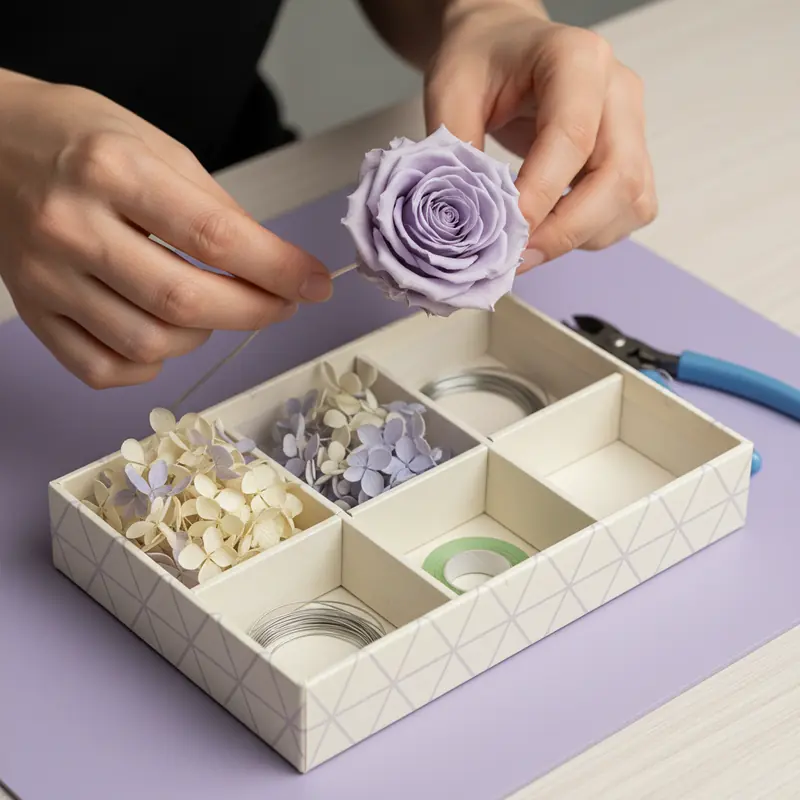
When exploring a Preserved flower workshop, first ask whether the proposed piece is boxed, arranged in another container or made with a glass component. None of those formats should be assumed from the material name. For a boxed design, clarify whether the visible box is part of the artwork, transport packaging, or both, and whether an additional outer carton is needed.
Ask how the finished arrangement is held within its container, whether the lid closes with clearance around the decoration and how the container itself is restrained inside the outer packaging. A neat rectangular display does not automatically mean it can be carried on its side. Obtain the permitted orientation for the complete piece and identify where it can be held without pressing on the design.
Treat glass as a separate decision
If glass is proposed, request a specific explanation of the protection and handling arrangement rather than accepting a general reference to gift wrapping. Ask whether a non-glass design is available if the package conflicts with participants' routes. Changing the display format before booking may be more workable than adding an increasingly bulky outer pack to something that still needs careful handling.
For dried arrangements, identify what projects beyond the main body
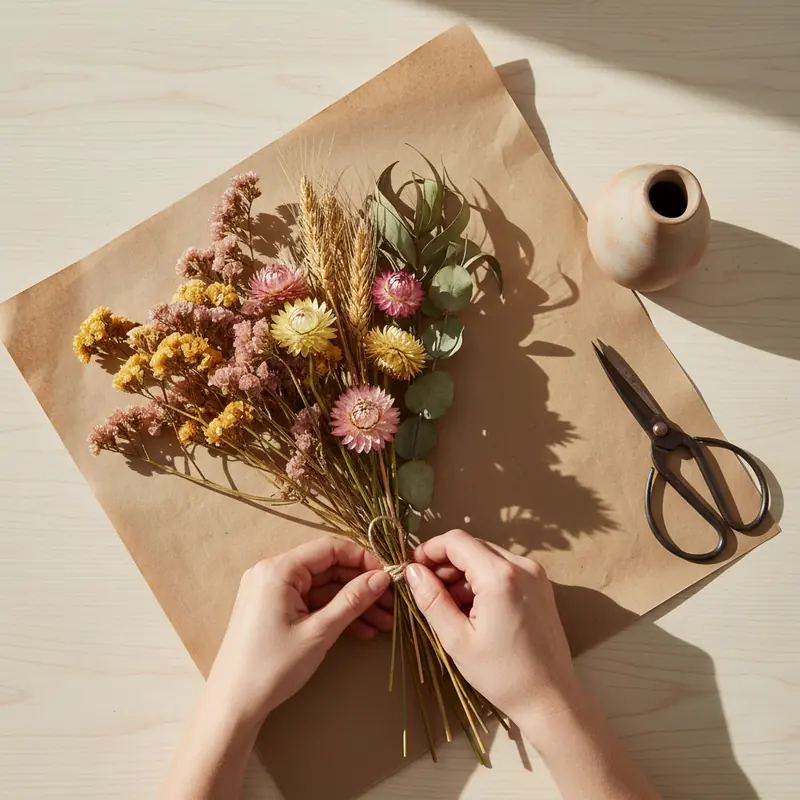
Use the Dried flower workshop guide to consider the creative direction, then ask whether your proposed output is a bouquet, a vessel arrangement or another shape. Follow that with questions about the tallest stems, side branches and any decoration extending beyond the centre. Those projections, rather than the size of the base alone, determine the space the packing needs to allow.
Ask which parts may contact the packaging, what support is needed around projecting material and whether the piece must be kept dry during the journey. Do not infer that a design tolerates squeezing simply because its proposed carrying instructions do not involve water. If the outline is too awkward for the agreed route, ask whether the project can be made more compact while retaining its intended appearance.
For seasonal wreaths, compare the decorated diameter and depth
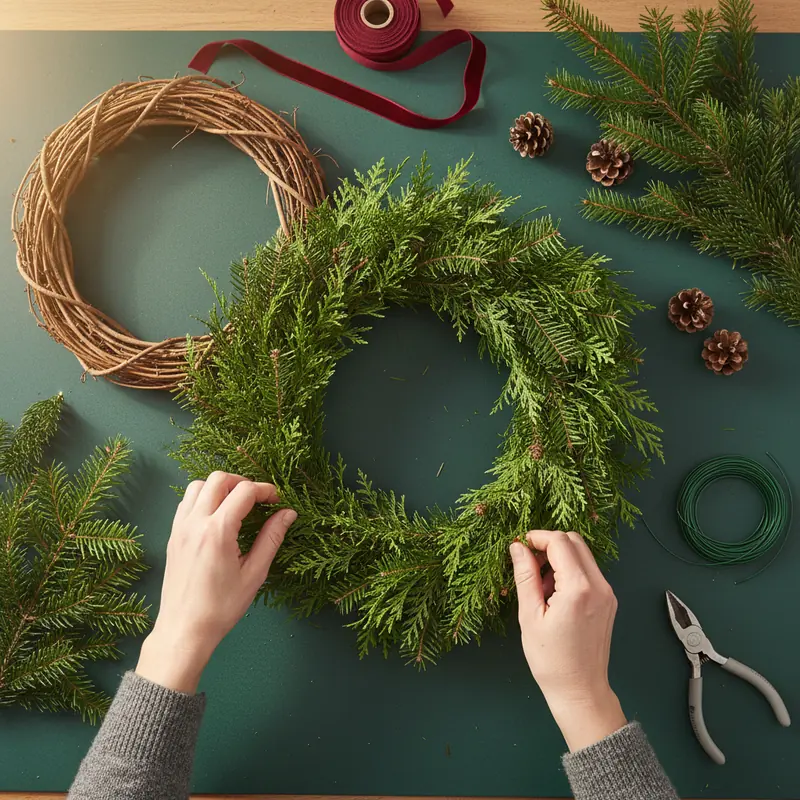
If the corporate event will use a Christmas wreath workshop, request the dimensions after foliage, ribbon and other proposed decorations have been added. The bare ring is not the finished footprint. Ask for the outer diameter, total depth and any elements projecting from either face, then ask how much space the proposed outer box provides around those details. Materials and session availability still need individual confirmation.
Confirm whether the wreath may travel flat, upright or only in a specified position, and how it is restrained without loading its decoration. A handle or hanging loop should not be treated as a transport solution without confirmation. When deciding between a bouquet or wreath for a corporate workshop, compare the complete packed shapes against the journey: a broad box and a tall bouquet create different carrying demands, with neither automatically the easier option.
Request one complete packed example before confirming the group
Ask for a representative finished piece inside all proposed take-home packaging, with its packed length, width, height and weight. Confirm whether those measurements include handles, lids and projecting wrapping, and whether participants' creative variations could change the packed outline. If a physical sample is not available, request a clear description or photographs of the proposed arrangement and identify what remains unconfirmed.
The packing questions should follow the structure of the piece. Bloom Gallery's guide to moving flower arrangements asks readers to identify fragile glass elements and discusses boxes that fit without compressing the arrangement, internal restraint and upright positioning. Its context is moving arrangements, not testing commuter workshop gifts; use it to frame questions about your proposed piece, not as a guarantee or a universal packing method.
Have the supplier specify the permitted position for your particular design, whether it may be laid down, and whether anything may be placed on top. Distinguish a closed lid from a stackable pack. If the answer is that the piece must remain upright with nothing above it, record that plainly in the brief and assess whether the actual departure arrangement can accommodate it.
Match the carrying method to what colleagues can actually manage
A bag is useful only if it suits the packed piece and the person carrying it. Ask whether the proposed handles allow the required grip without pulling the contents against the sides, whether the base supports the piece in its permitted position, and whether a second hand is needed. Do not describe a handled package as hands-free; its usefulness depends on how it must be held.
As a hypothetical example, imagine a participant changing trains while also carrying a laptop bag. A tall pack requiring continuous two-handed support conflicts with that brief, even if it looks impressive at the table. For flower workshop projects for the commute home, compare the packing proposal with that carrying task before choosing the finish. If it does not fit, ask about a smaller design, an alternative form or a separately agreed collection arrangement.
Allow for packing after the creative activity ends
Clarify whether participants pack their own pieces, the supplier packs them, or your event team has a role. Ask what work remains after the last stem or decoration is placed: fitting internal supports, closing boxes, attaching names, adding instructions and handing out bags may all need to be considered. Obtain a proposed finishing and collection sequence rather than assuming everyone can leave as soon as the making stops.
If colleagues must leave at different times, agree how early departures will be handled and where completed pieces wait. Ask how each participant's name will stay associated with the correct pack without opening it again at the door. Record the final collection cut-off and who deals with a piece left behind. These are responsibilities to agree for the event, not services to presume are included.
Treat pooled transport as a separate handover
If several finished gifts will leave together, give the supplier that information before selecting packaging. Individual carrying bags do not answer how a batch will be loaded, kept in its required position and identified at the receiving end. Ask whether grouped outer packaging is proposed, how pieces remain separated and whether the agreed vehicle space can accommodate them without stacking where stacking is not permitted.
Name the person responsible for collection, the loading handover and the receiving handover. If transport is being requested from the supplier, ask for separate confirmation of availability, scope and charges; do not assume delivery is included in the workshop. If colleagues will collect their pieces later, also agree the waiting location and any handling instructions. Avoid letting an informal offer to carry everyone's gifts substitute for an agreed transport plan.
Send a packaging brief that leaves no inclusion implied
Make your enquiry easy to answer by grouping the information into journey, proposed piece, complete pack and handover. State the event date and district, participant count, individual or pooled departure plan, and the main carrying restriction. Then ask the supplier to identify a compatible project and describe the full pack. Keep every unanswered item marked as unconfirmed rather than converting a suggestion into an inclusion.
Request an itemised explanation of what the quotation covers: display container, decorative wrapping, protective outer bag or box, internal restraint, any required leak-management arrangement, labels and packing work. Ask which are included and which require an additional charge. Prices, available formats and any transport arrangements should be confirmed for the specific enquiry with customer service; a design reference is not a package specification.
If the proposed pack does not suit the departure plan, resolve that mismatch before booking. First ask whether the piece can be made smaller, then whether another format meets the brief, and finally whether a different collection or separately quoted transport arrangement is feasible. The aim is not to find the flower style that sounds easiest to carry. It is to agree one complete gift that can be handled in the way your colleagues actually need.
- Journey: individual collection or pooled transport; travel mode, walking or changes, and other bags to carry: ____.
- Proposed piece: material, finished form, container and any glass or projecting decoration: ____.
- Complete pack: overall dimensions, weight, required orientation and any unresolved measurement: ____.
- Inclusions and handover: packing components, additional charges, packing responsibility and agreed collection sequence: ____.
Details to confirm before ordering
- Event date, district, participant count and whether gifts leave individually or together: ____.
- Walking, changes between transport services, other bags and any need to keep one hand free: ____.
- Proposed material and finished form, including container, glass and projecting decoration: ____.
- Representative complete pack, overall dimensions and weight, with anything unconfirmed identified: ____.
- Required carrying position, permission to lay flat, and any stacking restriction: ____.
- Included display and outer packaging, internal supports, any required hydration or leak arrangement, and additional charges: ____.
- Who packs and labels each piece, finishing time, departure sequence and handling instructions: ____.
- Collection point, named handover roles and separately confirmed pooled transport or uncollected-piece arrangements: ____.
Questions about this decision
Is a boxed preserved-flower piece automatically easier to take home than a bouquet?
No. Compare the complete packed dimensions, weight, permitted position and carrying method. A display box may still require an outer carton and internal restraint, while a bouquet's wrapping may make it wider than expected. The better fit is the proposal that matches the actual route.
Can we choose the packaging after the workshop design is confirmed?
Ask about it before committing to the design. The required outer pack could change the carrying footprint or reveal that the proposed piece needs a position participants cannot maintain. Confirming a representative packed example early leaves room to adjust the size or form.
What if some colleagues cannot carry the selected gift on their journey?
Raise the constraint before booking and ask about a compact design, a different form or an alternative collection arrangement. If supplier transport is an option, request its availability, scope, charges and handover terms separately. Do not assume it is provided.
Can we assume a lidded wreath box can be stacked for group collection?
No. A lid does not establish that the contents or package can take a load above them. Ask about the exact finished wreath, its internal support, permitted travel position and any stacking restriction, then plan the collection space accordingly.
Does wrapping shown in a design image mean that the same packaging is included?
No. The images here are AI-generated design references, not workshop records or confirmed package contents. Ask the supplier to specify the display elements, decorative wrapping, protective packaging and packing work included in your individual quotation.
Sources and further reading
Reference only. Illustrations are AI-generated design references, not photographs of actual customer orders. Confirm current contents, prices and arrangements with our team.
For this guide:Corporate flower workshop take-home gifts: bouquet, box or wreath for the journey home?
Plan your workshop
Considering Corporate flower class? Send the date, district and the points discussed in this guide to YumYum Gifts to confirm suitable options and a quotation.
Book a WorkshopWhatsAppThis opens a prepared WhatsApp enquiry. Availability, details and price must be confirmed before booking.
Explore related services and designs
Compare relevant options, view design references and find the information you need before making an enquiry.
Christmas wreath workshop
Compare Christmas wreath making directions, foliage textures and decorative finishes to consider a craft project, without assuming that specific materials, lesson content or workshop dates are confirmed.
Corporate flower class
Compare flower workshop directions for a workplace group, looking at shared materials and arrangement formats while discussing group needs, course details and scheduling separately before making plans.
Parent-child flower class
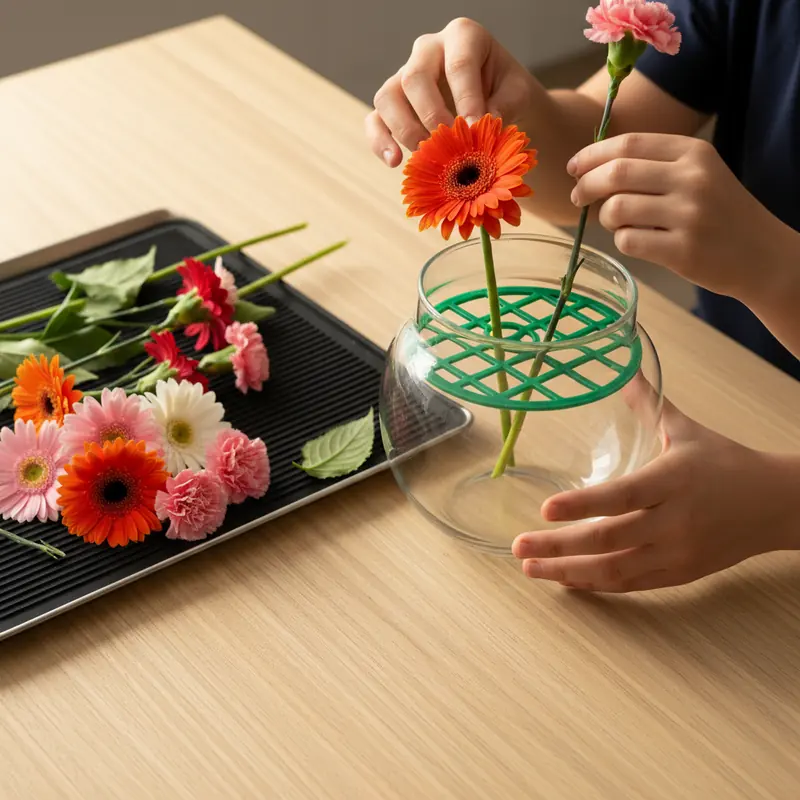
Compare shared flower activity directions for an adult and child, considering simple materials and collaborative formats while discussing age suitability, supervision and course arrangements separately.
Preserved flower workshop
Compare preserved flower craft directions, materials and display formats to consider what you would like to make, keeping lesson details and workshop arrangements subject to a separate enquiry.
Dried flower workshop
Compare dried flower craft directions, botanical textures and display formats to identify what interests you, keeping the actual materials, lesson content and workshop arrangements for separate discussion.
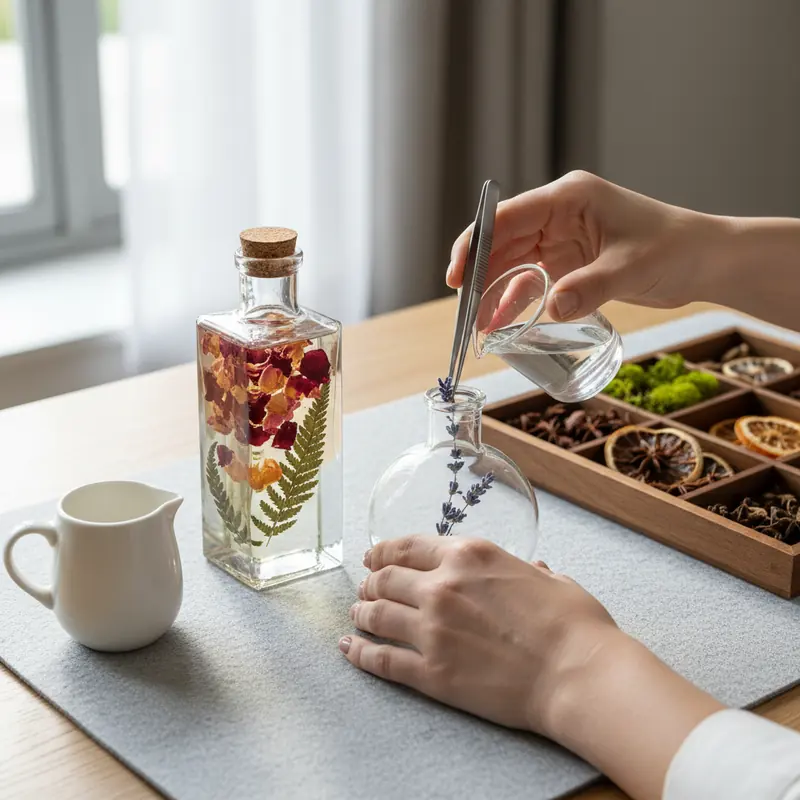
Herbarium workshop
Compare botanical bottle craft directions, dried flower placement and vessel shapes to identify a project, keeping the workshop materials, handling instructions and lesson arrangements for separate discussion.
Original AI-generated navigation references; designs and order details are subject to confirmation.
Useful options for your plans
Compare Christmas wreath workshop directions if you would like to explore seasonal wreath making.
Explore Corporate flower class when comparing hands-on flower activities for a workplace group.
Compare Parent-child flower class directions while discussing suitable materials and supervision for your child.
Compare Preserved flower workshop directions if you are interested in working with preserved flower materials.