YumYum Gifts · Ordering guides
Planning an Employee-and-Child Flower Workshop: What Should the Quote Separate?
For this guide:Planning an Employee-and-Child Flower Workshop: What Should the Quote Separate?
Plan your workshop
Considering Corporate flower class? Send the date, district and the points discussed in this guide to YumYum Gifts to confirm suitable options and a quotation.
Book a WorkshopWhatsAppThis opens a prepared WhatsApp enquiry. Availability, details and price must be confirmed before booking.
A flower workshop quote for employees and children needs more than a total headcount. An employee making an arrangement independently, a parent helping a child with a shared piece, and an adult attending only to accompany someone create different requirements. Start with a participation register, then ask the supplier to show how finished pieces, occupied places and teaching work translate into the quoted scope. This is a buying checklist, not a price list or a promise that every item is charged separately.
Before making a Corporate flower class enquiry, gather your event objective, adult and child numbers, children's age range, preferred teaching languages, and company-site or studio preference. There is a practical reason to provide that detail: the Hong Kong supplier Let Hope Bloom's corporate workshop information identifies corporate family activities and describes packages that specify materials, tools, instructors, setup and delivery or on-site services. Those are useful categories to ask about, not evidence that another supplier includes the same package.
Build a register of participation roles, not just names
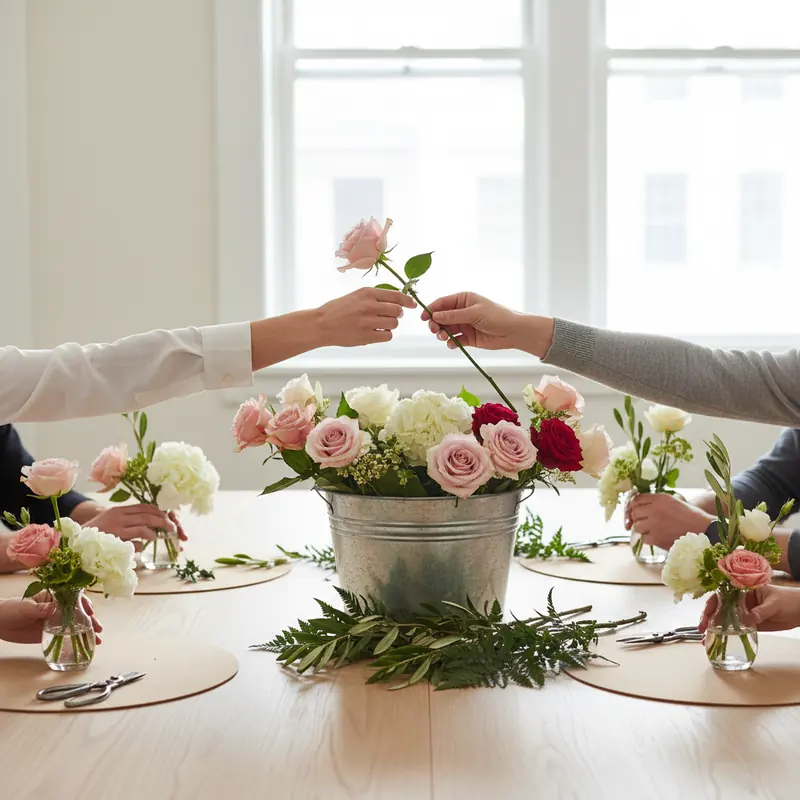
Give employees a choice of clearly defined arrangements when collecting responses: an adult creating independently; an adult and child making a shared piece; a child making a separate piece with an accompanying adult; or an adult attending without making anything. Record children individually where their roles differ. A parent bringing siblings may need a different arrangement for each child, so a household-level answer such as 'family attending' leaves too much unresolved.
Use the Parent-child flower class enquiry to confirm whether shared and separate creations can be accommodated, rather than assuming all parent-child bookings work alike. As an example of a particular booking model, ClassBento's Bloom and Bond listing describes a person or pair creating a single arrangement together and lists flowers, greens, tools and containers. That overseas example illustrates why the unit matters; its attendance conditions and charges should not be applied to a Hong Kong event.
- Adult role: independent maker / co-maker / accompanying only; number: ____.
- Child participation: shared piece / separate piece; number and age range: ____.
- Requested finished pieces for this booking group: ____; seating requirements: ____.
Turn the requested finished pieces into a materials schedule
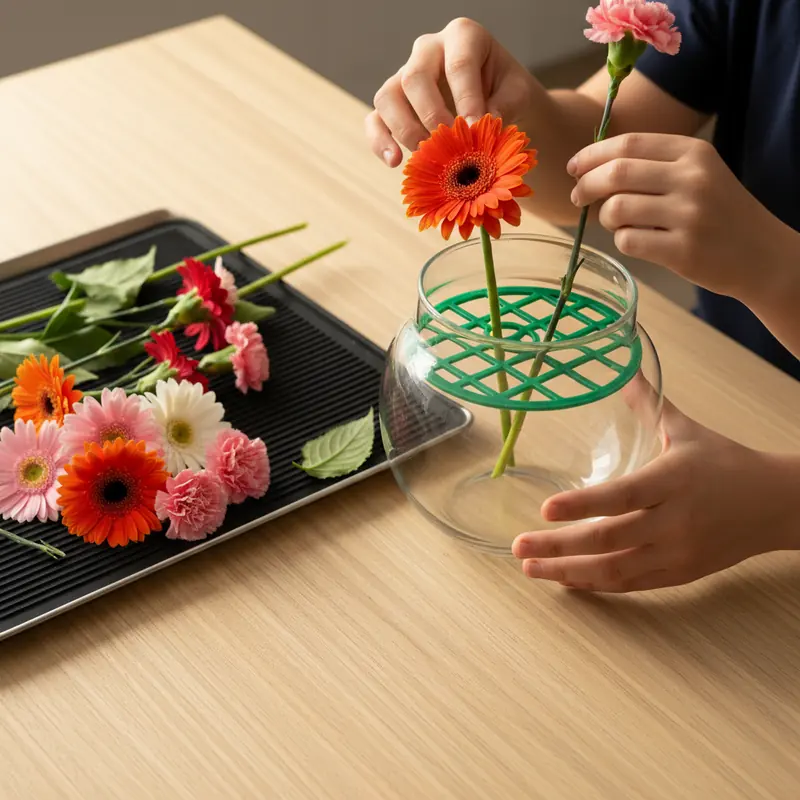
Once participation choices are clear, list the intended finished pieces by project. Ask the supplier to confirm what constitutes a kit: plant materials, container or base, fixing or adhesive consumables, decorative elements and take-home protection. Keep any optional extras visibly separate. A quote saying only 'materials included' does not tell you whether it covers the same finished result as another proposal, especially when the two suppliers have suggested different containers or levels of preparation.
If you ask about shared flower kits for parent-child workshops, define sharing as making a specified finished piece together, not simply passing materials around a table. Confirm whether co-makers receive a single container and a coordinated selection of materials, and whether individual practice materials are also supplied. Ask what happens if a family later requests separate pieces. That change may affect kits, table space and teaching arrangements even when the number of people stays unchanged.
- Project and finished-piece quantity: ____; container or base per piece: ____.
- Plant materials, fixing consumables and decorative items included: ____.
- Practice materials and optional additions: included / separately quoted / not offered.
Keep tool provision, workstations and seats on separate lines
A shared creation does not automatically mean a shared seat. Both the adult and child may need to sit at the worktable, see the demonstration and reach the working area. An accompanying adult may also occupy a place even without receiving a kit. Give the supplier the full attendance register and ask for a proposed layout that reflects these roles. Do not infer a studio's usable capacity from the number of kits in the materials line.
Ask separately which tools are lent, which are shared between workstations, and which, if any, can be taken home. For an arrangement-based option, clarify whether containers are part of the finished piece while buckets, protective table coverings or other working equipment remain with the supplier. The point is to establish what will be available when participants need it. Tool provision and additional seating may be included or charged differently; neither should be assumed free because a family shares materials.
Define the teaching scope before comparing teaching fees
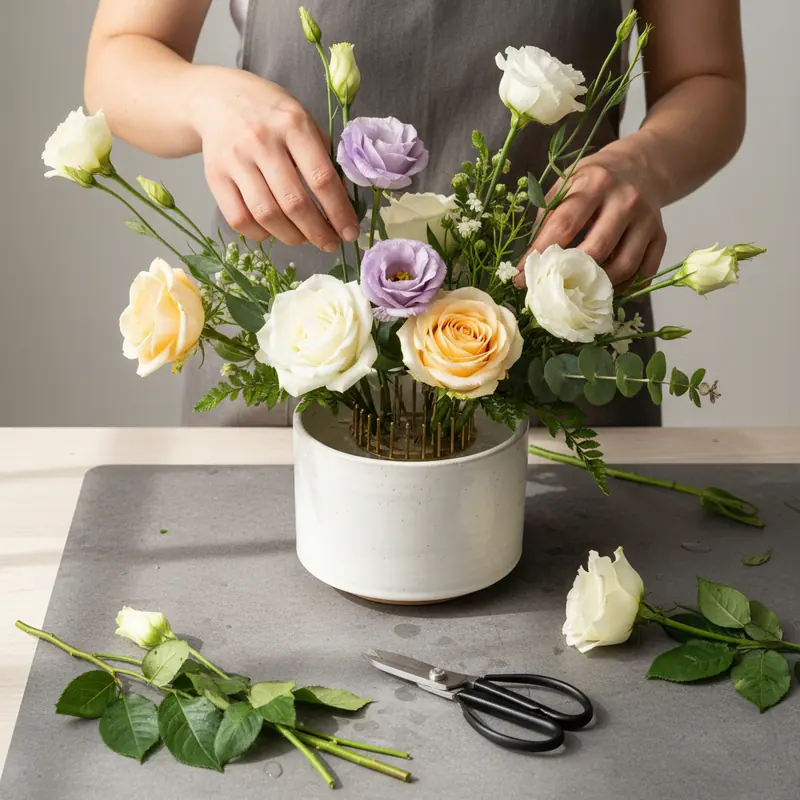
When comparing teaching fees for mixed-age flower workshops, ask what the instructor will actually deliver rather than judging a single fee in isolation. Team Flower's workshop planning guide distinguishes educational content, live demonstration, individual instruction and supporting event work. These distinctions help you ask precise questions, but they do not establish a compulsory staffing ratio or an automatic mixed-age surcharge.
Describe the intended balance between a shared family activity and independent learning. If adults want a more detailed design exercise while children follow a shorter sequence, ask how those routes will run together. A quotation should make clear whether both routes are within scope, whether the group will follow a common design, and how the requested language arrangements will work. Do not assume that adding another explanation has no effect on the agreed session.
Common demonstration and guided practice
Ask whether the teaching time includes an introduction, a complete demonstration, staged demonstrations or pauses for participants to practise. Clarify whether instructions will be repeated in the requested languages and whether everyone can see the demonstration position. These questions help distinguish an activity with a brief introduction from one with sustained step-by-step teaching, without suggesting either format is inherently better.
Individual help and optional extension steps
Confirm whether the instructor will circulate to help individual makers, and what assistance is intended for shared adult-child pieces. If an adult finishes early, an optional extension step may be useful, but ask whether it is actually offered and uses extra materials. Likewise, identify a simpler stopping point for participants who need it, subject to the supplier's proposed design rather than an invented age-based rule.
Identify preparation work and the event's actual working window
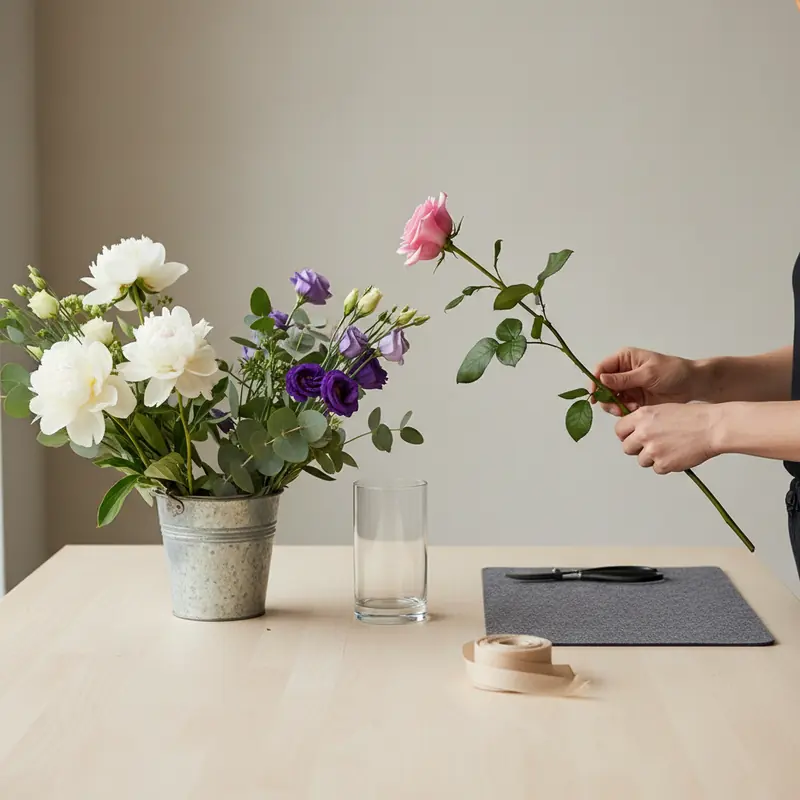
Preparation can change what participants are expected to do. Ask whether stems arrive ready for arranging, whether components are pre-portioned, and whether containers or project bases require preparation on site. The design-reference image of stem preparation illustrates a task to discuss; it does not establish what your chosen supplier includes. Specify which stages you want participants to experience and let the supplier explain the implications for materials, timing and teaching.
Separate access and setup, participant-facing teaching, and clearing away in the requested schedule. A company meeting room booked only for the activity itself may leave no agreed window for deliveries or packing equipment. Ask the supplier to identify preparation already built into its materials or teaching price, then explain any additional preparation line. The aim is transparency, not demanding an artificial breakdown of every minute or rejecting a package simply because it bundles related work.
- Off-site preparation included: ____; participant preparation tasks: ____.
- Venue access, teaching and clear-up windows requested: ____.
- Preparation appears in these quote lines, with any overlap explained: ____.
Distinguish teaching assistance from adult supervision
Ask who will handle material distribution, project-specific assistance and practical requests during the session. The lead instructor may cover some of these tasks, or the supplier may propose an assistant. Request the intended duties and the circumstances under which that proposal would change. A mixed-age audience is a reason to discuss support needs, not proof that an additional person is always required or that a fixed adult-to-child ratio applies.
Keep accompanying adults' responsibilities explicit. An instructor explaining a technique is not the same as someone supervising a child throughout the event, and a flower workshop should not be described as childcare. Ask the supplier and parents to confirm how tools, small components and any liquids will be handled for the actual children attending. If a particular step needs adult or instructor involvement, record that decision in the agreed activity scope rather than relying on a general reassurance.
Request staffing assumptions rather than an unexplained surcharge
Where a quote includes assistance, ask which attendance pattern, project and teaching window the staffing assumes. Then ask what changes would require the supplier to review it: a different project, more independent makers, a wider range of needs or a revised layout. This gives your organiser a basis for managing registration changes without claiming that any particular adjustment must cost extra.
For a wreath option, ask about the base and fixing work
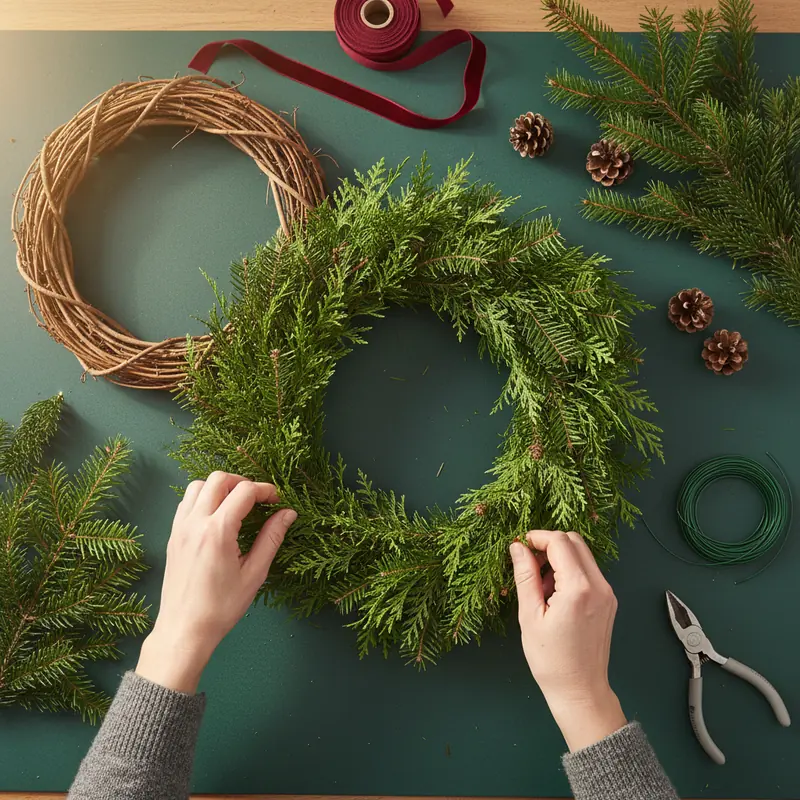
If a seasonal project is under consideration, use the Christmas wreath workshop enquiry to request a project-specific materials line. Ask whether it includes the base ring, foliage, decorations, ribbon and fixing materials, and how substitutions would be agreed. Also clarify whether the proposed piece is intended to be a shared family creation or an individual project. A reference image is not a specification for diameter, foliage quantity or included decoration.
On the teaching side, ask who trims materials and handles each fixing step, and whether any components are prepared beforehand. Establish the roles of instructor, accompanying adult and child for the proposed method. Confirm how the completed piece will be supported and protected for the journey home. These are scope questions, not a claim that a wreath is suitable for every age, currently scheduled, or less expensive than another project.
For pressed flowers, distinguish prepared materials from pressing
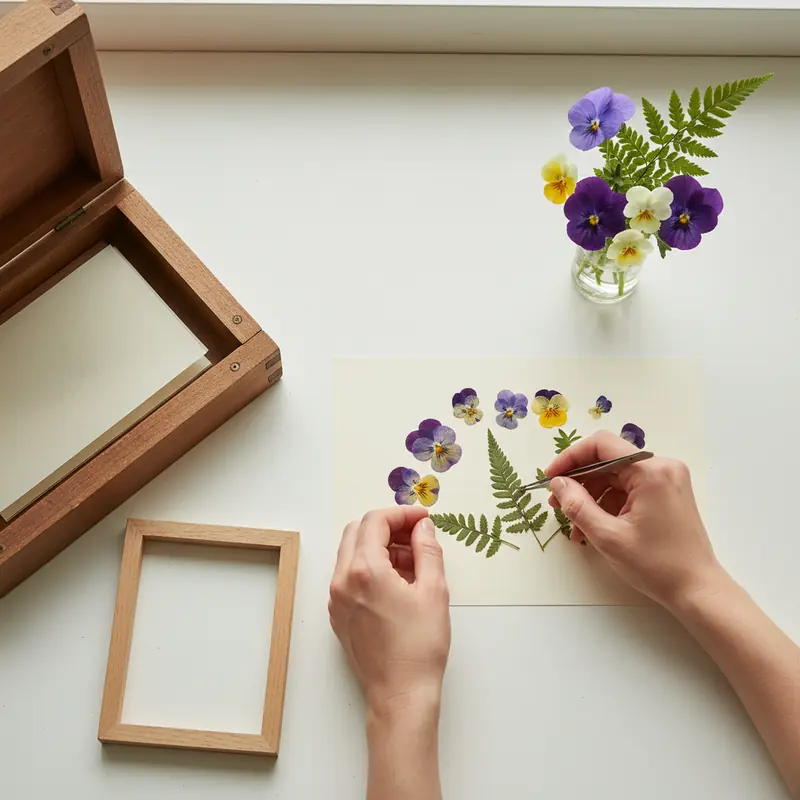
A Pressed flower workshop enquiry should state whether you want to work with already-pressed flowers or learn a pressing process. These are not interchangeable descriptions. Ask which plant materials will be available, what surface or finished object they will be arranged on, and which adhesives or other consumables are included. A press visible in a design reference does not mean participants will press fresh flowers and complete the same pictured result within your session.
Request details of layout demonstration, handling guidance and individual help with arranging or attaching the materials. Confirm whether the supplier offers different steps for shared and independent makers, and whether finishing or further preparation remains after the class. Ask how the piece should be transported in its agreed state. Compare this proposal with another project on its actual materials and teaching tasks, not on an assumption that flatter materials mean a simpler or cheaper session.
For herbarium bottles, allocate filling, closing and cleanup tasks
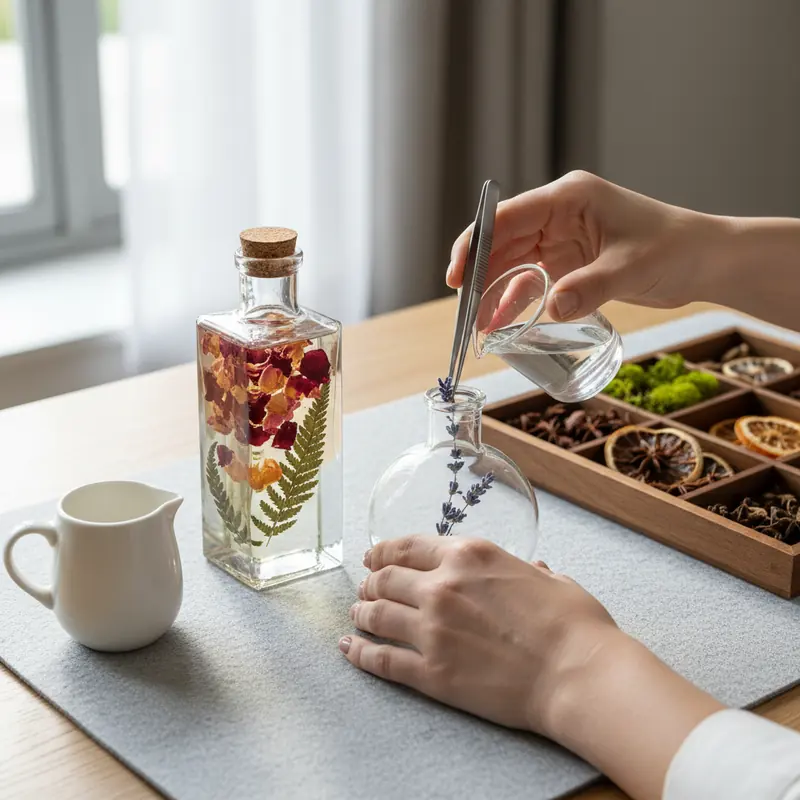
For a bottle-based alternative, the Herbarium workshop enquiry can establish whether the quotation includes the container, plant materials, filling liquid, closure and any finishing elements. Ask what the proposed contents are and whether each finished piece has its own complete set. Do not infer a particular liquid, bottle size or finished appearance from the reference image, and do not assume that similarly named proposals contain equivalent components.
Have the supplier explain who places the materials, pours any liquid and closes the container. These tasks may be allocated differently between instructor, adult and child, so the arrangement needs confirmation for your group. Ask about table protection, management of leftover materials, cleanup and take-home packaging as well. Written handling instructions and an agreed division of tasks are useful; they are not a guarantee that every child can carry out every step or that a material presents no sensitivities.
Compare studio and company-site logistics on the same basis
A studio proposal and a visit to your office may place different work inside the headline total. For either option, confirm the actual venue, available worktables and seats, demonstration position, access arrangements and agreed setup and departure windows. For an office visit, identify what the company will provide and what the supplier must bring. Ask separately about transport, loading, carrying materials within the building, protective coverings and cleaning responsibilities rather than assuming these are covered by the teaching fee.
If Causeway Bay is genuinely on your venue shortlist, use Flower class Causeway Bay as a location enquiry and request the proposed address, seating arrangement, loading access and entry times. The enquiry does not confirm an existing classroom there. Compare any studio venue charge with the transport and setup scope of a company-site proposal, keeping the requested activity and attendance pattern consistent. Confirm any building or venue requirements before treating either total as ready for approval.
Read inclusions and assumptions before comparing the totals
Put the proposals beside the same participation register and finished-piece schedule. For each line, record its unit, quantity or working window, and whether it is included, separately quoted, optional or still awaiting confirmation. Useful lines are materials per finished piece, loan tools, teaching, preparation, assistance, venue arrangements, transport, setup, cleanup and take-home packaging. Suppliers can retain their own pricing format; your comparison simply needs enough detail to identify a real difference in scope.
Look for omissions and unexplained overlaps before asking which total is lower. If preparation appears under both materials and teaching, ask whether those lines cover different work. If packaging is not mentioned, ask what is needed for the proposed finished pieces and whether it is included. A supplier that bundles setup into a package is not necessarily missing a service, while a separate setup line is not necessarily a duplicate. Request clarification in writing rather than filling the gap with an assumption.
- Quote line: ____; unit or time window: ____; quantity or scope: ____.
- Status: included / separately quoted / optional / awaiting confirmation.
- Assumption or unanswered question: ____; supplier's written clarification: ____.
Agree the change procedure before approving the booking
Ask the supplier to state when participant numbers, finished-piece quantities and project choices must be confirmed, and how later requests are handled. Distinguish an extra attendee who shares an existing piece from an extra independent maker who needs another kit. Equally, an absent child does not automatically remove a kit if the family still wants the completed-piece materials. Obtain the supplier's actual rules for increases, reductions, absences and unused materials; do not assume refunds, transfers or take-home kits are available.
Before approval, request a final written scope tied to the current register, selected project, teaching window and venue arrangement. Confirm the quotation's validity conditions and any unresolved payment, cancellation or rescheduling terms directly with customer service for this booking. Send a concise enquiry using the checklist below, then update it when decisions change. You are ready to compare totals when both suppliers are answering the same brief—not merely when both have supplied a price per person.
Details to confirm before ordering
- Attendance register confirmed: independent adults, adult-child co-makers, independent child makers and accompanying-only adults.
- Children's age range, preferred teaching languages and any requested participation adjustments shared for discussion.
- Finished pieces by project confirmed separately from attendee numbers, seats, workstations and shared tools.
- Materials, containers or bases, consumables, loan tools and take-home packaging identified as included or separately quoted.
- Demonstration, individual help, preparation, assistance and adult supervision responsibilities clarified.
- Preferred date: ____; district: ____; studio or company site: ____; access, transport, setup and cleanup scope confirmed.
- Written change procedure, quotation validity conditions and outstanding booking terms received before approval.
Questions about this decision
Should every attending employee and child be counted as a separate kit?
Not automatically. Count all attendees for layout and support discussions, then specify how many finished pieces are requested. Ask the supplier how its kit or booking unit relates to shared creations and independent makers.
Does sharing a piece mean the accompanying adult attends free?
No such condition should be assumed. A shared materials set does not settle seating, supervision, teaching access or the supplier's booking charges. Ask for the accompanying-adult conditions in writing.
Must a mixed-age workshop have an extra assistant?
This guide does not prescribe staffing. Give the supplier the participation pattern, age range, project and requested support, then ask it to explain its proposed staffing and what changes would require review.
Can a single package price still be compared fairly?
Yes, if its written scope identifies the materials, teaching, logistics and exclusions sufficiently clearly. You do not need a separate charge for every task, but you do need to know what each package covers.
What should I ask if a child cannot attend after kits are confirmed?
Ask how the supplier handles the attendance change, the allocated materials and any shared piece. Confirm whether cancellation, reassignment or collection is possible and on what terms; none of these options is automatic.
Sources and further reading
Reference only. Illustrations are AI-generated design references, not photographs of actual customer orders. Confirm current contents, prices and arrangements with our team.
For this guide:Planning an Employee-and-Child Flower Workshop: What Should the Quote Separate?
Plan your workshop
Considering Corporate flower class? Send the date, district and the points discussed in this guide to YumYum Gifts to confirm suitable options and a quotation.
Book a WorkshopWhatsAppThis opens a prepared WhatsApp enquiry. Availability, details and price must be confirmed before booking.
Explore related services and designs
Compare relevant options, view design references and find the information you need before making an enquiry.
Corporate flower class
Compare flower workshop directions for a workplace group, looking at shared materials and arrangement formats while discussing group needs, course details and scheduling separately before making plans.
Parent-child flower class
Compare shared flower activity directions for an adult and child, considering simple materials and collaborative formats while discussing age suitability, supervision and course arrangements separately.
Pressed flower workshop
Compare pressed flower craft directions, flat botanical arrangements and display formats to consider a project, without assuming the illustration confirms particular materials, lesson content or workshop availability.

Dried flower workshop
Compare dried flower craft directions, botanical textures and display formats to identify what interests you, keeping the actual materials, lesson content and workshop arrangements for separate discussion.
Christmas wreath workshop
Compare Christmas wreath making directions, foliage textures and decorative finishes to consider a craft project, without assuming that specific materials, lesson content or workshop dates are confirmed.

Beginner flower class
Compare introductory flower learning directions, simple arrangement formats and basic materials to consider a starting point, without assuming a particular teaching sequence or confirmed course availability.
Original AI-generated navigation references; designs and order details are subject to confirmation.
Useful options for your plans
Explore Corporate flower class when comparing hands-on flower activities for a workplace group.
Explore Dried flower workshop if you want to compare craft directions using dried botanical textures.
Compare Parent-child flower class directions while discussing suitable materials and supervision for your child.
Compare Beginner flower class directions if you are looking for a starting point in flower arranging.