YumYum Gifts · Ordering guides
Choosing a flower class with friends: how to check skill level, hands-on time and learning goals
For this guide:Choosing a flower class with friends: how to check skill level, hands-on time and learning goals
Plan your workshop
Considering Flower class? Send the date, district and the points discussed in this guide to YumYum Gifts to confirm suitable options and a quotation.
Book a WorkshopWhatsAppThis opens a prepared WhatsApp enquiry. Availability, details and price must be confirmed before booking.
One friend wants a relaxed afternoon making something attractive. Another has arranged flowers at home and wants to understand hand-tied bouquets. A third is wondering whether floristry could become a business. Sharing an interest in flowers does not mean you need the same lesson. If you are deciding how to choose a flower class for friends with different goals, begin with the tasks each person wants to do, rather than a class name or a finished-work photograph.
Before asking about dates, write a short learning brief together: what each person has done before, one step they want to practise themselves, and whether business knowledge matters. Then ask the provider to distinguish what is demonstrated, what every participant does and what is outside the lesson. The framework below helps you decide whether one shared project is enough, or whether enjoying an introductory session together and continuing separately would be more useful. It is a selection guide, not confirmation of any provider's curriculum or group arrangements.
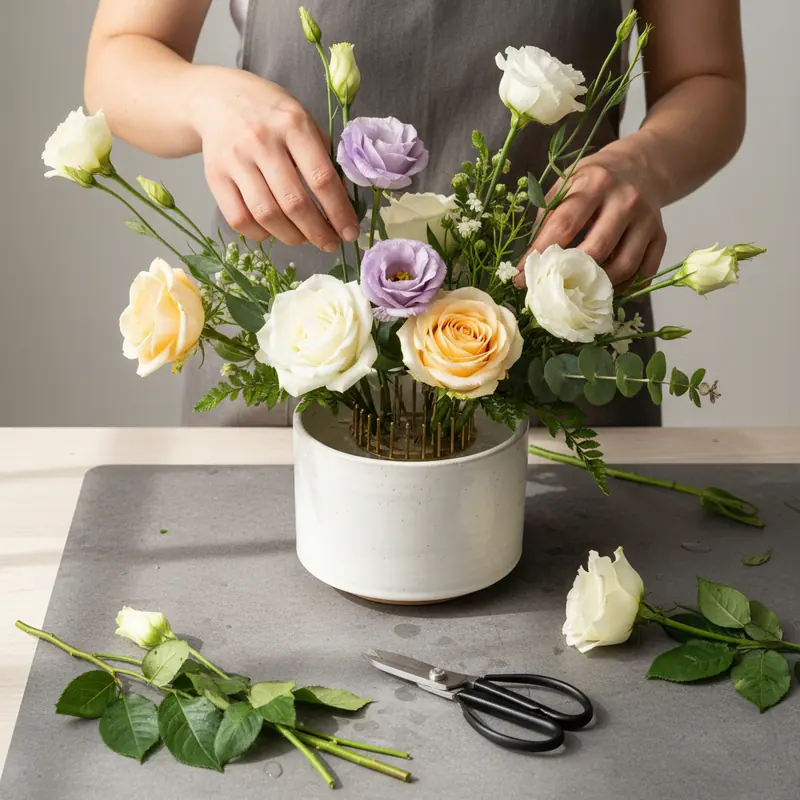
Start with tasks each friend has actually done
Replace broad labels such as beginner, creative or experienced with short descriptions of real tasks. Someone might have put shop-bought stems in a vase but never selected a focal point. Another might have wrapped a gift bouquet without constructing the bouquet underneath. Ask each person to name something they can do independently and something they still need explained. This gives the provider more useful information than saying the group has mixed abilities.
Use the Flower class direction as a starting point for discussing your shared interest, then make the enquiry more precise. Write, for example, that you want an introduction to handling fresh stems and building a small arrangement, while one participant also wants to understand bouquet construction. That is a hypothetical brief, not a description of an available lesson. The provider can then explain whether those aims fit together and what prior knowledge is expected.
Give the first-timer a clear starting point
A friend with no experience should not have to guess which tools or preparation steps the teacher assumes they already know. When reviewing the Beginner flower class direction, ask whether tool use and flower preparation are taught before the main project, and whether any prerequisite tasks are expected. Also ask about the teaching language and the language used for individual explanations. Being comfortable asking a question matters more than choosing an impressive-sounding level.
Different starting points do not automatically require different classes, but neither should you assume a provider can accommodate every level simultaneously. Solomon Bloemen Flower School's description discusses learners from complete beginners to professional and vocational directions, alongside interests and current skill level. That supports asking about the match; it does not establish that a particular mixed-level session is available. Ask what a returning learner would practise while the first-timer receives an introduction, and whether that arrangement forms part of the proposed lesson.
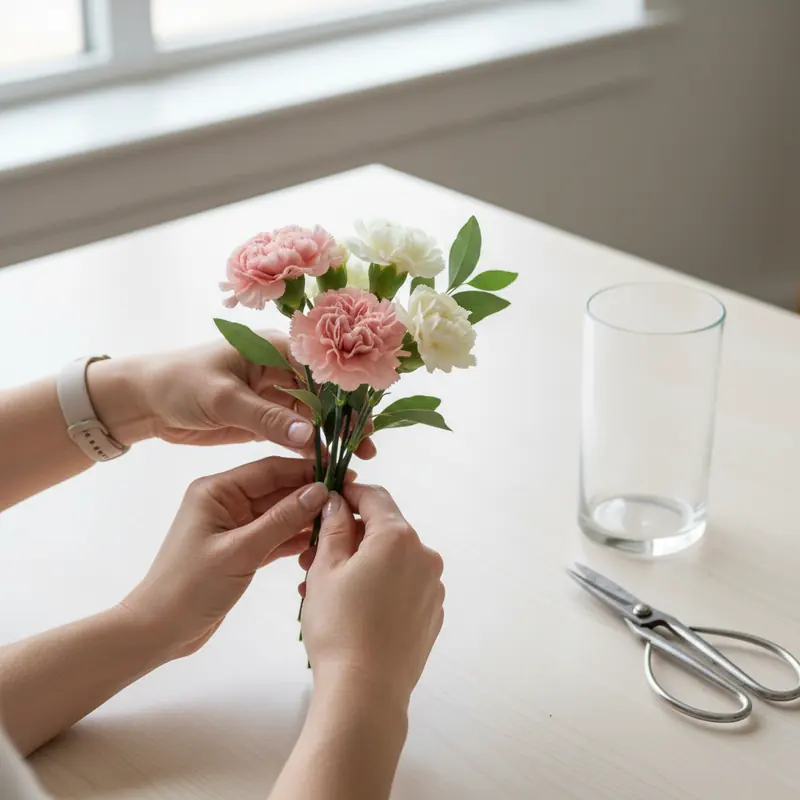
Choose one shared outcome before adding extras
Give the group one common destination: an individually made vase arrangement, a hand-tied bouquet or another clearly described project that the provider can confirm. Next, separate essential goals from optional interests. If everyone wants to learn stem placement but only one person wants elaborate wrapping, do not make the wrapping the centre of the whole group's request without discussing that trade-off. A shared outcome gives the teacher a workable question to answer.
Decide whether the purpose is learning together or producing one collaborative piece. Both can be enjoyable, but they offer different opportunities to practise. If friends share a single arrangement, one person may prepare stems while another handles placement. Ask how tasks would rotate if everyone wants to try both. If each friend needs to complete the same step independently, say so explicitly rather than assuming that a group booking means identical personal practice.
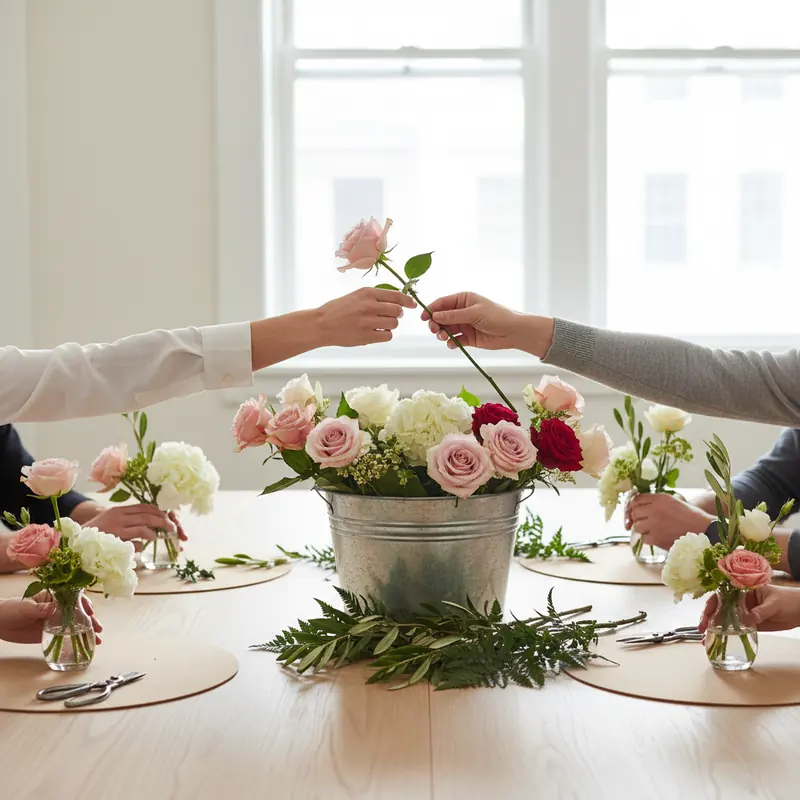
Separate flower preparation from vase composition
For the friend interested in vase work, split the request into preparation and composition. Preparation might be a task you want explained and practised; composition might mean making choices about height, spacing or where the eye goes first. When considering a Flower arranging class, ask which of these steps every person performs and which are completed in advance. A session using prepared materials may still suit your group, but it will not answer the same learning need as preparing those materials yourself.
Ask whether the vase or other container is specified and whether students choose placements themselves or reproduce a demonstrated arrangement. Neither format is automatically better: following a model may suit someone who wants a clear first exercise, while making choices may matter more to a friend who already arranges at home. The useful comparison is whether the activity addresses your stated goal. A photograph of a finished vase cannot tell you how much decision-making the student was asked to do.
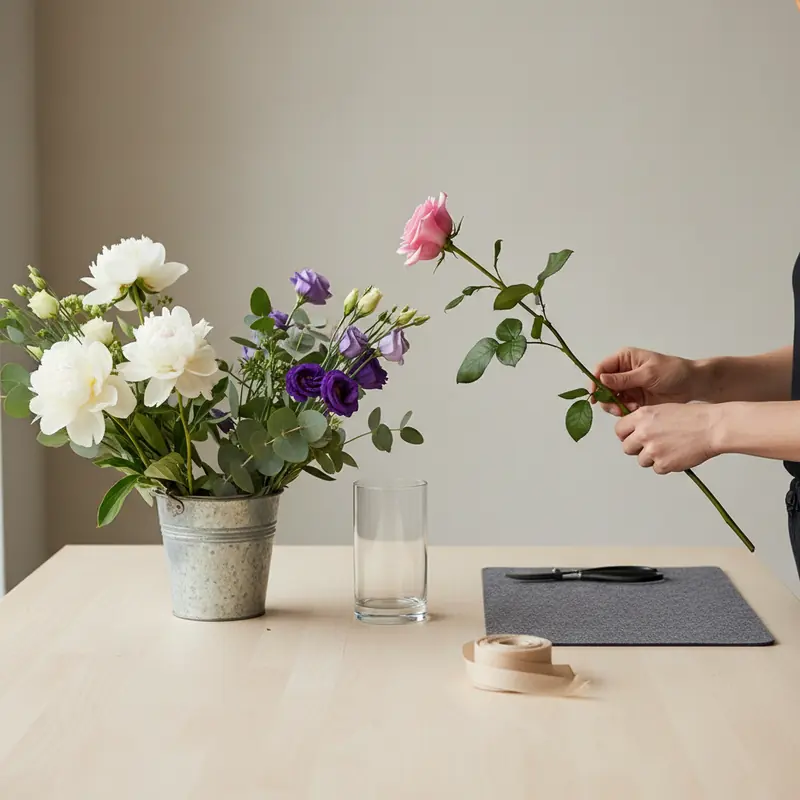
Distinguish bouquet construction from wrapping
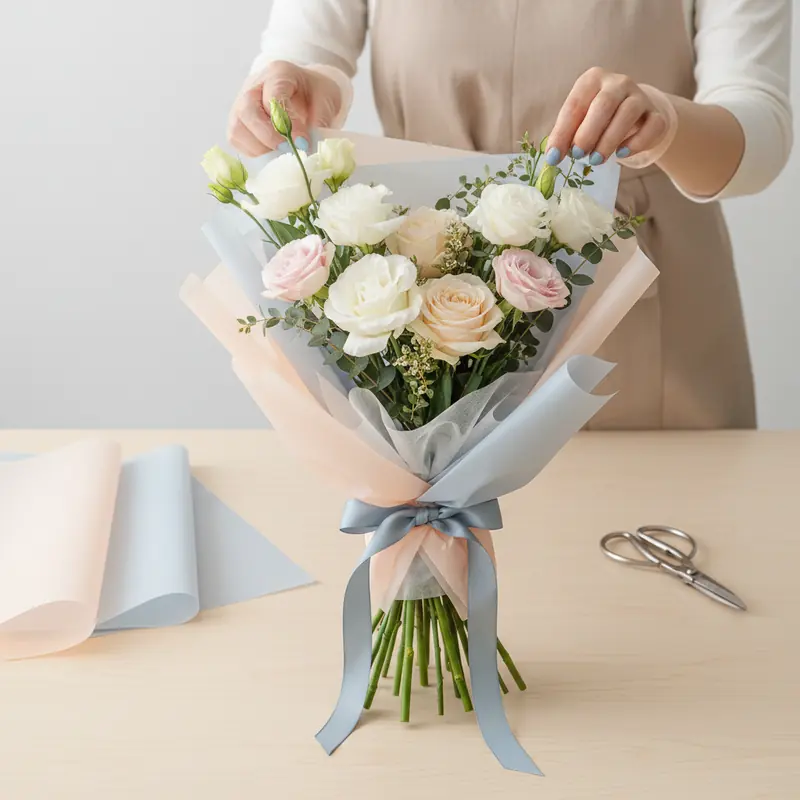
A bouquet photograph combines several outcomes that may be taught separately: flower selection and placement, holding or tying the bouquet, and adding the outer presentation. If a friend likes the look associated with a Korean bouquet class, ask whether each participant practises flower positioning, hand-tying and layered wrapping, or only some of those elements. Do not infer particular techniques, flower varieties or materials from the label alone.
Be especially clear about what arrives ready-made. Wrapping a prepared bouquet could answer a presentation goal without teaching bouquet construction. Building a bouquet that the teacher subsequently wraps could answer the opposite goal. Ask which stages remain in the student's hands, whether the teacher finishes any stages and whether you can identify an example that represents the proposed exercise. Treat any supplied image as a reference to discuss, not a guarantee of identical flowers, wrapping or results.
Read the class clock as several different activities
Total class length does not tell you how long each friend will be handling materials. Ask the provider to outline the sequence: explanation, demonstration, preparation, making, discussion and any finishing or packing. You do not need to demand a minute-by-minute promise. You do need enough detail to distinguish a lesson centred on watching from one that includes the practice your group wants. There is no universal minimum number of hands-on minutes that settles this choice.
Botany Studio's Basic Floral Course distinguishes theory and hands-on practice and names arrangement types. That is a useful model for the questions you ask, not evidence about another provider's class. Ask for an approximate practice allocation if available, and ask whether it applies to each person or the group collectively. If only total duration is supplied, record individual practice time as unconfirmed rather than estimating it by subtracting an assumed demonstration period.
Check what every participant has access to
The phrase materials included leaves several learning questions unanswered. Ask whether each participant has an allocation of flowers and access to the tools needed for their own task, or whether materials and tools circulate around the table. Shared equipment is not necessarily a problem, but ask how the sequence works when several friends reach the same step. Also establish whether each person makes a piece, whether any components are shared and what, if anything, can be taken away afterwards.
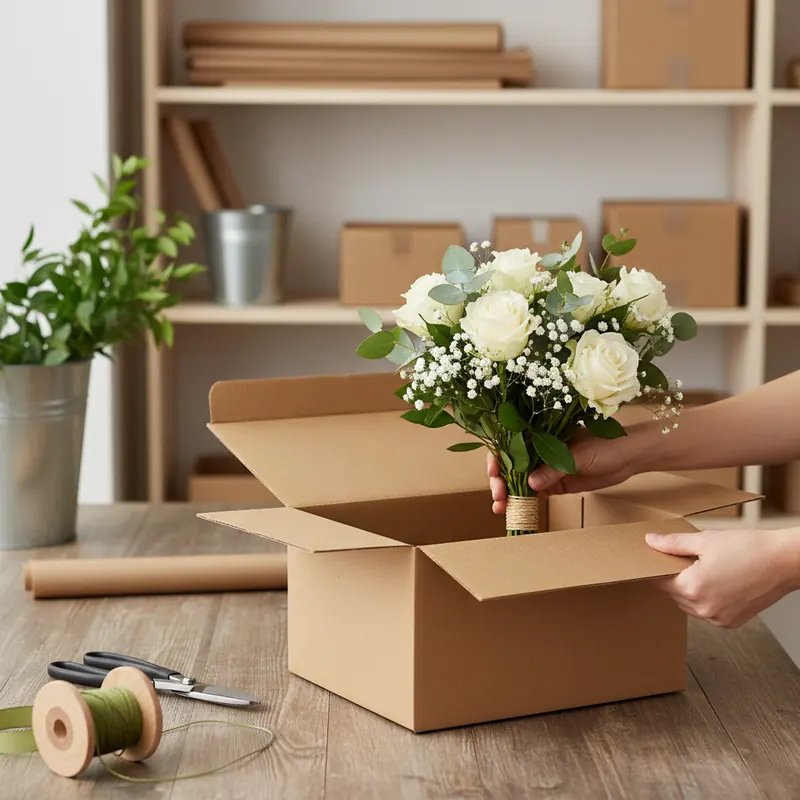
Compare the material arrangement with the learning brief rather than requesting more simply for its own sake. Someone practising wrapping needs an opportunity to work with the relevant presentation materials; someone focused on composition needs meaningful choices about placement. Ask what happens if the planned materials change and whether the substitute exercise would teach the same step. Confirm separately any container, packaging or transport arrangements you require, without assuming these are included because they appear in a reference image.
Ask how retrying and feedback work
A class can include making without including a chance to revise. Ask whether students can pause, review a particular step and attempt it again, and whether that depends on the material or the lesson's timetable. You are checking the teaching format, not asking the provider to promise unlimited replacement flowers. If a friend primarily wants to understand why a bouquet or arrangement is difficult for them, the opportunity to discuss an attempt may matter more than adding another finished object.
Clarify the feedback format too. Does the teacher comment while students work, review each piece at the end or address common points with the whole group? Ask whether each participant can receive feedback on their chosen learning goal. A description such as small group does not by itself establish individual teaching time, a particular teacher-to-student ratio or a guaranteed correction session.
Name the step you may want to repeat
Instead of asking whether there is lots of practice, name the task: could each friend try arranging the stems, review the result and adjust their own placement? For wrapping, ask whether a fold or layer can be revisited before the final fastening. A specific question lets the provider explain what is feasible within the proposed exercise.
Check whether feedback leaves you doing the work
Ask how corrections are handled. A teacher may demonstrate a change, explain it verbally or guide you to make the adjustment yourself. If independent practice is your priority, request clarification about which approach is planned. A polished piece completed by the teacher and a piece revised by the learner are different outcomes, even when both look attractive.
Record answers without filling in the gaps
Keep a simple comparison note with one line for each essential task and three possible statuses: confirmed by the provider, not yet confirmed, or not included. Beside the status, record the actual answer and which proposed class it refers to. This prevents a general description on a website from being treated as confirmation for your particular group. Keep practical arrangements such as location and fees separate from the learning-scope notes, so an attractive venue does not accidentally outweigh a missing essential skill.
For example, in a hypothetical reply, the provider confirms individual vase placement but describes wrapping as a teacher demonstration. Record those as different outcomes. If wrapping practice is essential to one friend, ask a focused follow-up rather than marking the whole lesson suitable or unsuitable. When comparing providers, an unanswered question remains an unanswered question; it is not proof that the activity is excluded, but it is not a sound basis for committing either.
Decide whether everyone needs the same next step
One shared workshop makes sense when the provider confirms a common project, the first-timer's starting needs are covered and the other friends can identify worthwhile practice within the same exercise. It does not need to fulfil every long-term ambition. Agree in advance which goals are for this outing and which can wait. That makes it easier to enjoy a modest introductory task without expecting it to double as specialist training.
Separate learning paths make more sense when an essential goal changes the lesson substantially. A friend who wants repeated bouquet construction may need a different follow-up from someone who only wants a first experience of vase arranging. You could share an introductory session and pursue later study independently, provided the shared session itself is appropriate. Ask about that possibility without assuming a private class, a customised curriculum or a progression route is available.
Keep business questions separate from a hobby outing
If one friend is considering running a flower business, make that a separate curriculum enquiry through the Florist startup class direction. Ask whether sourcing, material wastage, costing and order handling are taught, and how those subjects are practised or discussed. Making one bouquet does not establish the ability to price an order, manage supplies or run a business. Nor does attending a course guarantee a commercial outcome.
The Hong Kong Academy of Flower Arrangement's course catalogue lists recreational learning alongside a florist management diploma, illustrating that hobby and business aims can be distinct. Those are that institution's offerings, not confirmation of YumYum Gifts' teaching scope. Your business-minded friend may still enjoy the shared activity, but should not rely on it to answer commercial questions unless the provider explicitly confirms those topics. Equally, the other friends should not need to choose business study merely to stay together.
Send one clear brief, then confirm the booking details
Combine the group's answers into a short enquiry: group size, each person's experience, the common project, preferred teaching language and the steps each friend wants to perform independently. State any essential retry or feedback request, and put business topics in a separate sentence. Ask the provider to identify what is included, what is demonstrated only and what cannot be accommodated. A concise brief with specific questions is easier to resolve than several friends sending conflicting requests about different class names.
Once the learning scope is clear, confirm the proposed date, district and exact venue, availability, total fees, materials, any items you must bring and the cancellation or rescheduling conditions before making a commitment. Ask customer service for the current quotation; do not infer it from another class or a reference image. Choose the option that meets the group's essential learning needs with the fewest unresolved assumptions. If no single session does that, a shared introduction followed by separate study is a sensible outcome, not a failed group plan.
Details to confirm before ordering
- Record group size and each person's practical flower-handling experience, without relying only on level labels.
- Agree one shared project and identify each friend's essential hands-on step.
- Confirm prerequisites, teaching language and whether the proposed group can be taught together.
- Distinguish demonstration, individual practice and collaborative work for preparation, arranging, tying and wrapping.
- Confirm personal materials, tool access, opportunities to revise and the feedback format.
- Separate specialist or business-learning questions from the shared activity and identify any unconfirmed essentials.
- Obtain the date, venue, current quotation, material inclusions, bring-along requirements and cancellation or rescheduling terms before committing.
Questions about this decision
Can friends with different experience levels take one class together?
Possibly, but the provider needs to confirm that the starting requirements and practical tasks suit each person. Describe actual experience and ask what each friend would do, rather than relying on a mixed-level label.
What if the provider can only confirm the total class duration?
Ask which stages involve individual making and whether materials or tasks are shared. If no further breakdown is available, keep personal hands-on time marked as unconfirmed and decide whether that uncertainty is acceptable for your goals.
Does a wrapping lesson necessarily include making the bouquet?
No. Ask whether the bouquet is supplied ready-made, constructed by the student or finished by the teacher. Confirm flower placement, tying and wrapping separately if all three matter to you.
Should our group request a private class to solve different learning goals?
Not automatically. A private setting does not itself confirm a suitable curriculum or individual practice. First ask whether the proposed lesson can cover your common essentials, and separately check whether any group-specific arrangement is available.
Can a friend exploring floristry as a business still join our hobby outing?
Yes, if the confirmed activity suits them as a shared experience. Treat business learning as a separate need and ask about commercial topics independently; do not assume the outing provides business preparation.
Sources and further reading
Reference only. Illustrations are AI-generated design references, not photographs of actual customer orders. Confirm current contents, prices and arrangements with our team.
For this guide:Choosing a flower class with friends: how to check skill level, hands-on time and learning goals
Plan your workshop
Considering Flower class? Send the date, district and the points discussed in this guide to YumYum Gifts to confirm suitable options and a quotation.
Book a WorkshopWhatsAppThis opens a prepared WhatsApp enquiry. Availability, details and price must be confirmed before booking.
Explore related services and designs
Compare relevant options, view design references and find the information you need before making an enquiry.
Flower class
Compare flower learning directions and practical materials to decide which type of floral activity interests you, without assuming particular lesson content, dates or availability from the illustration.
Flower class Kwun Tong
Compare flower learning enquiries associated with Kwun Tong, looking at activity direction and travel preferences while checking the actual venue, class details and scheduling separately before planning attendance.
Flower class Causeway Bay
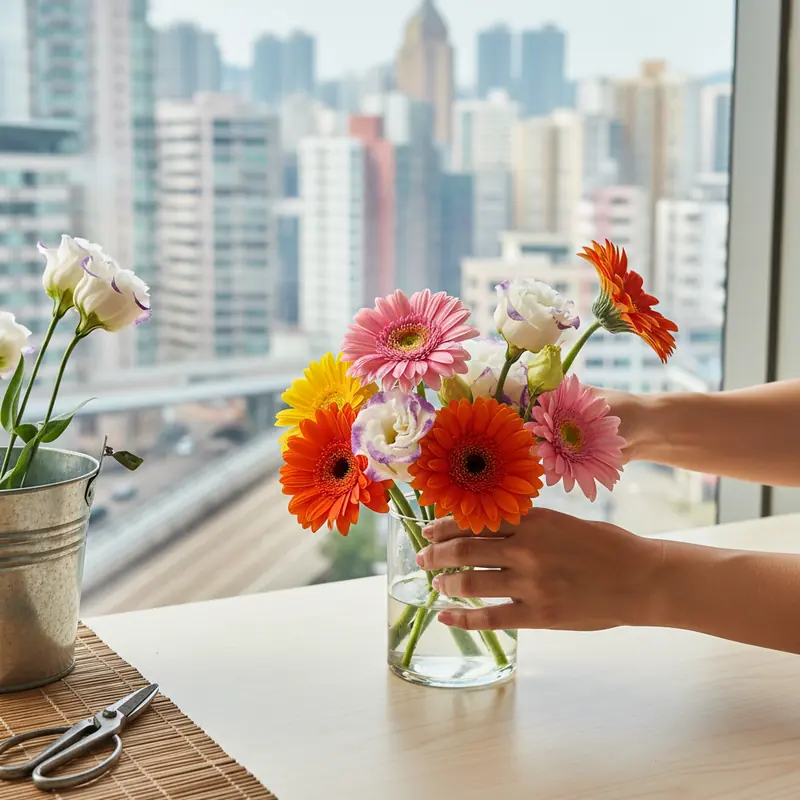
Compare flower learning enquiries associated with Causeway Bay, considering activity type and travel preferences while confirming the actual venue, course details and schedule separately before making arrangements.
Beginner flower class
Compare introductory flower learning directions, simple arrangement formats and basic materials to consider a starting point, without assuming a particular teaching sequence or confirmed course availability.
Florist startup class
Compare flower business learning directions and practical preparation themes to frame your course enquiry, without assuming the class covers a particular syllabus or guarantees a business outcome.
Korean bouquet class
Compare Korean style bouquet learning directions, airy flower placement and layered wrapping approaches to frame your enquiry, without assuming a particular lesson plan or currently available class.
Original AI-generated navigation references; designs and order details are subject to confirmation.
Useful options for your plans
Compare Flower class options to find a floral learning direction that interests you.
Compare Flower class Kwun Tong enquiries while checking the venue and class arrangements for your plans.
Explore Flower class Causeway Bay while confirming the venue and arrangements that suit your travel plans.
Compare Beginner flower class directions if you are looking for a starting point in flower arranging.